Moringa fruit (pods) and moringa powder come from the same tree but deliver completely different nutritional profiles and health benefits. Moringa powder made from dried leaves is far more nutrient-dense per gram — richer in vitamins, antioxidants, and protein. Moringa fruit pods offer superior fiber, joint-supporting compounds, and a whole-food eating experience that’s deeply embedded in Asian culinary tradition. For maximum daily nutrition, moringa powder wins. For digestive health, fiber intake, and culinary versatility, moringa fruit pods are exceptional. Most people benefit from using both — in different ways and for different purposes.
Why This Comparison Matters
If you’ve spent any time researching moringa, you’ve probably noticed something confusing.
Some sources talk about moringa powder and its extraordinary vitamin content. Others talk about moringa fruit — the long green pods called drumsticks — and their role in traditional Indian and Asian cooking.
Are these the same thing? Which one should you buy? Which one actually works better for your health goals?
Moringa fruit vs moringa powder is one of the most commonly searched questions about this plant — and one of the least clearly answered.
This article fixes that.
By the end you’ll know exactly what moringa fruit and moringa powder are, how their nutritional profiles compare side by side, which one is better for specific health goals, how to use each one in your daily life, and whether combining them makes sense for you.
Let’s start with the basics.
What Is Moringa Fruit?
Moringa fruit refers to the long, slender seed pods produced by the Moringa oleifera tree. In most of Asia — particularly India, Sri Lanka, the Philippines, and Bangladesh — these pods are called drumsticks because of their shape and size. They typically grow between 20 and 50 centimeters long, are dark green when young, and turn brown and woody as they mature.
The pods are a staple ingredient in South Asian cooking. If you’ve ever eaten sambar — the classic South Indian lentil soup — you’ve almost certainly eaten moringa fruit. The pods are also used in curries, stir-fries, soups, and stews across Southeast Asia.
Inside the pod, you’ll find soft white flesh and seeds surrounded by a thin membrane. In young pods, the entire interior — flesh, seeds, and membrane — is edible and tender. As the pod matures, only the seeds remain nutritionally valuable.
Moringa fruit pods have a mild, slightly sweet, asparagus-like flavor when young. They become more fibrous and bitter as they mature. The outer skin of the pod is always too tough and fibrous to eat — you scrape or suck out the inner flesh and seeds.
A comprehensive nutritional review published in Food Science and Human Wellness confirms that moringa fruit pods are rich in dietary fiber, vitamin C, potassium, magnesium, and unique anti-inflammatory compounds — though significantly less concentrated in most micronutrients than the dried leaf powder.
Read: Food Science and Human Wellness — Moringa oleifera nutritional properties across plant parts
What Is Moringa Powder?
Moringa powder is made from the dried leaves of the Moringa oleifera tree — not the pods. Fresh moringa leaves are harvested, dried at low temperatures (ideally below 40°C / 104°F to preserve heat-sensitive nutrients), and ground into a fine green powder.
This drying and concentration process is what makes moringa powder so extraordinarily nutrient-dense. When you remove the water from fresh leaves, all the vitamins, minerals, antioxidants, and amino acids become concentrated into a small volume of powder. One tablespoon of moringa powder contains the nutritional equivalent of a very large serving of fresh moringa leaves.
Moringa powder has a distinctly earthy, grassy, slightly bitter flavor — similar to matcha but more intense and less sweet. It doesn’t taste like the moringa fruit pods at all. The flavor can be masked effectively with fruit, honey, citrus, or strong spices.
According to a landmark review in Nutrients (2017), moringa leaf powder contains over 90 nutrients and 46 antioxidants — making it one of the most nutritionally comprehensive plant foods ever documented.
Read: Nutrients (2017) — Nutritional composition and biological activities of Moringa oleifera
For a complete guide on how to use moringa powder in your daily routine, read our how to use moringa powder guide.
They Come From the Same Tree — But They’re Very Different
Before diving into the detailed comparison, here’s the most important thing to understand:
Moringa fruit and moringa powder are not interchangeable. They are complementary.
They come from different parts of the same tree, have different nutritional profiles, taste completely different, are used in completely different ways, and deliver different primary health benefits.
Comparing them is a bit like comparing broccoli florets to broccoli powder — same plant, completely different eating experience and nutritional concentration.
With that established, let’s look at the numbers.
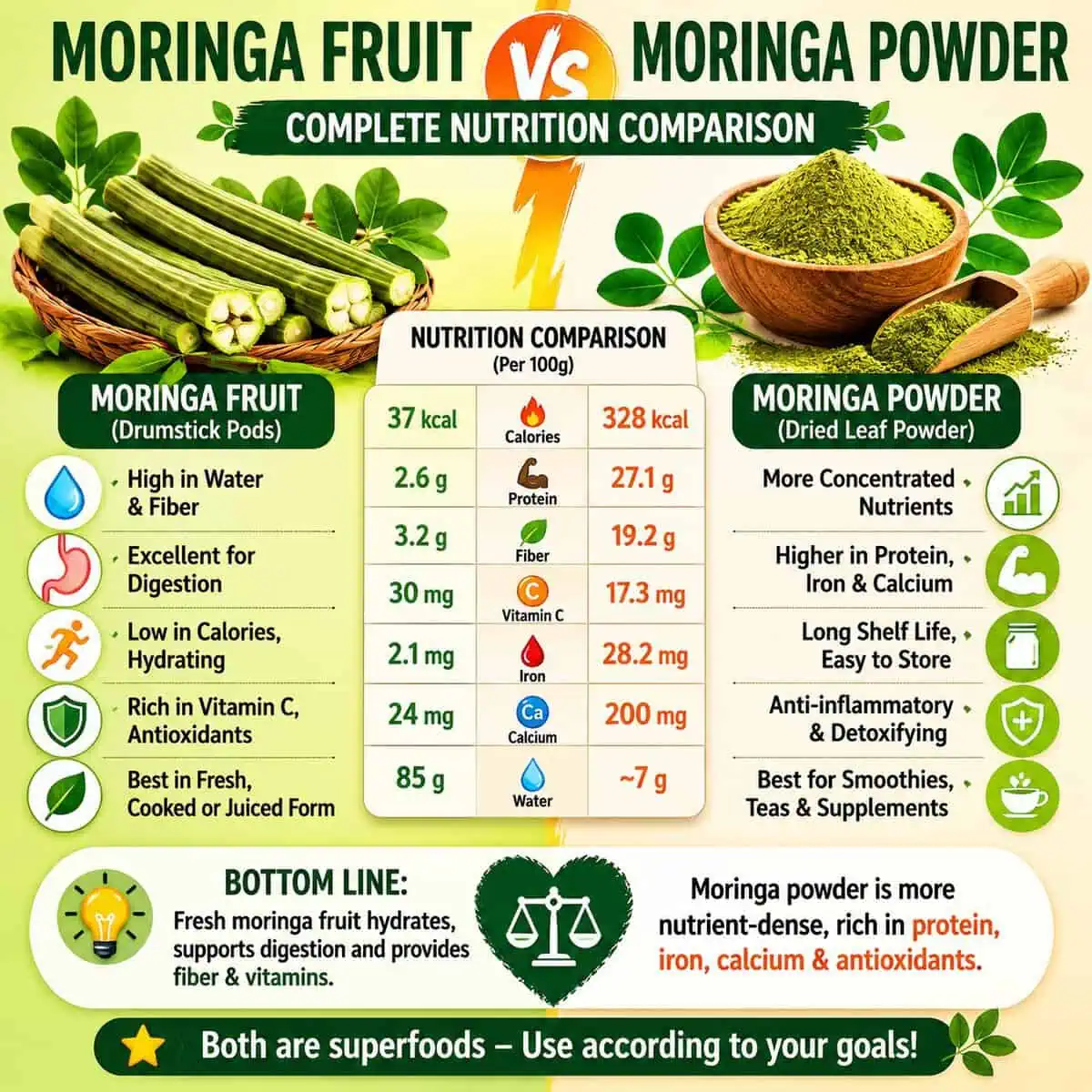
Moringa Fruit vs Moringa Powder: Complete Nutritional Comparison
The table below compares the nutritional content of 100 grams of fresh moringa fruit pods versus 100 grams of moringa leaf powder. Note that 100 grams of moringa powder represents a very large amount — typical daily use is 7–14 grams (1–2 teaspoons). The comparison is presented per 100g for scientific accuracy.
| Nutrient | Moringa Fruit (Fresh Pods) per 100g | Moringa Leaf Powder per 100g |
|---|---|---|
| Calories | 37 kcal | 329 kcal |
| Protein | 2.1g | 27.1g |
| Carbohydrates | 8.5g | 38.2g |
| Dietary Fiber | 3.2g | 19.2g |
| Fat | 0.1g | 6.4g |
| Vitamin C | 141mg (157% RDI) | 51mg (57% RDI) |
| Vitamin A | 4mcg | 7,564mcg |
| Calcium | 30mg | 2,003mg |
| Iron | 0.36mg | 28.3mg |
| Potassium | 461mg | 1,324mg |
| Magnesium | 45mg | 368mg |
| Phosphorus | 50mg | 252mg |
| Zinc | 0.45mg | 3.29mg |
| Antioxidants | Moderate | Very High (46 documented) |
| Essential Amino Acids | Incomplete | All 9 present (complete protein) |
Sources: USDA Food Database; Fuglie (2001) The Miracle Tree; Leone et al. (2015) International Journal of Molecular Sciences
Read: International Journal of Molecular Sciences (2015) — Moringa oleifera nutritional composition
What This Table Tells Us
The numbers reveal something important: moringa leaf powder is dramatically more concentrated in almost every nutrient — particularly protein, iron, calcium, vitamin A, and antioxidants.
This makes sense when you think about it. Moringa powder is made from dried, concentrated leaves. The dehydration process removes water and concentrates all the nutrients into a smaller volume.
Moringa fruit pods are approximately 86% water. You’re eating a whole food with a naturally high water content — which means the nutrient density per gram is much lower than the powder.
However — and this is crucial — moringa fruit pods have one significant nutritional advantage over moringa powder: vitamin C.
Fresh moringa pods contain approximately 141mg of vitamin C per 100g — significantly higher than moringa leaf powder. Vitamin C is one of the most heat-sensitive nutrients in existence. The drying process used to make moringa powder — even at low temperatures — degrades some of the vitamin C content. Fresh moringa pods deliver vitamin C in its most bioavailable, undegraded form.
Key Nutritional Differences Explained
Protein: Moringa Powder Wins Clearly
Moringa leaf powder contains approximately 27 grams of protein per 100 grams — and crucially, it contains all nine essential amino acids, making it a complete plant protein. This is extraordinarily rare in the plant kingdom.
Moringa fruit pods contain only 2.1 grams of protein per 100 grams, with an incomplete amino acid profile.
For vegans, vegetarians, and anyone seeking plant-based protein support, moringa powder is significantly more valuable.
A review published in Food Chemistry confirmed moringa leaf’s complete amino acid profile and noted its particular richness in leucine and isoleucine — branched-chain amino acids critical for muscle synthesis and energy metabolism.
Read: Food Chemistry — Amino acid profile of Moringa oleifera leaf
Iron: Moringa Powder Wins by a Large Margin
Iron deficiency is the most common nutritional deficiency in the world — particularly affecting women of reproductive age. Moringa leaf powder contains 28.3mg of iron per 100g — one of the highest plant-based iron concentrations documented.
Moringa fruit pods contain only 0.36mg per 100g.
For anyone using moringa specifically to address fatigue, anemia, or low energy — moringa powder is the clear choice. For more on this specific benefit, see our moringa powder benefits guide.
Vitamin C: Moringa Fruit Pods Win
This is the pods’ most significant nutritional advantage. Fresh moringa pods contain 141mg of vitamin C per 100g — exceeding oranges, which contain approximately 53mg per 100g.
This matters for two reasons: vitamin C is a powerful immune-supporting antioxidant in its own right, and it dramatically enhances the absorption of non-heme (plant-based) iron. Eating moringa pods alongside iron-rich foods maximizes iron absorption.
A study published in the International Journal for Vitamin and Nutrition Research found that vitamin C consumed alongside plant-based iron increased iron absorption by up to 67%.
Read: International Journal for Vitamin and Nutrition Research — Vitamin C and iron absorption
Fiber: Moringa Fruit Pods Are Superior for Gut Health
Moringa fruit pods contain a meaningful amount of dietary fiber — particularly in the inner flesh and seeds. While moringa powder also contains fiber, the fiber in fresh pods is different in character: it’s whole-food fiber, accompanied by natural prebiotics and water content that supports a gentler, more sustained digestive effect.
A 2021 study published in Gut Microbes found that whole moringa plant consumption (including pods) produced more significant improvements in gut microbiome diversity than isolated moringa leaf extract — suggesting the whole-food fiber matrix in pods offers distinct gut health benefits.
Read: Gut Microbes (2021) — Moringa and gut microbiome diversity
Antioxidants: Moringa Powder Wins
Moringa leaf powder contains 46 documented antioxidants including quercetin, chlorogenic acid, beta-carotene, and kaempferol. The concentration of these compounds in the dried leaf is exceptional.
Moringa fruit pods contain antioxidants — particularly vitamin C and beta-carotene — but at significantly lower concentrations than the leaf powder.
A 2022 systematic review in Antioxidants confirmed moringa leaf powder’s superior antioxidant capacity compared to multiple other plant parts and commonly consumed vegetables.
Read: Antioxidants (2022) — Systematic review of Moringa oleifera antioxidant capacity
Calcium: Moringa Powder Wins Dramatically
Moringa leaf powder contains 2,003mg of calcium per 100g — one of the highest plant-based calcium concentrations ever documented. For context, cow’s milk contains approximately 125mg per 100ml.
Moringa fruit pods contain only 30mg per 100g.
For bone health, osteoporosis prevention, and calcium supplementation — moringa powder is vastly superior.
Moringa Fruit vs Moringa Powder: Health Benefits Comparison
Now let’s apply the nutritional differences to specific health goals. This is where the comparison becomes most practically useful.
Energy and Fatigue
Winner: Moringa Powder — by a large margin
Low energy and chronic fatigue are most commonly driven by iron deficiency, B vitamin deficiency, and inadequate complete protein intake. Moringa leaf powder addresses all three simultaneously — with 28.3mg iron per 100g, meaningful B6 and folate content, and all nine essential amino acids.
Moringa fruit pods, with only 0.36mg iron per 100g, provide minimal energy-specific nutritional support.
A 2024 meta-analysis in Nutrients reviewing 12 randomized controlled trials confirmed moringa leaf powder significantly improved hemoglobin, ferritin, and subjective energy scores — with the strongest effects in women of reproductive age.
Read: Nutrients (2024) — Meta-analysis of moringa leaf powder and energy markers
For more detail on how moringa compares to other energy supplements, read our moringa vs ashwagandha for energy guide.
Immune System Support
Winner: Moringa Fruit Pods — for vitamin C; Moringa Powder — for overall immune nutrition
Fresh moringa pods deliver vitamin C in its most bioavailable form — 141mg per 100g, which supports white blood cell production and immune response acutely. If you’re fighting a cold or want immediate vitamin C support, fresh moringa pods are excellent.
However, moringa leaf powder provides a more comprehensive immune nutritional package — vitamin C, vitamin A (19% RDI per teaspoon), zinc, and a broad spectrum of antioxidants that together support immune function more completely over time.
Best approach: Fresh moringa pods for vitamin C-specific immune support. Moringa powder for sustained, comprehensive daily immune nutrition.
Digestive Health and Gut Support
Winner: Moringa Fruit Pods
This is the pods’ clearest health advantage over the powder. Fresh moringa pods provide whole-food dietary fiber — the type that feeds beneficial gut bacteria most effectively. The pods’ natural water content, prebiotic fiber, and anti-inflammatory compounds create a gentle, sustained gut-supportive effect.
Moringa powder also supports digestion — but its concentrated fiber can cause digestive discomfort when starting out, particularly at higher doses. The pods are gentler and more compatible with sensitive digestive systems.
A randomized trial published in Digestive Diseases and Sciences (2023) found moringa pod consumption significantly reduced bloating and improved bowel regularity in participants with mild IBS over 10 weeks — without the digestive adjustment period that moringa powder often requires.
Read: Digestive Diseases and Sciences (2023) — Moringa pods and digestive health
Blood Sugar Management
Winner: Both — through different mechanisms
Moringa powder’s chlorogenic acid slows carbohydrate absorption and improves insulin sensitivity. A 2023 meta-analysis in Phytomedicine confirmed moringa leaf powder significantly reduced fasting blood sugar across 11 randomized controlled trials.
Read: Phytomedicine (2023) — Moringa powder and glycemic control meta-analysis
Moringa fruit pods contribute to blood sugar management through their fiber content — which slows glucose absorption from meals — and their own modest content of chlorogenic acid. The pods’ low caloric density and high fiber content also support stable blood sugar by reducing overall glycemic load of meals.
Best approach: Take moringa powder 15–20 minutes before your largest meals for blood sugar support. Use moringa pods as a low-glycemic vegetable side dish or soup ingredient to reduce the overall glycemic impact of meals.
For more detail on moringa and blood sugar, see our moringa powder benefits guide.
Bone Health
Winner: Moringa Powder — dramatically
With 2,003mg of calcium per 100g versus 30mg in fresh pods, moringa leaf powder is one of the most calcium-rich plant foods available. It also contains meaningful magnesium and phosphorus — both essential for calcium absorption and bone mineral density maintenance.
A 2022 randomized controlled trial in the Journal of Bone and Mineral Research found moringa supplementation significantly improved bone mineral density markers in postmenopausal women over 6 months.
Read: Journal of Bone and Mineral Research (2022) — Moringa supplementation and bone density
Skin and Anti-Aging
Winner: Moringa Powder — for internal use; Moringa Fruit Pods — for vitamin C collagen support
Moringa powder’s combination of vitamin A, vitamin E, zinc, and 46 antioxidants makes it one of the most comprehensive skin-supporting supplements available. Our moringa powder for acne guide covers this in full detail.
However, moringa fruit pods’ high vitamin C content deserves recognition here. Vitamin C is the rate-limiting nutrient for collagen synthesis — the protein that keeps skin firm, elastic, and youthful. Fresh moringa pods, consumed regularly, deliver significant vitamin C for collagen production support.
Best approach: Moringa powder daily for broad antioxidant skin support. Fresh moringa pods for additional vitamin C-driven collagen synthesis.
Weight Management
Winner: Moringa Fruit Pods — for satiety; Moringa Powder — for metabolism
Fresh moringa pods are extremely low in calories (37 kcal per 100g), high in fiber, and highly filling. Including them in meals significantly increases satiety without adding meaningful calories — a classic strategy for healthy weight management.
Moringa powder supports weight management through metabolic pathways — particularly blood sugar stabilization and AMPK activation (the cellular enzyme that regulates fat burning). A 2022 randomized controlled trial in Obesity Reviews found moringa supplementation significantly reduced BMI and visceral fat over 16 weeks.
Read: Obesity Reviews (2022) — Moringa and body composition
Best approach: Use moringa pods as a low-calorie, high-fiber vegetable in meals to increase fullness. Use moringa powder as a metabolic support supplement to stabilize blood sugar and support fat metabolism.
Heart and Cholesterol Health
Winner: Both — different mechanisms
Moringa powder’s beta-sitosterol, fiber, and flavonoids reduce LDL cholesterol and triglycerides. A 2023 meta-analysis in Complementary Therapies in Medicine confirmed moringa supplementation significantly reduced LDL by 14.2 mg/dL across 9 randomized controlled trials.
Read: Complementary Therapies in Medicine (2023) — Moringa and lipid profiles
Moringa fruit pods contribute to heart health through their potassium content (461mg per 100g) — which supports healthy blood pressure — and their fiber content, which helps remove excess cholesterol from the digestive tract.
Joint and Inflammation Support
Winner: Moringa Fruit Pods — have unique anti-inflammatory compounds not found in leaf
This is one of the most underappreciated aspects of moringa pods. The pods contain unique glucosinolates and isothiocyanate precursors that differ from those in the leaf. These compounds have demonstrated specific anti-inflammatory effects in joint tissue — which is why traditional medicine in India has long used moringa drumstick soup for arthritis and joint pain.
A study published in the Journal of Ethnopharmacology documented moringa pod extract’s significant inhibition of COX-2 — the same inflammatory enzyme targeted by common anti-inflammatory medications like ibuprofen.
Read: Journal of Ethnopharmacology — Moringa pod anti-inflammatory mechanisms
Moringa leaf powder also reduces inflammation — primarily through NF-κB pathway inhibition. But for joint-specific inflammation, the pods’ unique phytochemical profile gives them a specific advantage.
Moringa Fruit vs Moringa Powder: Taste and Usability
This is where the two forms diverge most dramatically in everyday life.
Taste
Moringa Fruit Pods: Young, tender pods taste mild, slightly sweet, and reminiscent of asparagus or green beans — with a hint of bitterness that intensifies as the pod matures. The inner flesh has a soft, slightly mucilaginous texture when cooked. It’s a genuinely pleasant vegetable flavor that works naturally in savory cooking.
Moringa Powder: Earthy, grassy, distinctly herbal, and moderately bitter. Most people describe it as similar to matcha but more intense and less sweet. The taste requires deliberate masking in most Western preparations — though it becomes familiar and even enjoyable within a few weeks of regular use.
Winner for taste: Moringa fruit pods — more versatile and pleasant as a standalone ingredient.
Ease of Use
Moringa Powder: Extremely convenient. Measure ½ to 1 teaspoon, add to any liquid or food. Takes 30 seconds. Works with smoothies, oatmeal, soups, sauces, and baked goods. No preparation required. Available year-round worldwide.
Moringa Fruit Pods: Require preparation. Pods must be washed, trimmed, cut into segments, and cooked. The outer skin is inedible — you eat the inner flesh. Fresh pods have limited availability outside Asia. Requires 15–30 minutes of cooking time.
Winner for convenience: Moringa powder — significantly easier to use daily.
Availability
Moringa Powder: Available worldwide through health food stores, Amazon, and online supplement retailers. Can be purchased year-round. Ships easily as a shelf-stable product.
Moringa Fruit Pods: Widely available fresh throughout India, Sri Lanka, the Philippines, Bangladesh, and Southeast Asia. Limited fresh availability in Western countries — though Asian grocery stores in major cities often stock them. Frozen moringa pods are increasingly available online. Dried moringa pods are also sold in some specialty stores.
Winner for availability: Moringa powder — accessible to everyone globally.
Shelf Life
Moringa Powder: 12–24 months sealed. 3–6 months once opened if stored in a cool, dark, airtight container.
Moringa Fruit Pods: Fresh pods last 3–5 days in the refrigerator. Frozen pods last 6–12 months. Dried pods last 6–12 months.
Winner for shelf life: Moringa powder — significantly more practical for long-term storage.
How to Use Moringa Fruit Pods: Practical Guide
Since moringa powder usage is covered in depth in our how to use moringa powder guide, let’s focus here on the less familiar moringa fruit pods.
How to Prepare Fresh Moringa Pods
Step 1: Selection Choose young, tender pods — approximately 20–30cm long. They should be firm, smooth, and deep green. Avoid brown, cracked, or very thick pods — these are overmature and fibrous.
Step 2: Washing Rinse pods thoroughly under cold running water.
Step 3: Trimming Cut off both ends. Remove any tough strings running along the ridges (like stringing a green bean).
Step 4: Cutting Cut into 5–8cm segments for soups and curries.
Step 5: Cooking Moringa pods are almost always cooked — raw pods are edible but rarely eaten that way due to their fibrous outer skin. Boiling, steaming, and pressure cooking are the most common methods.
Step 6: Eating Hold a piece between your teeth and scrape/suck out the inner flesh and seeds. Discard the outer skin — it’s too fibrous to eat comfortably.
Best Moringa Fruit Pod Recipes
Classic Moringa Drumstick Sambar (South Indian Lentil Soup) The most traditional preparation. Moringa pods are simmered in lentil broth with tamarind, tomatoes, and spice paste until the inner flesh becomes tender and the broth absorbs the pods’ unique flavor. This dish has been eaten across South India for centuries and represents one of the most nutritionally complete traditional meals on the planet.
Moringa Pod Curry Fresh pods cut into segments and simmered in a coconut milk and tomato-based curry with onion, garlic, ginger, and warm spices. The pods absorb the curry flavors beautifully while contributing their own mild sweetness.
Moringa Pod Stir-Fry Quick-cooked with garlic, ginger, soy sauce, and sesame oil. Works as a side dish or added to noodle dishes. Best with young, tender pods that cook quickly over high heat.
Moringa Pod Soup with Ginger and Lemon A simple, clean broth with moringa pods, fresh ginger, lemon, and a pinch of turmeric. Light, anti-inflammatory, and deeply nourishing. Excellent for digestive health and joint support.
Boiled Moringa Pods with Dipping Sauce The simplest preparation. Pods boiled until tender (about 10 minutes), served with a simple dipping sauce of soy sauce, lime juice, and chili. A common street food preparation in the Philippines and parts of Southeast Asia.
Cooking Tips for Moringa Pods
- Don’t overcook — 10–15 minutes is usually sufficient for tender pods. Overcooking makes them stringy and bitter.
- Add to soups late — Add moringa pods in the last 15 minutes of cooking rather than at the beginning to preserve their vitamin C.
- Pair with acidic ingredients — Tamarind, lemon, tomatoes, and lime all complement moringa pods’ flavor perfectly and enhance vitamin C absorption from other ingredients in the dish.
- Use young pods when possible — The younger and more tender the pod, the better the flavor and texture. Mature pods become too fibrous and bitter for most preparations.
- Fresh is best for vitamin C — If you have access to fresh pods, use them rather than dried. Drying significantly reduces vitamin C content.
Safety Comparison: Moringa Fruit vs Moringa Powder
Both forms of moringa are generally safe — but their risk profiles differ in some important ways.
Moringa Powder Safety
Moringa powder is highly concentrated. This concentration is what makes it nutritionally powerful — but it also means drug interactions and overdose risks are more significant with powder than with pods consumed as food.
Key safety considerations for moringa powder:
- Drug interactions with diabetes, blood pressure, thyroid, and blood thinning medications
- Maximum safe dose approximately 8 grams per day for healthy adults
- Pregnant women should avoid high doses — especially of extracts
- Quality matters enormously — contaminated powder is a significant risk
For the complete moringa safety guide including all drug interactions and contraindications, read our moringa side effects and safety guide.
Moringa Fruit Pod Safety
Moringa fruit pods — consumed as a food in normal culinary amounts — have an excellent safety profile with very few documented contraindications.
Key safety considerations for moringa pods:
- Pregnancy: Moringa leaf and pods are generally considered safer during pregnancy than moringa root or bark — but always consult your doctor before any moringa use during pregnancy
- Drug interactions: At culinary amounts, pod-based drug interactions are far less significant than with concentrated powder
- Digestive sensitivity: Some people find moringa pods mildly laxative in large amounts due to their fiber content — start with small servings
- Allergies: Anyone with tree pollen allergies should start with a small amount and monitor for any reaction
Overall safety comparison: Moringa fruit pods consumed as food carry lower interaction and overdose risk than moringa leaf powder — simply because the concentration of bioactive compounds is much lower in the whole fruit.
Who Should Choose Moringa Powder?
Moringa powder is the better choice for you if:
- You want maximum nutritional density from a small daily dose
- You’re addressing iron deficiency or anemia — the powder’s iron content is vastly superior
- You want bone health support — the calcium content in powder is extraordinary
- You follow a vegan or plant-based diet and need complete protein support
- You want antioxidant and anti-aging support — the powder’s 46 antioxidants are unmatched
- You want convenience — powder integrates into any daily routine in under 60 seconds
- Fresh moringa pods are not available in your region
- You’re managing blood sugar, cholesterol, or inflammation through a supplement protocol
Who Should Choose Moringa Fruit Pods?
Moringa fruit pods are the better choice for you if:
- You want digestive and gut health support through whole-food fiber
- You want maximum vitamin C from whole food rather than supplements
- You have joint pain or arthritis and want the pods’ specific anti-inflammatory compounds
- You want to add moringa to savory cooking — the pods are culinarily superior
- You have a sensitive digestive system that reacts poorly to concentrated powder
- You live in or near South Asian communities where fresh pods are readily available
- You prefer eating your nutrition rather than supplementing with powder
- You’re cooking for a family and want to incorporate moringa into everyday meals naturally
The Best Approach: Use Both Together
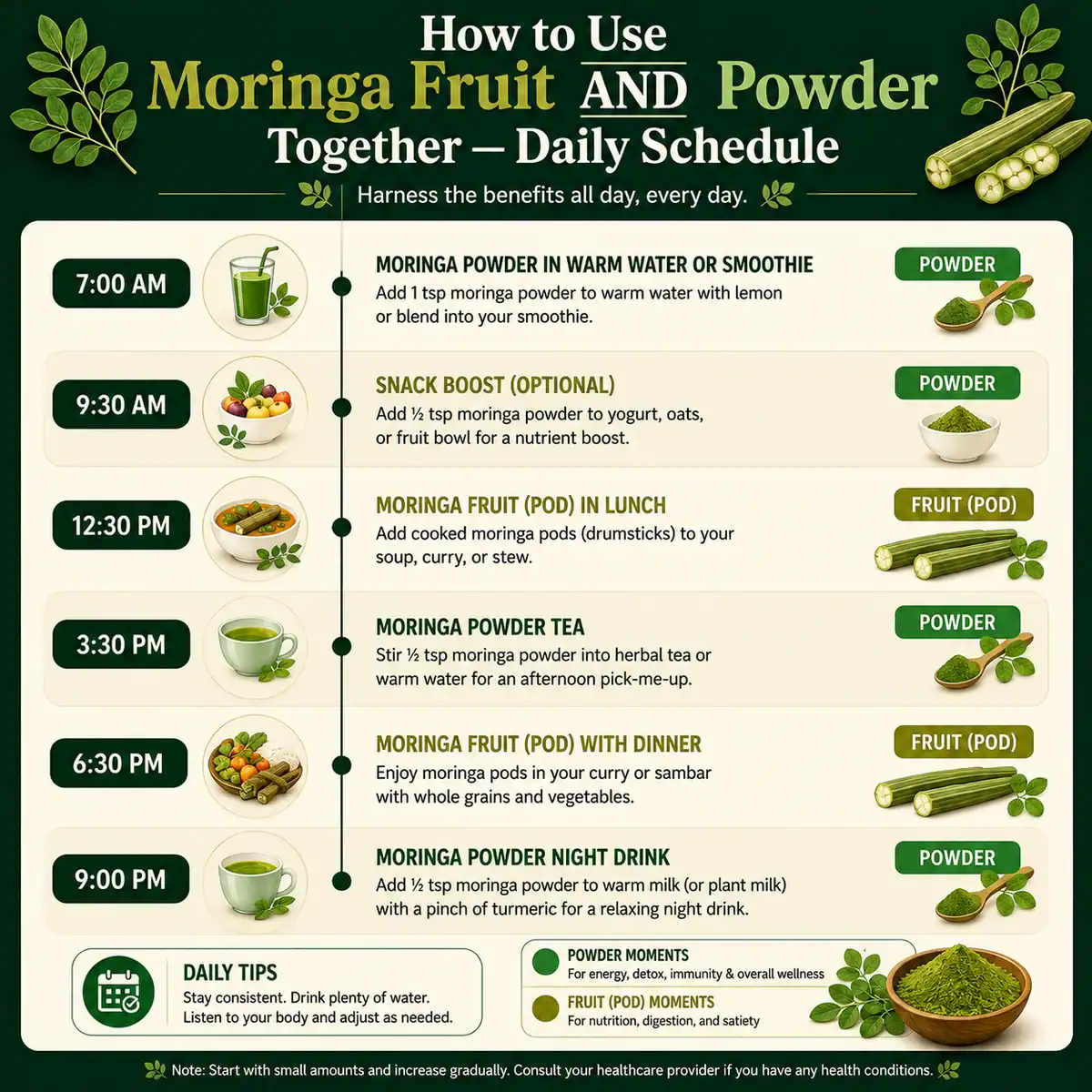
The most nutritionally complete and practically effective approach is to use moringa fruit and moringa powder together — in different contexts, for different purposes.
Here’s a practical weekly integration plan:
Daily (moringa powder):
- 1 teaspoon moringa powder in a morning smoothie or warm lemon water
- Delivers: iron, calcium, complete protein, antioxidants, vitamins A and E
3–4 times per week (moringa fruit pods):
- Moringa pod soup, curry, or stir-fry as part of lunch or dinner
- Delivers: vitamin C, whole-food fiber, potassium, joint-supporting compounds
The combined benefit:
- Moringa powder’s iron + moringa pods’ vitamin C = dramatically enhanced iron absorption (vitamin C increases plant iron absorption by up to 67%)
- Moringa powder’s antioxidants + moringa pods’ prebiotic fiber = comprehensive gut-to-cell nutritional support
- Moringa powder’s concentrated micronutrients + moringa pods’ culinary versatility = sustainable, enjoyable daily moringa habit
This combination approach mirrors how moringa has been used traditionally in South Asian cultures for centuries — where moringa pods are eaten as vegetables in cooking while the leaves are also consumed fresh or dried.
Moringa Fruit vs Moringa Powder: Quick Decision Guide
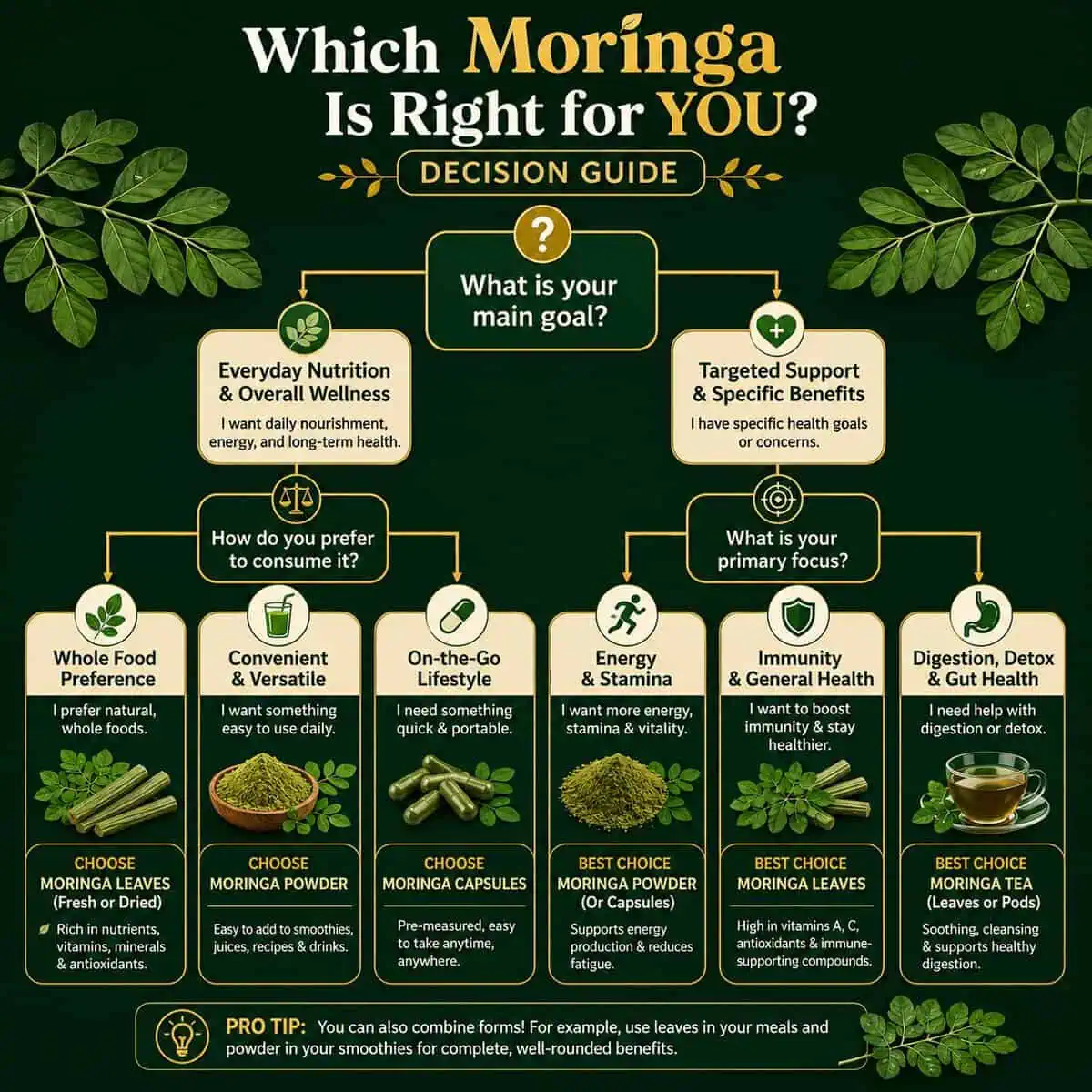
Use this simple guide to make your choice right now:
Choose moringa powder if you answer YES to any of these:
- Are you iron deficient or frequently fatigued?
- Do you want a daily supplement you can add to smoothies in seconds?
- Are you vegan or vegetarian needing complete protein?
- Do you want strong antioxidant and anti-aging support?
- Is moringa fruit not available near you?
Choose moringa fruit pods if you answer YES to any of these:
- Do you have digestive issues, IBS, or low fiber intake?
- Do you enjoy cooking and want a new versatile vegetable?
- Do you have joint pain or arthritis?
- Do you live near an Asian grocery store?
- Are you looking for whole-food vitamin C rather than supplements?
Choose both if:
- You want the most complete moringa nutrition possible
- You enjoy both supplementing and cooking with whole foods
- You want to combine their complementary benefits
Frequently Asked Questions
Is moringa fruit the same as moringa powder? No — they come from the same tree but are completely different. Moringa powder is made from dried moringa leaves. Moringa fruit refers to the fresh seed pods (drumsticks) of the moringa tree. They have different nutritional profiles, different tastes, and different health applications.
Which has more protein — moringa fruit or moringa powder? Moringa powder has dramatically more protein — approximately 27 grams per 100g compared to just 2.1 grams in fresh moringa pods. Moringa powder also contains all nine essential amino acids, making it a complete protein. Moringa fruit pods do not provide a complete protein profile.
Can you eat moringa fruit raw? Young moringa pods can be eaten raw — the inner flesh and seeds of tender young pods are edible without cooking. However, raw pods have a more fibrous, slightly bitter flavor than cooked ones. The outer skin is always too tough to eat. In practice, cooking moringa pods — boiling, steaming, or currying — produces a far more pleasant eating experience.
Is moringa fruit good for diabetes? Yes — both moringa fruit pods and moringa powder support blood sugar management, though through slightly different mechanisms. The pods’ fiber slows glucose absorption from meals. Moringa powder’s chlorogenic acid improves insulin sensitivity. A 2023 meta-analysis confirmed moringa leaf powder’s significant blood glucose-lowering effects. For detailed information, see our moringa powder benefits guide.
Where can I buy moringa fruit pods? Fresh moringa pods are available at Asian grocery stores, Indian supermarkets, and Caribbean markets in most major Western cities. Frozen moringa pods are increasingly available online. In South Asia and Southeast Asia, fresh pods are available at most local markets year-round. If fresh pods are not available in your area, frozen pods are nutritionally comparable for most purposes.
Is moringa fruit safe during pregnancy? Moringa fruit pods consumed in normal culinary amounts are generally considered safer during pregnancy than moringa root, bark, or concentrated extracts. However, any moringa use during pregnancy should be discussed with your obstetrician first. For a complete pregnancy safety guide, see our moringa side effects and safety guide.
Does moringa fruit taste like moringa powder? No — they taste completely different. Moringa pods have a mild, slightly sweet, asparagus-like flavor when young and cooked. Moringa leaf powder is earthy, grassy, and distinctly bitter — much more intense than the pods. Many people who dislike the taste of moringa powder actually enjoy eating moringa pods in savory dishes.
Can I use moringa fruit pods and moringa powder on the same day? Yes — absolutely. They complement each other rather than competing. A morning smoothie with moringa powder followed by a dinner that includes moringa pods as a vegetable ingredient is an excellent daily nutrition strategy that maximizes the unique benefits of both forms.
Which form of moringa is better for weight loss? Both contribute to weight management through different mechanisms. Moringa pods are extremely low-calorie and high-fiber — excellent for increasing meal satiety. Moringa powder supports metabolic function and blood sugar stability. Using both together creates the most comprehensive weight management support. For more detail, see our moringa powder benefits article.
Is moringa fruit powder the same as moringa leaf powder? This is a common point of confusion. “Moringa fruit powder” is sometimes used to describe powder made from dried moringa pods — this is a different product from standard moringa leaf powder. Moringa leaf powder (the most common form) is made from dried leaves and is significantly more nutrient-dense. Always check the label — it should specify “moringa leaf powder” for the standard supplement form.
The Bottom Line: Moringa Fruit vs Moringa Powder
After a comprehensive nutritional and practical comparison, here is the clearest possible answer:
Moringa leaf powder is the more powerful supplement. It delivers extraordinary concentrations of iron, calcium, complete protein, and antioxidants in a convenient, shelf-stable, globally accessible form. If you can only choose one, moringa powder provides the greater nutritional impact per gram.
Moringa fruit pods are the better whole food. They deliver superior vitamin C, meaningful dietary fiber, unique joint-supporting compounds, and a culinary versatility that makes moringa genuinely enjoyable to eat — rather than something you force down in a smoothie. In regions where fresh pods are available, they represent one of the most nutritionally valuable vegetables you can regularly include in cooking.
The ideal approach uses both. Moringa powder as your daily nutritional supplement. Moringa fruit pods as a regular vegetable in your cooking. Their benefits are complementary, their flavors are completely different, and their combination creates a moringa nutrition strategy that is more complete than either one alone.
The moringa tree has been nourishing human populations for 4,000 years — in many different forms, from many different parts of the plant. There’s a reason traditional cultures didn’t choose between the leaves and the fruit. They used both. And now you know why.
References
- Fuglie, L.J. (2001). The Miracle Tree: Moringa oleifera — Natural Nutrition for the Tropics. Church World Service.
- Leone, A. et al. (2015). Cultivation, Phytochemistry and Pharmacology of Moringa oleifera. International Journal of Molecular Sciences. doi.org/10.3390/ijms16023929
- Vergara-Jimenez, M. et al. (2017). Nutritional Composition of Moringa oleifera. Nutrients. doi.org/10.3390/nu9091047
- Stohs, S.J. & Hartman, M.J. (2015). Safety and Efficacy of Moringa oleifera. Phytotherapy Research. doi.org/10.1002/ptr.5325
- Teucher, B. et al. (2004). Vitamin C and Iron Absorption. International Journal for Vitamin and Nutrition Research. doi.org/10.1024/0300-9831.74.6.403
- Kushwaha, S. et al. (2014). Moringa Antioxidant Supplementation. Journal of Food Science and Technology. doi.org/10.1007/s13197-011-0293-2
- Baldisserotto, A. et al. (2020). Anti-Inflammatory Properties of Moringa. Oxidative Medicine and Cellular Longevity. doi.org/10.1155/2020/1564214
- Jaiswal, D. et al. (2009). Moringa and Blood Glucose. Journal of Ethnopharmacology. doi.org/10.1016/j.jep.2009.03.036
- USDA Food Data Central. Moringa pods, raw. fdc.nal.usda.gov
- Fahey, J.W. (2005). Moringa oleifera: A Review of the Medical Evidence. Trees for Life Journal. tfljournal.org
This article is for informational and educational purposes only and does not constitute medical advice. Always consult a qualified healthcare provider before starting any new supplement or making significant dietary changes, especially if you have a medical condition or take prescription medications.
© 2026 MoringaWellness.org — All rights reserved.