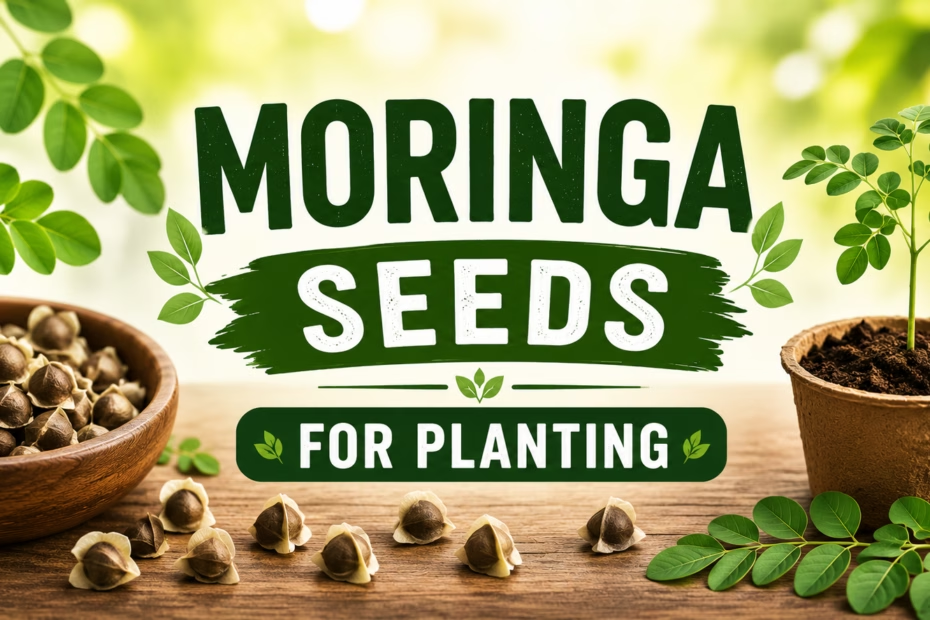
Everything you need to know to grow a moringa tree from seed — germination, soil, watering, pruning, and harvesting your own leaves, pods, and seeds
By MoringaWellness.org | Updated May 2026 | 18 min read
Quick Answer: Can You Grow Moringa from Seed?
Yes — moringa is one of the easiest trees to grow from seed. Moringa seeds have a germination rate of 85–95% under the right conditions. Seeds typically sprout within 5–14 days of planting. The tree grows extraordinarily fast — often reaching 3–5 meters in the first year — and can begin producing harvestable leaves within 60 days of germination. Moringa thrives in warm, tropical, and subtropical climates and can also be grown in containers indoors in cooler regions.
Why Growing Moringa from Seed Is Worth It
You already know what moringa can do for your health.
You’ve read about the 90+ nutrients, the complete protein, the iron, the antioxidants, the hormonal support, the energy benefits. You probably already buy moringa powder online or from a health store.
But here’s something most moringa users never consider: you can grow your own.
And growing moringa from seed is not complicated. It’s not expensive. It doesn’t require a large garden or advanced horticultural knowledge. Moringa is called the “miracle tree” partly because of its extraordinary resilience — it grows in poor soil, survives drought, tolerates neglect, and produces harvestable nutrition within weeks of planting.
A single moringa tree can produce kilograms of fresh leaves every year — enough for daily smoothies, cooking, and making your own powder. You also get access to fresh moringa pods (drumsticks) that are rarely available in Western supermarkets, and you can harvest seeds from your own tree to replant or share.
This guide covers everything you need to know about moringa seeds for planting — from selecting the right seeds, to germination, to growing in different climates, to harvesting and beyond.
Understanding the Moringa Plant
Before planting, understanding the plant helps you make better decisions about growing conditions and care.
Botanical Profile
Scientific name: Moringa oleifera
Family: Moringaceae
Native range: Sub-Himalayan regions of northern India, Pakistan, Bangladesh, and Afghanistan
Growth habit: Fast-growing deciduous tree
Mature height: 5–12 meters (can be maintained shorter through regular pruning)
Lifespan: 20+ years with proper care
Climate preference: Tropical and subtropical — USDA hardiness zones 9–11 for outdoor growing
Drought tolerance: Exceptional — one of the most drought-resistant food trees known
Soil tolerance: Wide — grows in poor, sandy, and clay soils; prefers well-draining conditions
The Moringa Growth Cycle
Understanding the moringa growth cycle helps you plan your planting and harvesting schedule:
Germination: 5–14 days after planting
Seedling stage: Days 14–60 — rapid stem and leaf development
Juvenile tree: Months 2–6 — first leaves ready for harvest at approximately 60 days
First flowering: Typically 6–8 months from seed in optimal conditions
First pod production: 8–12 months from seed
Full production: Year 2 onwards — maximum leaf, pod, and seed yield
Choosing the Right Moringa Seeds for Planting
Not all moringa seeds are created equal. The quality of your seed determines germination success, tree health, and ultimately the nutritional quality of your harvest.
What to Look For in Moringa Seeds
Freshness is the single most important factor. Moringa seed viability declines rapidly with age. Fresh seeds — harvested within the previous 6–12 months — have germination rates of 85–95%. Seeds older than 12 months may drop to 50% or lower. Seeds older than 2 years may fail to germinate at all.
When purchasing moringa seeds for planting, look for:
✅ Harvest date clearly labeled — avoid seeds with no date or a date older than 12 months
✅ Wings intact — fresh moringa seeds have three papery white wings attached. Broken or missing wings indicate old or poorly stored seeds
✅ Firm and plump seed body — the brown seed inside the wing should feel solid and heavy, not shriveled or lightweight
✅ Pale tan to brown color — very dark brown or black seeds may indicate age or damage
✅ From a reputable source — seeds from specialist herb and tropical plant nurseries, reputable online seed companies, or directly from existing moringa growers
✅ Specified as Moringa oleifera — there are 13 species of moringa; M. oleifera is the species grown for nutritional use
Where to Buy Moringa Seeds for Planting
Online specialty seed retailers: Many reliable retailers specialize in tropical and medicinal plants. Look for sellers who specify harvest dates and offer germination guarantees.
Local tropical nurseries: In warm climate regions (Florida, California, Hawaii, Texas, Arizona in the USA; most of South Asia, Southeast Asia, Africa, and the Caribbean) local nurseries often stock moringa seeds or seedlings.
Moringa farms: Some moringa farms sell seeds directly to home growers — these often have the freshest seeds available.
Existing moringa trees: If you know anyone growing moringa, mature pods left on the tree until fully dry will contain viable seeds. These are often the best quality seeds available.
Avoid: Generic garden centers in cold regions that sell moringa seeds without harvest dates, and very cheap seeds from unknown online sellers without reviews.
How Many Seeds to Buy
Always plant more seeds than you need trees. Even with fresh seeds a 15–20% failure rate is normal. Plan for:
- 1 tree desired: Buy 4–6 seeds
- 3 trees desired: Buy 8–12 seeds
- Container growing indoors: Buy 6–10 seeds per container location
- Large garden planting: Buy seeds at a ratio of 3:1 against desired trees
Understanding Moringa Seed Anatomy
Before planting, it helps to understand what you’re working with.
A fresh moringa seed consists of three parts:
The wings: Three papery, parchment-like wings arranged symmetrically around the seed. These serve as wind dispersal mechanisms in nature. For planting, these wings are often removed — though some growers plant with wings intact. Neither approach is wrong.
The seed coat: A hard, brown outer shell that protects the embryo. This coat needs to be softened before germination — either naturally through moisture or deliberately through scarification (see below).
The embryo: The living seed inside the coat — consisting of two large white cotyledons (seed leaves) and the embryonic root and shoot.
Pre-Germination Preparation: How to Prepare Moringa Seeds for Planting
Proper seed preparation dramatically improves germination success. There are three effective methods:
Method 1: Wing Removal and Direct Planting (Simplest)
Remove the papery wings by gently pinching and tearing them away from the seed body. Plant the winged seed immediately in moist soil. This is the simplest method and works well with fresh seeds.
Best for: Fresh seeds (less than 6 months old), experienced growers, warm planting conditions
Method 2: Water Soaking (Most Recommended)
This is the most widely recommended pre-germination treatment for moringa seeds — particularly for home growers.
Process:
- Remove the wings from the seeds
- Place seeds in a glass of room-temperature water
- Soak for 24 hours only — not longer. Over-soaking can cause the seed to rot
- After 24 hours, remove seeds from water
- Plant immediately — don’t let soaked seeds dry out
Why it works: The water softens the hard seed coat, allowing moisture to penetrate the embryo more easily and triggering germination signaling pathways.
Germination improvement: Soaking typically improves germination rates by 15–25% compared to direct planting of unsoaked seeds.
A study published in the Journal of Horticulture and Forestry confirmed that 24-hour water soaking produced the highest germination rates in Moringa oleifera compared to longer soaking periods or scarification alone.
Read: Journal of Horticulture and Forestry — Seed pre-treatment and moringa germination
Method 3: Scarification (For Older Seeds)
Scarification means lightly scratching or nicking the hard seed coat to allow moisture to penetrate more easily. This is most useful for seeds that are 6–18 months old and may have harder, less permeable seed coats.
Process:
- Gently rub the seed coat on fine-grit sandpaper (400–600 grit) for a few seconds
- Alternatively, use a nail file or knife to make a very small nick in the seed coat — avoiding the pointed end where the root emerges
- After scarification, soak in water for 12–24 hours
- Plant immediately
Caution: Be gentle. The goal is to slightly compromise the seed coat, not damage the embryo inside.
Float Test: Identifying Viable Seeds
Before investing time and soil in planting, do a simple viability test:
- Place seeds in a glass of water
- Wait 30 minutes
- Seeds that sink: viable — the embryo is intact and dense
- Seeds that float: likely non-viable — the embryo may be damaged, absent, or dead
This test is not 100% reliable — some viable seeds float initially before absorbing water — but it’s a useful quick screen for obviously dead seeds.
Germination Methods: How to Germinate Moringa Seeds
There are two primary germination approaches — direct outdoor planting and indoor germination. Each has advantages.
Method A: Direct Outdoor Planting
Best for: Warm climates (above 20°C / 68°F consistently), large gardens, experienced growers
Process:
- Prepare planting location (see soil preparation below)
- Pre-treat seeds using water soaking
- Plant seeds 2–3cm (about 1 inch) deep
- Space seeds 30–50cm apart if planting multiple (thin later to the strongest seedlings)
- Water gently and thoroughly
- Cover with a thin layer of mulch to retain moisture
- Water daily until germination — keep soil moist but not waterlogged
- Expect germination in 5–10 days in warm conditions
Advantages: No transplant shock, seeds adjust to local conditions from the start
Disadvantages: More vulnerable to extreme weather, pests, and drying out
Method B: Indoor Germination in Pots (Most Recommended for Beginners)
This is the most reliable method for first-time moringa growers and those in cooler climates.
What you need:
- Small pots or seedling trays (10–15cm diameter)
- Well-draining potting mix (see soil section below)
- Plastic wrap or a humidity dome
- A warm location (20–35°C / 68–95°F)
- Grow lights if natural light is limited
Process:
Step 1: Fill small pots with moist, well-draining potting mix
Step 2: Pre-treat seeds with 24-hour water soak
Step 3: Plant one seed per pot at a depth of 2–3cm (approximately twice the seed’s diameter)
Step 4: Cover with a thin layer of soil and water gently
Step 5: Cover each pot loosely with plastic wrap or a humidity dome to retain moisture
Step 6: Place in the warmest location available — ideally 25–35°C (77–95°F). A heat mat under the pots dramatically improves germination speed and success
Step 7: Check daily. Keep soil consistently moist — not wet. Remove the plastic cover once seedlings emerge
Step 8: Once seedlings reach 10–15cm tall and have several sets of true leaves (typically 3–4 weeks after germination), they can be transplanted outdoors in warm climates or moved to larger containers
Germination timeline:
- 25–30°C (77–86°F): Germination in 5–7 days
- 20–25°C (68–77°F): Germination in 7–12 days
- Below 20°C (68°F): Germination may take 14–21 days or fail entirely
Method C: The Paper Towel Method
A popular method for checking seed viability before committing to soil:
- Moisten a paper towel — damp but not dripping
- Place pre-soaked seeds on one half of the towel
- Fold the other half over the seeds
- Place in a sealed plastic bag
- Keep in a warm location (25–30°C)
- Check daily — seeds should show a white root tip within 3–7 days
- Once the root tip appears (approximately 2–5mm long) plant immediately in soil — handle gently to avoid breaking the delicate root
Advantage: You only plant seeds that are actually germinating — eliminates waste of potting mix and space on non-viable seeds
Soil Requirements: What Moringa Needs to Thrive
Moringa is remarkably tolerant of poor soils — one of the reasons it’s been called a miracle tree. But understanding its preferences helps you give it the best start.
Ideal Soil Characteristics
Drainage above all else: Moringa’s single greatest soil requirement is good drainage. It is highly susceptible to waterlogging — roots sitting in wet soil will rot quickly, killing even established trees. Well-draining soil is non-negotiable.
pH: Moringa thrives in slightly acidic to neutral soil — pH 6.0–7.5. It tolerates mildly alkaline conditions (up to pH 8.0) but struggles below pH 5.5.
Texture: Sandy loam is ideal — it provides drainage, some water retention, and good root penetration. Sandy soils work well with regular watering. Clay soils require amendment.
Organic matter: Moringa doesn’t need rich soil — it’s adapted to nutrient-poor conditions. However adding moderate amounts of well-composted organic matter improves establishment and early growth.
Depth: Moringa develops a deep taproot. Ensure at least 60cm of uncompacted soil depth for outdoor planting. Container growing requires pots at least 45cm deep.
Soil Preparation for Outdoor Planting
For sandy or loam soils (minimal amendment needed):
- Dig planting hole 40–50cm wide and 40–50cm deep
- Mix excavated soil with 20–30% compost or well-rotted manure
- If soil is very sandy, add a small amount of perlite to improve water retention
- Backfill hole with amended mix before planting
For clay soils (significant amendment needed):
- Dig planting hole 60cm wide and 60cm deep
- Mix excavated clay with 40% coarse sand and 20% compost
- Add a layer of gravel or broken pottery at the bottom of the hole for drainage
- Ensure the planting area doesn’t collect water after rain — raised beds work well for clay soils
For raised beds:
An excellent option for gardens with poor drainage or clay soils. Build raised beds at least 30–40cm deep with a mix of:
- 60% good quality topsoil
- 25% compost
- 15% coarse sand or perlite
Container and Pot Soil Mix
For container growing moringa (indoors or on patios), use:
- 50% good quality potting mix
- 25% coarse sand or perlite
- 25% compost or aged manure
Avoid heavy, peat-based potting mixes that retain too much water. Moringa in containers is highly susceptible to overwatering — drainage holes are essential.
Climate Requirements and Growing Zones
Ideal Climate for Moringa
Moringa is a tropical and subtropical plant. Its ideal growing conditions are:
Temperature: 25–35°C (77–95°F) for optimal growth. Tolerates up to 48°C (118°F) in drought conditions. Growth slows below 18°C (64°F). Sensitive to frost — temperatures below 0°C (32°F) will kill unprotected plants.
Rainfall: 250–3,000mm annually. Moringa’s drought tolerance means it can survive as little as 250mm of annual rainfall. However regular irrigation in drier conditions improves growth and leaf production dramatically.
Humidity: Adaptable. Grows in both humid tropical and dry arid conditions.
Sunlight: Full sun — minimum 6 hours of direct sunlight daily. In partial shade moringa grows but produces fewer leaves and delayed flowering.
Growing Moringa by Region
Ideal outdoor regions (year-round growing):
India, Pakistan, Bangladesh, Sri Lanka, Philippines, Indonesia, Thailand, Vietnam, West and East Africa, Caribbean islands, Florida (southern), Hawaii, Puerto Rico, tropical Australia, and much of Central and South America.
Suitable outdoor regions (seasonal growing or with protection):
Southern California, Arizona, Texas (Gulf Coast), Mediterranean Europe, South Africa (warm coastal regions), New Zealand (northern regions).
Container growing required:
United Kingdom, Northern Europe, Canada, Northern USA, Japan, Korea — moringa can be grown successfully in containers that are brought indoors during cold months.
Growing Moringa in Cold Climates
This is one of the most asked questions about moringa seeds for planting — and the answer is genuinely encouraging.
Moringa can be grown in cold climates as a container plant or as a seasonal plant that is cut back and protected over winter. Several strategies work:
Strategy 1: Container Growing
Grow moringa in large containers (45–75 liters) that can be moved indoors when temperatures drop below 10°C (50°F). Indoors, moringa needs a south-facing window or supplemental grow lighting (at least 6 hours of bright light daily).
Strategy 2: Annual Replanting
In climates with long warm summers, treat moringa as an annual. Plant seeds indoors 6–8 weeks before the last frost date. Move outdoors after last frost. Harvest leaves all summer. Compost the plant before the first frost and restart the following year. This approach still produces abundant leaf harvests.
Strategy 3: Cut-Back and Protect
In borderline climates (USDA Zone 9, Mediterranean regions), cut moringa trees back to 60–90cm in autumn. Cover the root zone with thick mulch (15–20cm). Wrap the remaining trunk with frost cloth. In many Zone 9 climates, moringa survives winter as a rootstock and regrows vigorously in spring.
Strategy 4: Greenhouse Growing
A greenhouse or polytunnel in cold climates enables year-round moringa growing. Even an unheated polytunnel extends the growing season significantly in temperate regions.
Planting Guide: Step-by-Step Instructions
Outdoor Planting (Direct Ground)
Best time to plant: After the last frost date in your region, when soil temperature is consistently above 20°C (68°F). In tropical regions, plant at the beginning of the rainy season for natural irrigation support.
Spacing: For single trees: minimum 3–4 meters from other trees and structures. For a moringa hedge or plantation: 1 meter apart (plants will be maintained through regular heavy pruning). For food forest integration: 5+ meters apart.
Step-by-step process:
- Prepare the site: Choose a location with full sun (6+ hours daily) and good drainage. Avoid low-lying areas that collect water after rain.
- Prepare the soil: Amend as described in the soil section above. Create a slightly raised mound at the planting site to improve drainage.
- Pre-treat seeds: Soak in water for 24 hours.
- Plant seeds: Place 2–3 seeds per planting location at 2–3cm depth. Planting multiple seeds ensures at least one germinates.
- Water gently: Use a watering can with a gentle rose head — not a strong jet that displaces seeds. Water until the soil is thoroughly moist.
- Mulch: Apply 5–8cm of organic mulch (straw, wood chips, or leaf mold) around the planting area — keeping mulch 5cm away from the seed location itself. Mulch retains moisture and regulates soil temperature.
- Mark the location: Use plant labels so you don’t accidentally disturb the planting area.
- Water daily: Keep soil consistently moist until germination, then water every 2–3 days in dry conditions.
- Thin seedlings: Once seedlings reach 15–20cm, select the strongest one per location and remove the others (cut at soil level — don’t pull, as this disturbs the remaining seedling’s roots).
Container Planting Guide
Container growing is the most accessible method for most people in the world — especially those in cool or urban environments.
Container selection:
- Minimum size for one tree: 40 liters (approximately 45cm diameter x 50cm deep)
- Preferred size: 75–100 liters for maximum growth
- Material: Any — terracotta, plastic, fabric grow bags (fabric bags are excellent for moringa — they air-prune roots, preventing circling)
- Essential: Large drainage holes at the bottom
Planting process:
- Fill container with well-draining moringa soil mix (see soil section)
- Leave 5cm of space at the top for watering
- Make a 3cm deep hole in the center
- Plant one pre-soaked seed
- Cover with soil and water gently
- Place in the warmest, sunniest location available
- Use a heat mat under the container if planting in cool conditions
Container care specifics:
- Water when the top 2–3cm of soil feels dry — never let the container sit in a saucer of water
- Feed with a balanced liquid fertilizer every 2–4 weeks during the growing season
- Repot to a larger container annually as the tree grows
- Rotate the container every few days to ensure even light exposure on all sides
Watering Guide: Getting It Right
Watering is where most moringa growing failures occur — almost always from overwatering rather than underwatering.
The Golden Watering Rule
Moringa would rather be too dry than too wet.
It is adapted to drought. Its deep taproot can access groundwater that surface-planted trees cannot. Its leaves will visibly droop as a signal that it needs water — and will recover quickly once watered. Waterlogging, on the other hand, causes root rot that can kill a tree within days.
Watering Schedule by Growth Stage
Seeds and seedlings (Weeks 1–4):
Keep soil consistently moist — not wet. Water daily in warm, dry conditions. Reduce to every 2 days if temperatures are cool or humidity is high. The soil surface should never fully dry out during this stage.
Young trees (Months 1–6):
Water every 2–3 days in dry conditions. Allow the top 3–5cm of soil to dry slightly between waterings. In rainy conditions, reduce or eliminate supplemental watering.
Established trees (6+ months):
Water deeply once per week in dry conditions. Moringa’s deep taproot can sustain the tree through several weeks of drought once established. Deep, infrequent watering encourages deeper root development and greater drought tolerance.
Container moringa:
Containers dry out faster than ground soil. Check containers every 1–2 days. Water when the top 3–5cm feels dry. Ensure excess water drains completely — never let the container sit in standing water.
Signs of Overwatering
- Yellowing leaves starting from the bottom of the plant
- Soft, mushy stems at the soil level
- Soil surface staying wet 3+ days after watering
- Foul smell from the soil
- Root rot visible when plant is removed from container
Action: If overwatered, stop watering immediately. If in a container, remove the plant and inspect roots. Trim any black or mushy roots. Repot in fresh, dry soil with additional perlite. Allow the soil to dry significantly before watering again.
Signs of Underwatering
- Leaves drooping and curling
- Leaf color becoming dull or gray-green
- Leaves falling prematurely
- Very dry, pulling-away-from-edges soil
Action: Water deeply and immediately. Moringa recovers quickly from underwatering — often within hours of adequate watering.
Fertilizing Moringa: What It Needs and When
Moringa is adapted to grow in nutrient-poor soils — which means it doesn’t need heavy fertilization. But the right nutrients at the right times significantly improve leaf production and tree health.
What Moringa Needs
Nitrogen (N): The most important nutrient for leaf production. Nitrogen drives leafy green growth. Signs of nitrogen deficiency: pale yellow-green leaves, slow growth.
Phosphorus (P): Important for root development and flowering. Particularly important in the first few months when establishing the root system.
Potassium (K): Supports overall plant health, disease resistance, and drought tolerance.
Micronutrients: Moringa responds well to applications of zinc, iron, and magnesium — nutrients that are often depleted in sandy soils.
Fertilization Schedule
At planting: Mix well-composted manure or compost into the soil at planting — this provides gentle, slow-release nutrition without risk of burning young roots.
Months 1–3 (seedling establishment): Apply a balanced liquid fertilizer (e.g., 10-10-10 NPK) at half strength every 2–3 weeks. This supports both root and leaf development without overwhelming a young plant.
Months 3–12 (active growth): Switch to a nitrogen-rich fertilizer (higher N number — e.g., 20-10-10) to support rapid leaf production. Apply every 2–4 weeks during the growing season.
Mature trees (Year 2+): Apply a balanced slow-release fertilizer twice per year (spring and summer). Supplement with compost mulch applied annually around the base of the tree.
Organic Fertilization Options
For those preferring organic approaches — which is particularly relevant for growing moringa for nutritional consumption:
- Compost tea: Excellent all-purpose organic fertilizer — apply every 2 weeks during growing season
- Worm castings: Mix into soil at planting or top-dress around established plants
- Well-rotted manure: Applied as a mulch around the base, it slowly releases nutrients with each watering
- Fish emulsion: High nitrogen organic fertilizer — dilute to half strength and apply monthly
- Wood ash: Provides potassium and raises soil pH if it’s too acidic — apply sparingly
Pruning Moringa: The Key to Productive Growing
Pruning is the most underappreciated aspect of growing moringa — and the practice that makes the biggest difference in leaf production, tree manageability, and long-term health.
Why Moringa Needs Regular Pruning
Left unpruned, moringa trees grow tall very quickly — easily reaching 5–6 meters in the first two years. At this height, leaf harvesting becomes impractical and the lower branches become sparse as the tree concentrates growth at the top canopy.
Pruning keeps moringa at a harvestable height, encourages bushier branching with more leaf-producing side shoots, and actually increases total leaf yield by stimulating new growth.
The First Pruning: Topping
When: When the seedling reaches approximately 60–90cm (about 2–3 feet) tall — usually around 6–8 weeks after planting.
What to do: Cut the main stem to 30–45cm height using clean, sharp pruning shears. This is called “topping” or “beheading” and sounds dramatic — but it’s the most important single action for productive moringa growing.
What happens: The tree responds by sending out multiple lateral branches from just below the cut point. Instead of one upward stem you now have 3–5 branches. Each of those branches produces leaves — immediately multiplying your harvest capacity.
Common mistake: Many first-time growers are reluctant to cut their young moringa tree. Don’t hesitate. The tree will respond within 1–2 weeks with vigorous new branching.
Ongoing Pruning Maintenance
After the first topping, continue pruning every 4–6 weeks during the growing season:
- Maintain the tree at a harvestable height of 1–2 meters
- Remove any vertical branches that are growing strongly upward — redirect energy into horizontal, branching growth
- Remove dead, damaged, or crossing branches
- After each pruning, leaves will regrow within 2–3 weeks
Coppicing (Hard Pruning)
Coppicing means cutting the entire tree back to 30–50cm from ground level. This is appropriate for:
- Annual end-of-season management in seasonal climates
- Reinvigorating an old or leggy tree
- Managing a plantation where complete regrowth is desired
Moringa responds exceptionally well to coppicing — regrowing from the rootstock with remarkable vigor.
Pruning for Seed Production
If your goal is to harvest seeds rather than maximize leaves, manage pruning differently
Pests and Diseases: What to Watch For
Moringa is remarkably resistant to most pests and diseases — one of its great advantages as a food plant. However some issues do arise.
Common Pests
Aphids:
Small soft-bodied insects that cluster on new growth and undersides of leaves. They suck sap and can cause leaf curling and stunted growth.
Treatment: Blast with water to dislodge. Apply neem oil solution (2 tablespoons neem oil + 1 teaspoon liquid soap in 1 liter water). Introduce beneficial insects like ladybugs.
Caterpillars:
Various moth and butterfly caterpillars feed on moringa leaves — particularly in tropical regions. Damage appears as holes or completely stripped branches.
Treatment: Hand-pick and remove. Apply Bacillus thuringiensis (Bt) — a natural bacterial insecticide safe for humans and beneficial insects.
Mites:
Spider mites can be a problem in hot, dry conditions — particularly on container-grown moringa indoors.
Treatment: Increase humidity around the plant. Apply neem oil spray. Ensure adequate watering.
Termites:
In tropical regions, termites can attack the roots and base of established moringa trees — particularly in dry conditions.
Treatment: Diatomaceous earth applied around the base. Keep mulch away from the trunk.
Common Diseases
Root rot (Pythium, Phytophthora):
The most common moringa disease — caused by waterlogged, poorly drained soil. Appears as wilting despite moist soil, yellowing leaves, and soft brown roots.
Prevention: Always ensure excellent drainage. Never overwater.
Treatment: Remove affected roots, repot in fresh well-draining soil, reduce watering dramatically.
Damping off:
Fungal disease affecting seedlings — the stem collapses at soil level. Most common in cool, damp conditions with poor air circulation.
Prevention: Use well-draining seed-starting mix, don’t overwater seedlings, ensure good air circulation.
Powdery mildew:
White powdery coating on leaves — most common in humid conditions with poor air circulation.
Treatment: Improve air circulation, reduce leaf wetness, apply diluted neem oil or baking soda spray (1 teaspoon baking soda + 1 teaspoon liquid soap in 1 liter water).
General Pest Prevention Principles
- Maintain plant health through appropriate watering and fertilization — healthy plants resist pests far better
- Remove dead leaves and debris from around the base regularly
- Inspect new growth weekly for early pest detection
- Apply diluted neem oil as a preventative spray every 2–3 weeks during vulnerable growth periods
Harvesting: Leaves, Pods, Flowers, and Seeds
This is the reward for all your growing effort — and moringa is extraordinarily generous.
Harvesting Moringa Leaves
When to start: You can begin harvesting leaves as soon as the tree is 60–90cm tall and has been topped — usually 60–90 days from planting.
How to harvest: Use clean scissors or pruning shears to cut stems bearing leaves. You can harvest the entire stem (stripping leaves from it afterwards) or just strip individual leaves from the stem while it remains on the tree.
How much to harvest: Never remove more than one-third of the tree’s foliage at one time. This allows the tree to maintain enough leaf area for photosynthesis and quick recovery.
Harvest frequency: In warm growing conditions, leaves regrow within 2–3 weeks of harvesting. Regular harvesting — every 3–4 weeks — keeps the tree actively producing new leaf growth.
Best time of day to harvest: Early morning, when leaves are freshest and have the highest nutrient content. Avoid harvesting during the hottest part of the day.
Yield expectations:
- Year 1 (with regular pruning): 200–800 grams of fresh leaves per harvest
- Year 2+: 1–3 kilograms of fresh leaves per harvest
- Annual yield from one mature tree: 12–25 kilograms of fresh leaves per year
Making Your Own Moringa Powder from Homegrown Leaves
- Wash harvested leaves thoroughly in clean water
- Spread on clean drying racks or mesh screens in a shaded, well-ventilated location — never direct sun (UV and heat degrade nutrients)
- Alternatively, use a food dehydrator at maximum 40°C (104°F) to preserve heat-sensitive nutrients
- Dry until leaves crumble easily — typically 2–4 days in shade or 4–6 hours in a dehydrator
- Remove leaves from stems (the stems are too fibrous for powder)
- Blend dried leaves in a high-speed blender or food processor until a fine powder forms
- Sieve through a fine mesh to remove any remaining coarse material
- Store in an airtight glass jar in a cool, dark location
Yield ratio: Approximately 8–10 grams of fresh leaves produce 1 gram of dried powder — so 100 grams of dried moringa powder requires 800–1,000 grams of fresh leaves.
Harvesting Moringa Pods (Drumsticks)
Moringa pods typically appear 6–8 months after planting in optimal conditions and year 2 for trees in cooler or seasonal environments.
When to harvest: Young, tender pods at 30–45cm long are best for cooking — they should be firm, deep green, and snap cleanly when bent. As pods mature they become fibrous and stringy.
How to harvest: Cut pods cleanly with pruning shears. Don’t pull — you risk damaging the branch.
Uses: Fresh pods in soups, curries, and stir-fries. See our moringa fruit vs powder guide for detailed nutritional and culinary information.
Harvesting Moringa Flowers
Moringa flowers appear before or alongside pods — clusters of small, cream-white flowers with a pleasant, slightly sweet fragrance. They are:
- Edible raw or cooked — mild flavor, slightly sweet
- Excellent in salads — add directly as a garnish
- Traditional medicine use — consumed as a tea for anti-inflammatory benefits
- Pollinator attraction — moringa flowers attract bees and butterflies
Harvest flowers by gently picking individual florets or small clusters. Use fresh or dry for tea.
Harvesting Moringa Seeds for Replanting
To harvest seeds from your own tree:
- Allow some pods to remain on the tree after they reach full size
- Wait until pods turn brown and dry — typically 6–8 weeks after pod formation
- Harvest dry pods by cutting from the branch
- Break open dried pods and remove seeds with their wings
- Dry harvested seeds further in shade for 2–3 days
- Store in a paper envelope or breathable container in a cool, dry location
- Use within 6–12 months for best germination results
Seed storage: Do NOT store moringa seeds in sealed plastic bags — moisture trapped inside causes fungal development and kills the embryo. Paper envelopes or cloth bags are ideal.
Growing Moringa Indoors: Complete Guide
For the millions of moringa users in cold climates, indoor growing is the most practical option. Here’s everything you need to succeed.
Can Moringa Grow Indoors?
Yes — though with some important considerations. Moringa is a tropical tree that naturally grows to 10+ meters in full sunlight. Indoors, it will grow much more slowly and remain significantly smaller. But it can still produce meaningful leaf harvests year-round in a warm, well-lit home.
Light Requirements for Indoor Moringa
Light is the primary challenge for indoor moringa growing. Requirements:
Natural light: A south-facing window (in the northern hemisphere) or north-facing window (in the southern hemisphere) that receives at least 6 hours of direct or very bright indirect light daily.
Grow lights: If natural light is insufficient — which it is in most homes in winter at latitudes above 40° — supplemental grow lighting is essential.
Recommended grow lights:
- Full-spectrum LED grow lights (look for lights covering 400–700nm spectrum)
- Keep lights 15–30cm above the canopy
- Run for 14–16 hours per day on a timer
- Relatively affordable — a basic full-spectrum LED suitable for one moringa tree costs $30–$80
Temperature for Indoor Growing
Moringa growing indoors needs temperatures consistently above 18°C (65°F) — and ideally 22–30°C (72–86°F). Most heated homes are adequate.
Avoid placing moringa near:
- Cold drafts from windows or doors
- Air conditioning vents
- Heating vents (can cause excessive drying)
Container Size for Indoor Moringa
Start in a 10-liter pot. Repot to larger containers as the tree grows:
- Months 1–3: 10 liters
- Months 3–12: 25–40 liters
- Year 2+: 50–75 liters
Larger containers support larger trees with higher leaf yields. Fabric grow bags are particularly good for indoor moringa because they air-prune roots and prevent the tree from becoming root-bound.
Pruning Indoor Moringa
Indoor moringa must be pruned more aggressively than outdoor trees to maintain a manageable size and encourage bushy, productive growth. Top the plant at 60cm and maintain it at 1–1.5 meters height through regular pruning every 4–6 weeks.
Leaf Yield from Indoor Moringa
Indoor leaf yields are lower than outdoor trees — typically:
- Small indoor tree (1–1.5m): 100–300 grams fresh leaves per harvest
- With grow lights and consistent care: 4–6 harvests per year
- Annual indoor yield: 400–1,800 grams fresh leaves
This is enough to supplement your moringa powder use — particularly valuable as fresh leaves (not dried) have the highest vitamin C content.
Moringa Seed Oil: Harvesting and Uses
One additional harvest product deserves attention — moringa seed oil.
Moringa seeds contain approximately 35–40% oil by weight. This oil — known as ben oil — is one of the most stable vegetable oils available (due to its exceptional antioxidant content) and has been used for centuries in cosmetics, cooking, and skincare.
Extracting Moringa Seed Oil at Home
Small-scale home extraction is possible but requires a cold-press oil extractor (available for $100–$500 online). Process:
- Harvest fully mature, dry pods from the tree
- Shell pods and remove seeds
- Dry seeds further in shade for 1–2 weeks
- Remove seed wings and shells (optional for home extraction — cold pressing with shells produces slightly darker oil but is viable)
- Feed seeds through cold-press extractor
- Filter extracted oil through a fine mesh or coffee filter
- Store in dark glass bottles
Yield: Approximately 35–40ml of oil per 100g of dry seeds.
Uses of moringa seed oil:
- Culinary use — high smoke point, mild flavor, extremely stable
- Facial and body moisturizer — light, non-comedogenic, rich in oleic acid
- Hair treatment — nourishes scalp, reduces breakage
- Carrier oil for essential oil blends
Frequently Asked Questions About Moringa Seeds for Planting
How long does moringa take to grow from seed?
Moringa germinates in 5–14 days. The first leaves are ready for harvest approximately 60 days after germination. Pods appear at 6–8 months in optimal conditions. The tree reaches full productive capacity in Year 2.
Can moringa seeds be planted directly in the ground?
Yes — direct ground planting works well in warm climates where soil temperature is consistently above 20°C (68°F). Soak seeds for 24 hours before planting and keep soil moist until germination.
How deep should moringa seeds be planted?
Plant at 2–3cm depth — approximately twice the diameter of the seed. Too shallow and seeds dry out; too deep and the emerging seedling struggles to reach the surface.
How many moringa seeds should I plant per hole?
Plant 2–3 seeds per planting location to ensure at least one germinates. Once seedlings emerge, keep only the strongest one and remove the others by cutting at soil level.
Can I grow moringa in a pot?
Yes — moringa grows well in containers with a minimum volume of 40 liters and excellent drainage. Use a well-draining soil mix with added perlite or coarse sand.
How much water does moringa need?
Moringa needs moderate, consistent watering during establishment — daily in the first 2–4 weeks, then every 2–3 days for young trees. Established trees need deep watering once per week in dry conditions. Overwatering is far more damaging than underwatering.
Does moringa grow in winter?
In frost-free climates, moringa grows year-round but more slowly in cooler winter months. In cold climates, moringa must be grown as a container plant moved indoors for winter, or replanted annually from seed each spring.
How tall does moringa grow?
Without pruning, moringa can reach 5–12 meters in warm climates. With regular pruning, it can be maintained at 1–2 meters — ideal for home gardens and easy harvesting.
How long does a moringa tree live?
In appropriate climates, moringa trees can live for 20+ years with proper care. Productivity generally peaks in years 3–7 and can be maintained through regular pruning and fertilization.
Can I grow moringa from a cutting instead of seed?
Yes — moringa can also be propagated from hardwood cuttings. Cut a 45–90cm section of mature branch (at least 4–5cm diameter), allow the cut end to callous for 24 hours, then plant 30–45cm deep in well-draining soil. Cuttings can produce harvests faster than seeds — some growers prefer this method for guaranteed genetic replication of a productive parent tree.
Why aren’t my moringa seeds germinating?
Most common causes: seeds too old (check purchase date), soil too cold (below 20°C), overwatering causing rot, planting too deep, or non-viable seeds (failed float test). Try fresh seeds, ensure soil temperature above 25°C, use the paper towel germination method to verify viability before soil planting.
When should I harvest moringa leaves for the best nutrition?
Early morning harvesting from young, actively growing shoot tips produces the highest nutritional quality leaves. Young leaves have higher nutrient concentrations than mature leaves. Always harvest after the tree has been topped — the new growth produced after topping is the most nutritious.
Troubleshooting Common Moringa Growing Problems
| Problem | Most Likely Cause | Solution |
|---|---|---|
| Seeds not germinating after 14 days | Old seeds, cold soil, overwatering | Use fresh seeds, ensure 25°C+ soil temp, check drainage |
| Seedling collapses at soil level | Damping off fungus | Improve drainage and air circulation, reduce watering |
| Yellow leaves (lower first) | Overwatering or nitrogen deficiency | Reduce watering; apply nitrogen fertilizer |
| Yellow leaves (upper first) | Iron or zinc deficiency | Apply chelated iron/zinc foliar spray |
| Leaves drooping and curling | Underwatering | Water deeply immediately |
| Slow growth | Insufficient light, cold temperature, poor soil | Increase light, ensure warmth, fertilize |
| Leggy, tall, sparse leaves | Insufficient light or no pruning | Increase light, top the plant |
| Leaf holes | Caterpillars or beetles | Hand-pick pests, apply Bt spray |
| White powder on leaves | Powdery mildew | Improve air circulation, apply neem oil |
| Roots visible above soil | Pot-bound, needs repotting | Repot to next size container |
| Tree not flowering after 12 months | Insufficient light, cold, or pruning too hard | Reduce pruning, ensure full sun, check temperature |
The Bottom Line: Growing Moringa from Seed
Growing moringa from seed is one of the most rewarding things a health-conscious gardener can do.
It starts with a small brown seed and becomes, within weeks, a living source of some of the most nutritionally complete food available on the planet. Within 60 days you’re harvesting fresh leaves. Within a year you have fresh drumstick pods that your local supermarket has never heard of. Within two years you have a mature, producing tree that provides year after year of fresh moringa.
The key success factors are simple:
✅ Buy fresh seeds — harvest date within 12 months, wings intact
✅ Soak for 24 hours before planting — improves germination by 15–25%
✅ Ensure drainage — waterlogging kills moringa faster than anything else
✅ Provide warmth and sun — minimum 20°C soil temperature and 6 hours daily sun
✅ Top the plant at 60–90cm — the single most important action for productive growth
✅ Don’t overwater — moringa would rather be dry than wet
✅ Harvest regularly — regular harvesting stimulates new growth and increases total yield
Whether you’re growing one tree in a container on your balcony or planting a backyard grove in a warm climate — moringa will reward your effort generously, year after year.
For everything you can do with the leaves once you start harvesting, visit our complete moringa recipes guide, our how to use moringa powder guide, and our moringa powder benefits guide.
Start with one seed. Grow one tree. And see what 4,000 years of human nutritional wisdom looks like in your own garden.
References and Further Reading
- Fuglie, L.J. (2001). The Miracle Tree: Moringa oleifera — Natural Nutrition for the Tropics. Church World Service.
- Fahey, J.W. (2005). Moringa oleifera: A Review of the Medical Evidence for Nutritional, Therapeutic, and Prophylactic Properties. Trees for Life Journal. tfljournal.org
- Leone, A. et al. (2015). Cultivation, Genetic, Ethnopharmacology, Phytochemistry and Pharmacology of Moringa oleifera Leaves. International Journal of Molecular Sciences. doi.org/10.3390/ijms16023929
- Foidl, N. et al. (2001). The Potential of Moringa oleifera for Agricultural and Industrial Uses. The Miracle Tree: The Multiple Attributes of Moringa.
- Palada, M.C. & Chang, L.C. (2003). Suggested Cultural Practices for Moringa. AVRDC Publication.
- Price, M.L. (2000). The Moringa Tree. ECHO Technical Note.
- USDA Plants Database — Moringa oleifera. plants.usda.gov
- FAO (2014). Moringa: A Multi-Purpose Tree. Food and Agriculture Organization of the United Nations.
- Olson, M.E. & Fahey, J.W. (2011). Moringa oleifera: A Multipurpose Tree Rediscovered. Journal of the Association for the Study and Application of Traditional Knowledge.
This article is for informational and educational purposes only. Growing conditions vary significantly by region, climate, and soil type. Results may differ from those described. Always consult local agricultural extension services for region-specific growing guidance.
© 2026 MoringaWellness.org — All rights reserved.