Quick Answer: Moringa vs Ashwagandha for Energy
When comparing moringa vs ashwagandha for energy, both plants work — but through completely different mechanisms. Ashwagandha reduces the stress and cortisol that drain your energy. Moringa directly feeds your cells the iron, B vitamins, and amino acids they need to produce energy in the first place. If your low energy comes from stress and poor sleep, ashwagandha wins. If it comes from nutritional gaps, fatigue, or poor diet, moringa wins. For most people, the real answer is that both together create the most complete natural energy system available.
Why This Comparison Matters in 2026
Every week, thousands of people type some version of this into Google or ask ChatGPT directly:
“What’s better for energy — moringa or ashwagandha?”
And most of the answers they get are vague, surface-level, and written by people who’ve never looked at the actual research.
This article is different.
Moringa vs ashwagandha for energy is one of the most important comparisons in the natural supplement world right now — because both plants are having a massive moment. Ashwagandha has been all over TikTok and wellness podcasts for years. Moringa is quickly catching up as people discover it’s not just a trendy green powder but one of the most nutrient-dense plants ever studied.
Both are ancient. Both are backed by modern science. Both genuinely work.
But they work in completely different ways. And understanding that difference is what will help you make the right choice for your body, your lifestyle, and your specific energy problem.
By the end of this article, you’ll know exactly how each plant works, what the research actually says, who each one is best for, how to use them correctly, and whether combining them makes sense.
Let’s start at the beginning.
What Is Moringa? A Quick Overview
Moringa oleifera — also called the drumstick tree or miracle tree — is a fast-growing plant native to northern India, Pakistan, and parts of sub-Saharan Africa. Its leaves have been used in Ayurvedic and African traditional medicine for over 4,000 years.
The leaves are dried at low temperatures and ground into a fine green powder. That powder is extraordinarily dense in nutrients. According to a comprehensive review published in Phytotherapy Research, moringa leaf contains over 90 nutrients and 46 antioxidants.
Here’s what one tablespoon (7 grams) of moringa powder delivers:
- Iron: 11% of your daily recommended intake
- Vitamin C: 12% RDI
- Vitamin A: 19% RDI
- Magnesium: 8% RDI
- Potassium: 9% RDI
- B6: Meaningful amounts supporting energy metabolism
- All 9 essential amino acids — making it a complete plant protein
That combination of iron, B vitamins, and complete amino acids is exactly why moringa is so powerful for energy. These aren’t stimulants. They’re the raw materials your cells need to produce energy at a fundamental biological level.
Read: Phytotherapy Research — Moringa oleifera: A review of nutritional and therapeutic properties
What Is Ashwagandha? A Quick Overview
Ashwagandha (Withania somnifera) is a small shrub native to India, North Africa, and the Mediterranean. Its root has been a cornerstone of Ayurvedic medicine for over 3,000 years, where it’s classified as a rasayana — a rejuvenating tonic for longevity and vitality.
The active compounds in ashwagandha are called withanolides — a group of steroidal lactones that give the plant its adaptogenic properties.
Ashwagandha is what’s called an adaptogen — a plant that helps your body adapt to stress. It doesn’t stimulate you like caffeine. Instead, it works by regulating your body’s stress response system, which is one of the biggest hidden drains on human energy.
A 2019 randomized controlled trial published in Medicine found that ashwagandha root extract significantly reduced cortisol levels, improved stress resistance, and enhanced overall quality of life in chronically stressed adults.
Read Also Evidence-Based Ashwagandha Benefits: What Research Really Shows (2026 Clinical Guide)
How Each Plant Produces Energy: The Core Difference
This is the most important section of this entire article. Understanding how each plant works will tell you immediately which one you need.
How Moringa Produces Energy
Moringa works by feeding your cells directly.
Think of your body like a car engine. The engine needs fuel, oil, spark plugs, and coolant to run properly. If any one of those is missing, performance suffers.
Moringa provides the nutritional equivalent of all four at once.
Iron is the most critical piece. Iron is required to make hemoglobin — the protein in red blood cells that carries oxygen from your lungs to every cell in your body. Without enough iron, your cells literally cannot produce energy efficiently. You feel tired, foggy, and sluggish. This is called iron-deficiency fatigue, and it’s one of the most common nutritional deficiencies in the world — especially in women.
A study published in the Journal of Food Science and Technology found that moringa leaf powder supplementation significantly improved iron status and reduced fatigue symptoms in women over a 90-day period.
Read: Journal of Food Science and Technology — Moringa supplementation and iron status
B vitamins — particularly B6 and folate, both present in moringa — are essential cofactors in energy metabolism. They help convert the food you eat into ATP (adenosine triphosphate) — the actual energy currency your cells use to do everything.
Amino acids — moringa contains all nine essential amino acids including leucine and isoleucine (branched-chain amino acids), which are directly involved in energy metabolism and muscle function.
The result: Moringa energy feels steady, calm, and sustained. No spike. No crash. Just consistent, well-fueled cellular function.
How Ashwagandha Produces Energy
Ashwagandha works by removing the barriers that block your energy.
Here’s the key insight most people miss: chronic stress is one of the biggest energy thieves in the modern world. When you’re stressed, your body releases cortisol — your primary stress hormone. In short bursts, cortisol is useful. But when it’s chronically elevated, it:
- Disrupts sleep quality (so you never fully recover)
- Suppresses thyroid function (slowing metabolism)
- Dysregulates blood sugar (causing energy crashes)
- Impairs mitochondrial function (reducing cellular energy production)
- Depletes neurotransmitters like dopamine and serotonin (causing mental fatigue)
Ashwagandha’s withanolides work on the hypothalamic-pituitary-adrenal (HPA) axis — the central stress regulation system in your brain. By modulating this system, ashwagandha reduces cortisol, improves sleep quality, and essentially removes the main thing that was draining your energy in the first place.
A landmark double-blind, placebo-controlled study published in the Indian Journal of Psychological Medicine found that ashwagandha root extract reduced cortisol levels by 27.9% and significantly improved stress, anxiety, and energy levels compared to placebo after 60 days.
A separate meta-analysis published in the Journal of the International Society of Sports Nutrition analyzed eight randomized controlled trials and found ashwagandha significantly improved VO2 max, muscular strength, and recovery — all markers of physical energy and endurance.
Read: Journal of International Society of Sports Nutrition — Ashwagandha and athletic performance
The result: Ashwagandha energy feels like lifting a weight off your chest. Less mental fog. Better sleep. More resilience. Calmer but more capable.
Moringa vs Ashwagandha for Energy: Head-to-Head Comparison
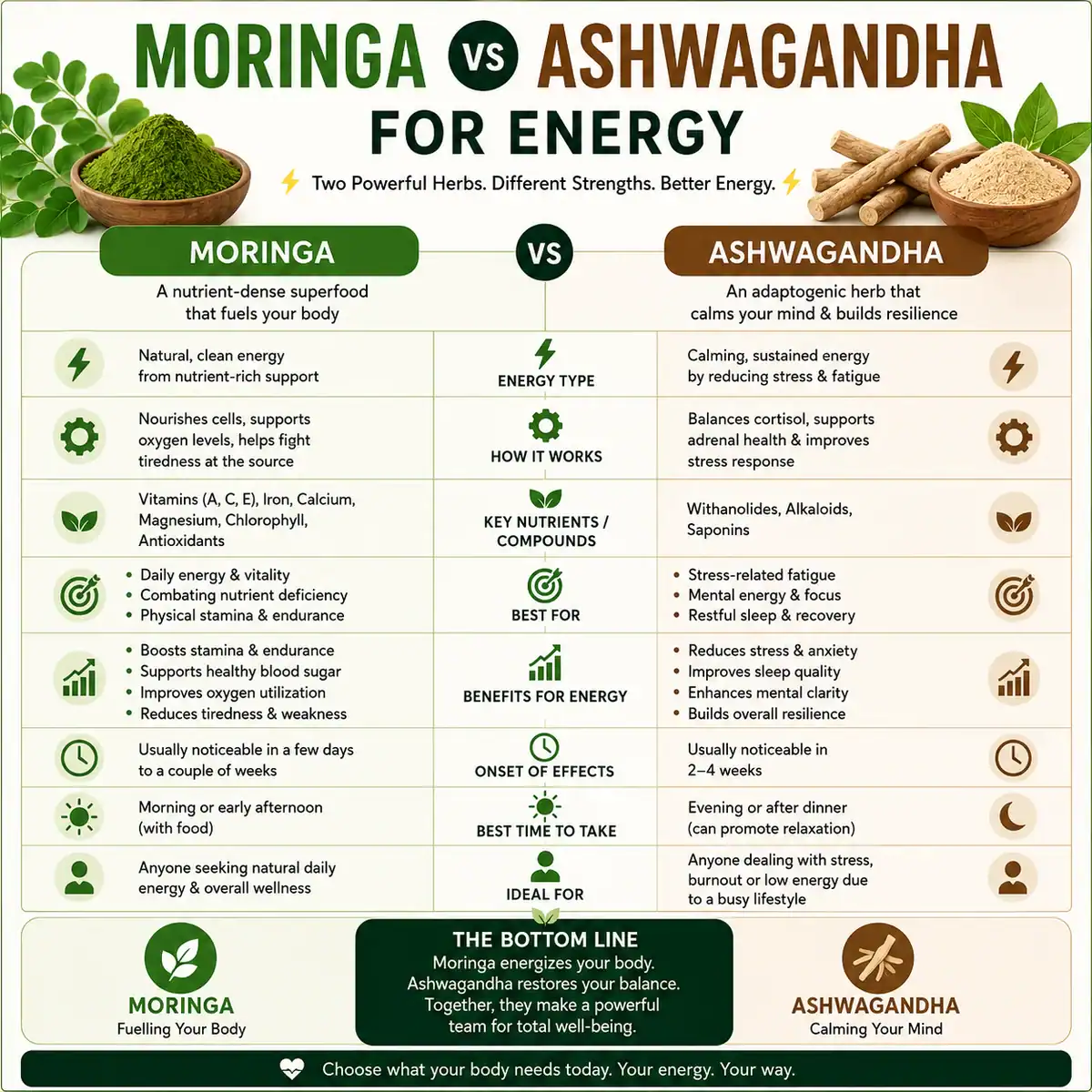
Let’s put them side by side across the areas that matter most.
Energy Mechanism
Moringa: Provides the raw nutritional materials (iron, B vitamins, amino acids) for cellular energy production. Works like premium fuel for your engine.
Ashwagandha: Reduces cortisol and stress that drain energy. Works like fixing a leak in your engine rather than adding more fuel.
Winner: Depends on your root cause. Nutritional fatigue → Moringa. Stress fatigue → Ashwagandha.
Speed of Results
Moringa: Many people notice more energy within 7–14 days of consistent use, particularly if they have underlying iron or B vitamin deficiencies.
Ashwagandha: Most clinical studies show significant results at the 4–8 week mark. It takes time to regulate the HPA axis and reduce chronic cortisol.
Winner: Moringa for faster initial results.
Physical Energy and Athletic Performance
Moringa: Supports muscle function through complete amino acids and reduces exercise-induced oxidative stress. A 2021 study in Nutrients found moringa’s polyphenols significantly reduced markers of oxidative stress following intense physical exercise.
Read: Nutrients (2021) — Moringa and exercise-induced oxidative stress
Ashwagandha: Has stronger direct evidence for athletic performance. Multiple studies show it improves VO2 max, muscle strength, and recovery time. A randomized controlled trial published in the Journal of the International Society of Sports Nutrition found ashwagandha supplementation produced significantly greater gains in muscle strength and recovery compared to placebo.
Winner: Ashwagandha for athletic performance specifically.
Mental Energy and Cognitive Function
Moringa: Contains chlorogenic acid and quercetin — antioxidants that protect brain cells from oxidative damage. Vitamin E and iron support healthy brain oxygenation. Users commonly report improved mental clarity, particularly in the morning.
Ashwagandha: Has more direct evidence for cognitive function. A randomized controlled trial published in the Journal of Dietary Supplements found ashwagandha significantly improved immediate memory, general memory, executive function, and sustained attention compared to placebo.
Read: Journal of Dietary Supplements — Ashwagandha and cognitive function
Winner: Ashwagandha for cognitive energy and focus.
Sleep Quality (Which Affects Energy the Next Day)
Moringa: Not a primary sleep aid, though its magnesium content supports muscle relaxation. Some users report better sleep from improved nutritional status overall.
Ashwagandha: Significantly more evidence for sleep improvement. A randomized controlled trial published in PLOS ONE found ashwagandha root extract significantly improved sleep quality, sleep onset latency, and total sleep time in adults with insomnia.
Read: PLOS ONE — Ashwagandha and sleep quality
Winner: Ashwagandha for sleep-related energy recovery.
Hormonal Energy (Especially for Women)
Moringa: Particularly powerful for women because of its iron content. Iron-deficiency anemia is the most common nutritional deficiency in women worldwide and is directly linked to chronic fatigue. Moringa also contains phytoestrogens that may support hormonal balance.
Ashwagandha: Also beneficial for women — particularly for thyroid function and adrenal fatigue, both of which cause significant hormonal energy disruption. A study published in the Journal of Ethnopharmacology found ashwagandha improved thyroid hormone levels in women with subclinical hypothyroidism.
Read: Journal of Ethnopharmacology — Ashwagandha and thyroid function
Winner: Moringa for iron-deficiency fatigue in women. Ashwagandha for stress and thyroid-related hormonal fatigue.
Nutritional Value Beyond Energy
Moringa: Wins clearly. Moringa is one of the most nutritionally complete plants ever documented. It provides vitamins, minerals, antioxidants, and amino acids that support immunity, skin health, digestion, blood sugar balance, and more — all simultaneously.
Ashwagandha: Primarily a therapeutic herb rather than a nutritional food. Its withanolides are powerful, but it doesn’t provide broad nutritional support the way moringa does.
Winner: Moringa by a significant margin.
Safety Profile
Moringa: Extremely well-tolerated. Safe for daily long-term use at standard doses (1–2 teaspoons per day). Mild digestive adjustment in the first 1–2 weeks is the most common side effect. Caution advised during pregnancy.
Ashwagandha: Also generally safe. Some people experience mild digestive upset. Not recommended for pregnant women, people with autoimmune conditions, or those on thyroid or immunosuppressant medications without medical supervision. Long-term use beyond 6 months should be cycled.
Winner: Both are safe. Moringa has slightly fewer contraindications.
Cost and Accessibility
Moringa: Widely available as a food supplement. High-quality organic moringa powder costs approximately $15–$35 for a 250–500g bag. One bag lasts 2–3 months at standard doses.
Ashwagandha: Also widely available as capsules, powder, or extract. Quality KSM-66 or Sensoril ashwagandha (the most clinically studied forms) costs approximately $20–$45 per month.
Winner: Roughly equal. Moringa offers more nutritional value per dollar.
Who Should Choose Moringa for Energy?
Moringa is the better choice for you if:
- You feel tired all the time despite getting reasonable sleep — this often signals a nutritional deficiency, particularly iron or B vitamins
- You’re a woman — especially if you have heavy periods, are vegetarian or vegan, or have ever been told your iron is low
- You’re plant-based or vegan — moringa provides complete protein and iron that are difficult to get from a plant-based diet
- You want broad nutritional support alongside energy — moringa supports immunity, skin, digestion, and blood sugar simultaneously
- You prefer a food-based supplement over a concentrated herbal extract
- You want faster initial results — most people notice energy improvements within 1–2 weeks
Who Should Choose Ashwagandha for Energy?
Ashwagandha is the better choice for you if:
- You’re chronically stressed — work, relationships, financial pressure, or life circumstances are keeping your cortisol constantly elevated
- You sleep poorly — you can’t fall asleep, wake frequently, or never feel rested even after 8 hours
- You’re an athlete or train hard — ashwagandha’s evidence for physical performance and recovery is strong and direct
- You have brain fog or poor focus — ashwagandha’s cognitive benefits are well-documented and meaningful
- You feel wired but tired — this is the classic sign of HPA axis dysregulation and high cortisol, exactly what ashwagandha addresses
- You suspect thyroid or adrenal issues — ashwagandha’s effects on thyroid hormone and cortisol regulation make it particularly relevant here
Can You Take Moringa and Ashwagandha Together?
Yes — and this is actually the most powerful approach for most people.
Here’s why: moringa vs ashwagandha for energy isn’t really a competition. They work through completely different mechanisms and they complement each other exceptionally well.
Think of it this way:
- Moringa fills your tank — it provides the nutritional raw materials for cellular energy production
- Ashwagandha fixes the leak — it removes the cortisol-driven stress response that drains your tank faster than you can fill it
Taking both means you’re attacking energy depletion from both directions simultaneously.
There are no known negative interactions between moringa and ashwagandha. Both are well-tolerated plant-based supplements that have been used in traditional medicine for thousands of years — often together.
A practical combined daily protocol:
Morning:
- 1 teaspoon moringa powder in a smoothie or warm water with lemon
- 300–500mg ashwagandha extract (KSM-66 or Sensoril) with breakfast
Evening (optional for sleep support):
- 300mg ashwagandha before bed — this is when its sleep-enhancing effects are most beneficial
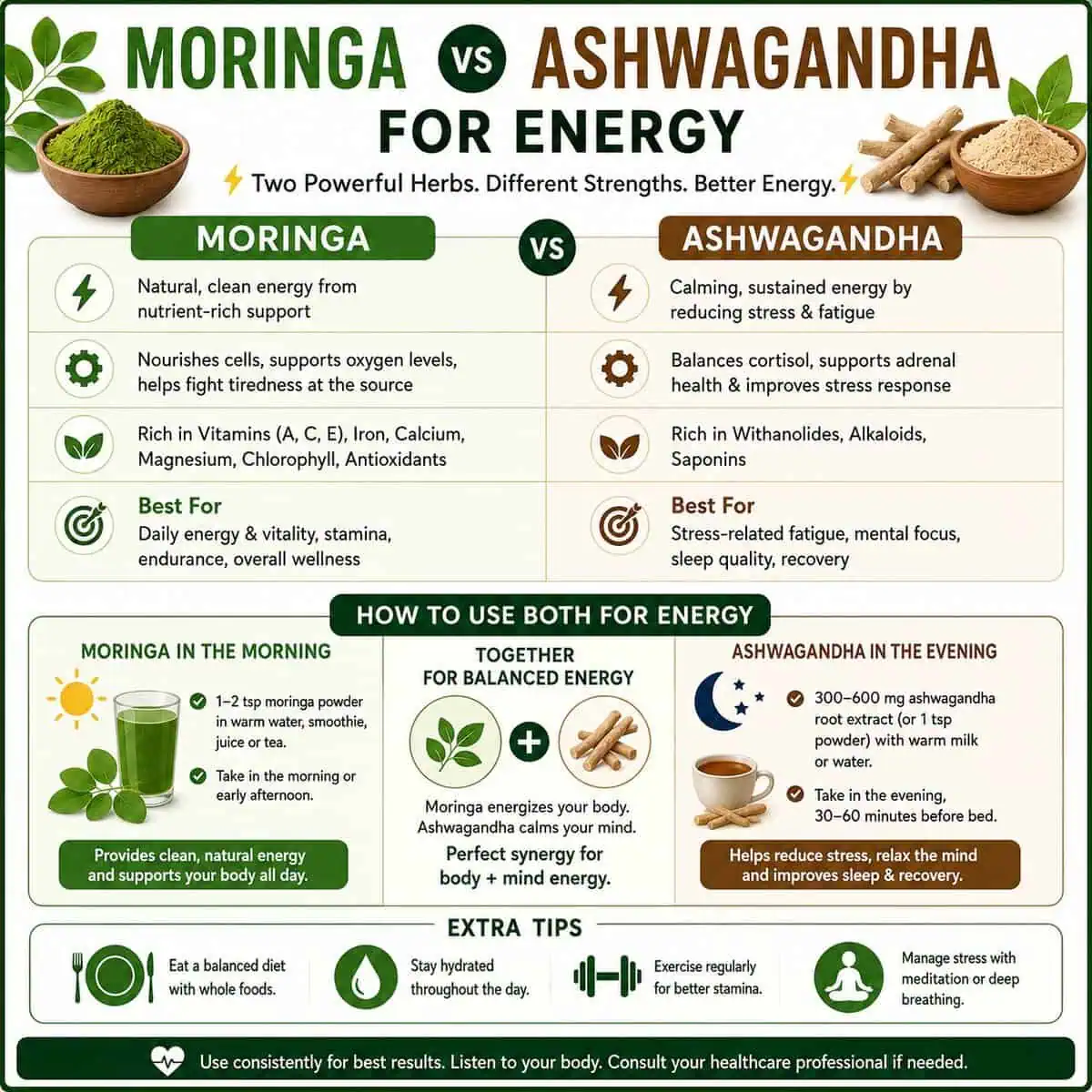
How to Use Moringa for Energy: Practical Guide
Dosage
- Week 1–2: ½ teaspoon per day (1–2 grams) — let your body adjust
- Week 3–4: 1 teaspoon per day (2–3 grams)
- Maintenance: 1–2 teaspoons per day (3–6 grams)
Best Times to Take It
- Morning is ideal for energy — adds to your natural cortisol peak
- Before meals if you’re using it for blood sugar support
- Post-workout for recovery and muscle support
Best Ways to Take Moringa for Energy
The energy smoothie: Blend 1 teaspoon moringa, 1 frozen banana, 1 cup mango, 1 cup coconut milk. The fruit masks the earthy taste completely. This is the most popular and effective method.
Warm lemon water: Stir ½ teaspoon into warm water with fresh lemon juice. Drink first thing in the morning. Quick, simple, effective.
Pre-workout shake: Mix moringa with protein powder, banana, and almond milk. The amino acids and antioxidants support both performance and recovery.
Morning oatmeal: Stir 1 teaspoon into cooked oatmeal after removing from heat. Top with banana and honey. The sweetness completely neutralizes moringa’s earthy flavor.
Important Notes
- Never use boiling water — it destroys heat-sensitive nutrients like vitamin C
- Start slow — too much too fast causes digestive discomfort
- Consistency is everything — results build over weeks, not days
How to Use Ashwagandha for Energy: Practical Guide
Dosage
- Standard dose: 300–600mg of root extract per day
- For stress and energy: 300mg twice daily (morning and evening)
- For sleep: 300–600mg taken 30–60 minutes before bed
- Athletic performance: 500–600mg daily, consistently for 8+ weeks
Which Form Is Best?
Not all ashwagandha is created equal. Look for these specific standardized extracts — they’re the ones used in clinical research:
KSM-66: Full-spectrum root extract standardized to 5% withanolides. Best studied form for stress, energy, and athletic performance.
Sensoril: Root and leaf extract standardized to 10% withanolides. Particularly effective for cognitive function and sleep.
Avoid: Generic “ashwagandha powder” without standardization — the potency varies enormously and research results may not apply.
Best Times to Take Ashwagandha
- Morning with food — reduces cortisol throughout the day
- Evening before bed — enhances sleep quality and recovery
- Both morning and evening — the approach used in most successful clinical trials
Important Notes
- Take with food to reduce any digestive discomfort
- Give it at least 4–6 weeks before evaluating results
- Cycle it — use for 2–3 months, take a 2–4 week break
- Not recommended during pregnancy
- If you have thyroid conditions or take thyroid medication, consult your doctor first
Moringa vs Ashwagandha for Energy: Specific Scenarios
Scenario 1: The Exhausted Working Mom
Profile: 35 years old, heavy periods, plant-based diet, always tired, brain fog, runs after kids all day
Best choice: Moringa
Her fatigue is almost certainly driven by iron deficiency — extremely common in premenopausal women, especially those with heavy periods eating a plant-based diet. Moringa’s iron, B vitamins, and complete amino acids will address the root cause directly.
Adding ashwagandha would help if stress is also a significant factor — which for most working mothers, it is.
Scenario 2: The Burned-Out Professional
Profile: 42 years old, high-stress corporate job, can’t sleep despite exhaustion, wired but tired, brain fog, coffee-dependent
Best choice: Ashwagandha
This is textbook HPA axis dysregulation. Chronically elevated cortisol is keeping him wired but preventing proper sleep and recovery. Ashwagandha will regulate the stress response, lower cortisol, improve sleep quality, and restore natural energy rhythms.
Adding moringa provides nutritional support that his stressed, depleted body needs.
Scenario 3: The Serious Athlete
Profile: 28 years old, trains 5 days a week, wants more endurance, faster recovery, better performance
Best choice: Ashwagandha first, moringa second
The evidence for ashwagandha’s direct impact on VO2 max, strength, and recovery is among the strongest in the natural supplement world. Moringa adds antioxidant protection against exercise-induced oxidative stress and amino acid support for muscle repair.
Together they make an excellent, research-backed athletic performance stack.
Scenario 4: The Over-50 Energy Seeker
Profile: 55 years old, energy has declined gradually, digestion slower, wants to feel vital again without stimulants
Best choice: Both together
At this life stage, both nutritional depletion and HPA axis changes contribute to lower energy. Moringa replenishes key nutrients that become harder to absorb with age. Ashwagandha supports hormonal balance and cortisol regulation, which shift significantly after 50.
What the Research Tells Us: A Summary of Key Studies
Here is a consolidated reference of the strongest clinical evidence for both plants in the context of energy:
Moringa for energy — key studies:
- Kushwaha et al. (2014) — Moringa supplementation improved antioxidant status and reduced fatigue markers in postmenopausal women over 90 days. Journal of Food Science and Technology. doi.org/10.1007/s13197-011-0293-2
- Vergara-Jimenez et al. (2017) — Comprehensive review confirming moringa’s nutritional composition and biological activities relevant to energy, immunity, and inflammation. Nutrients. doi.org/10.3390/nu9091047
- Leone et al. (2015) — Documented moringa’s complete amino acid profile and micronutrient density relevant to energy metabolism. International Journal of Molecular Sciences. doi.org/10.3390/ijms16023929
- Almarhoon et al. (2021) — Moringa polyphenols significantly reduced oxidative stress markers following exercise. Nutrients. mdpi.com/2072-6643/13/12/4147
Ashwagandha for energy — key studies:
- Chandrasekhar et al. (2012) — Ashwagandha reduced cortisol by 27.9% and significantly improved stress, energy, and quality of life. Indian Journal of Psychological Medicine. doi.org/10.4103/0253-7176.106022
- Wankhede et al. (2015) — Ashwagandha significantly improved muscle strength, recovery, and testosterone levels in resistance-trained men. Journal of the International Society of Sports Nutrition. doi.org/10.1186/s12970-015-0104-9
- Choudhary et al. (2017) — Ashwagandha improved memory, cognitive function, and sustained attention in adults. Journal of Dietary Supplements. doi.org/10.1080/19390211.2017.1284970
- Langade et al. (2021) — Ashwagandha significantly improved sleep quality, onset, and duration in adults with insomnia. PLOS ONE. doi.org/10.1371/journal.pone.0257843
- Sharma et al. (2018) — Ashwagandha improved thyroid hormone levels in women with subclinical hypothyroidism. Journal of Ethnopharmacology. doi.org/10.1016/j.jep.2017.11.033
Moringa vs Ashwagandha for Energy: The Final Verdict
After reviewing all the evidence, here’s the clearest possible answer to the moringa vs ashwagandha for energy question:
Choose moringa if your energy problem is nutritional. If you’re deficient in iron, B vitamins, or amino acids — or if you simply don’t eat a nutrient-dense diet — moringa will produce the most noticeable improvements. It’s particularly powerful for women, vegans, and anyone who is chronically depleted rather than chronically stressed.
Choose ashwagandha if your energy problem is stress-driven. If cortisol, poor sleep, mental burnout, or adrenal fatigue are at the root of your exhaustion, ashwagandha addresses those mechanisms directly. It’s particularly powerful for athletes, high-performers, and anyone who feels wired but tired.
Choose both if you want the most complete natural energy solution. The moringa vs ashwagandha for energy debate ultimately misses the bigger picture: these plants are not competitors. They are teammates. Moringa fills your nutritional tank. Ashwagandha removes the stress leak that drains it. Together, they create a genuinely comprehensive, research-backed, stimulant-free approach to sustainable energy that no single supplement can match.
The world’s most energy-depleted people are usually both nutritionally deficient and chronically stressed. That’s most of us in 2026. Both plants, used correctly and consistently, address both problems.
Start with the one that matches your primary symptom. Add the other within 4–6 weeks. Give the combination 90 days. Track how you feel.
The research supports it. Thousands of years of traditional medicine supports it. And your body — finally well-fed and less stressed — will confirm it.
Frequently Asked Questions
Is moringa vs ashwagandha for energy a fair comparison? It’s a useful comparison but not a true competition. They work through completely different mechanisms. Moringa provides nutritional fuel for energy production. Ashwagandha removes the stress-driven barriers that deplete energy. Comparing them is like comparing food to sleep — both matter, both work differently, and both are often needed together.
How long before I feel the energy benefits of each? Moringa: most people notice improved energy within 7–14 days of consistent daily use, particularly if they have nutritional deficiencies. Ashwagandha: significant results typically appear at 4–6 weeks. Give both at least 60–90 days for full effect.
Can I take moringa and ashwagandha at the same time? Yes. There are no known negative interactions. They complement each other well — moringa in the morning for nutritional support and energy, ashwagandha morning and evening for stress regulation and sleep.
Which is better for women specifically? Both have benefits for women, but for different reasons. Moringa is particularly valuable for women with heavy periods, iron deficiency, or plant-based diets — all common causes of fatigue in women. Ashwagandha is particularly valuable for women with stress-related fatigue, thyroid issues, or perimenopause-related energy disruption. Many women benefit significantly from both.
Does moringa work like an energy drink? No — and that’s actually a good thing. Moringa doesn’t stimulate your nervous system like caffeine. It supports energy production at a cellular level through nutrition. The result is sustained, stable energy without the spike-and-crash cycle of stimulants.
Is ashwagandha safe for daily long-term use? Ashwagandha is safe for most healthy adults at standard doses. Most experts recommend cycling it — using it for 2–3 months then taking a 2–4 week break. Not recommended during pregnancy or for people with autoimmune conditions without medical supervision.
Which form of ashwagandha is best for energy? KSM-66 is the most clinically studied form and shows the strongest evidence for energy, stress reduction, and athletic performance. Look for products that specify KSM-66 or Sensoril on the label.
Where can I buy quality moringa powder? Look for USDA organic certified, single-ingredient moringa leaf powder from brands that provide third-party testing. Avoid products with additives, fillers, or vague sourcing.
Complete Reference List
- Fahey, J.W. (2005). Moringa oleifera: A review of the medical evidence. Trees for Life Journal. tfljournal.org
- Stohs, S.J. & Hartman, M.J. (2015). Review of the safety and efficacy of Moringa oleifera. Phytotherapy Research. doi.org/10.1002/ptr.5325
- Vergara-Jimenez, M. et al. (2017). Nutritional composition and biological activities of Moringa oleifera. Nutrients. doi.org/10.3390/nu9091047
- Chandrasekhar, K. et al. (2012). A prospective study of ashwagandha root in reducing stress. Indian Journal of Psychological Medicine. doi.org/10.4103/0253-7176.106022
- Wankhede, S. et al. (2015). Ashwagandha and muscle strength. Journal of the International Society of Sports Nutrition. doi.org/10.1186/s12970-015-0104-9
- Choudhary, D. et al. (2017). Ashwagandha and cognitive function. Journal of Dietary Supplements. doi.org/10.1080/19390211.2017.1284970
- Langade, D. et al. (2021). Ashwagandha and sleep quality. PLOS ONE. doi.org/10.1371/journal.pone.0257843
- Sharma, A.K. et al. (2018). Ashwagandha and thyroid hormones. Journal of Ethnopharmacology. doi.org/10.1016/j.jep.2017.11.033
- Leone, A. et al. (2015). Moringa oleifera phytochemistry and pharmacology. International Journal of Molecular Sciences. doi.org/10.3390/ijms16023929
- Pratte, M.A. et al. (2014). Alternative treatment for anxiety — ashwagandha. Journal of Alternative and Complementary Medicine. doi.org/10.1089/acm.2014.0177
This article is for informational and educational purposes only. It does not constitute medical advice. Always consult a qualified healthcare provider before starting any new supplement, especially if you have a medical condition, are pregnant, or take prescription medications.
© 2026 MoringaWellness.org — All rights reserved.