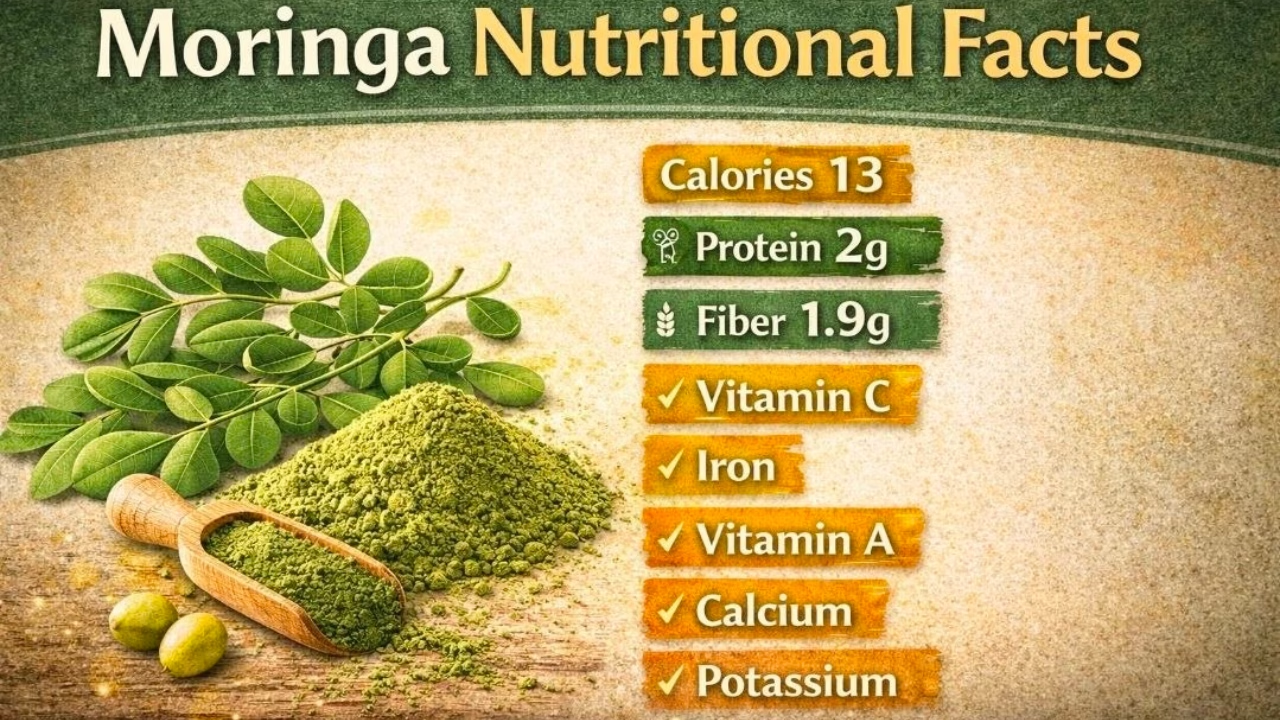
Moringa nutrition facts simply refer to what nutrients you actually get when you consume moringa — things like protein, vitamins, minerals, and antioxidants. And unlike many “superfoods” that are overhyped, moringa is genuinely nutrient-dense, especially when you look at how much nutrition is packed into a small serving of its powdered leaves.
That’s exactly why moringa is often called a “nutrient-dense superfood.” It contains a mix of important nutrients like vitamin A, vitamin C, iron, calcium, and potassium — along with plant compounds such as polyphenols and flavonoids. These aren’t just basic nutrients your body needs; they also play a role in things like reducing oxidative stress and supporting overall health.
Moringa comes from a plant called Moringa oleifera, a fast-growing tree native to South Asia but now widely grown in Africa and other tropical regions. The leaves are the most commonly used part, and they’re usually dried and turned into powder to make them easier to consume and more concentrated nutritionally.
In this guide, we’ll break everything down in a simple, practical way. You’ll learn what’s actually inside moringa — from macronutrients like protein and fiber to micronutrients like vitamins and minerals — plus the key antioxidants it contains. We’ll also compare it to other “superfoods” so you can see how it really stacks up and whether it’s worth adding to your routine.
2. What Is Moringa?
Before diving deeper into moringa nutrition facts, it helps to understand what moringa actually is and how people typically consume it. Because depending on the form you use, the nutritional impact can be slightly different.
2.1 Botanical Overview
Moringa comes from a plant called Moringa oleifera, often referred to as the “drumstick tree” or “tree of life.” It’s a fast-growing, drought-resistant tree that thrives in tropical and subtropical regions like India, Africa, and parts of Southeast Asia.
Almost every part of the tree is usable, but when it comes to nutrition, the leaves are the star.
Now, here’s where it gets practical — moringa isn’t usually eaten straight from the tree (unless you live where it grows). Instead, you’ll see it in a few common forms:
- Fresh leaves: Closest to the natural state, similar to spinach
- Powder: Dried and ground leaves (this is the most common form)
- Capsules: Powder packed into supplement form for convenience
Each form still comes from the same plant, but the way it’s processed affects how concentrated the nutrients are.
2.2 Forms of Moringa Used for Nutrition
Let’s break down the main ways people actually use moringa in everyday life:
Fresh Leaves
If you have access to the tree, fresh moringa leaves can be cooked like leafy greens — added to soups, stews, or sautéed dishes. They retain a good portion of their nutrients, but they’re less concentrated compared to dried forms.
Dried Moringa Powder (Most Common)
This is what most people use. The leaves are dried and ground into a fine green powder, which makes them:
- More concentrated nutritionally
- Easier to store and use
- Simple to add to smoothies, teas, or food
This is also the form most studies refer to when discussing moringa nutrition facts.
Capsules and Extracts
If you don’t like the taste (which can be slightly earthy or bitter), capsules are the easiest option. They contain the same powder, just in a more convenient form.
Extracts are more concentrated and sometimes standardized, but they’re less about whole nutrition and more about specific compounds.
Quick Takeaway
All forms come from the same plant, but for everyday nutrition:
- Fresh leaves = natural but less accessible
- Powder = best balance of nutrition + convenience
- Capsules = easiest, but less flexible
Understanding this helps you interpret moringa nutrition correctly — because the form you choose affects how much you actually get.
Read also What Is the Moringa Tree? A Complete Beginner’s Guide
3. Moringa Nutrition Facts (Per 100g and Per Serving)
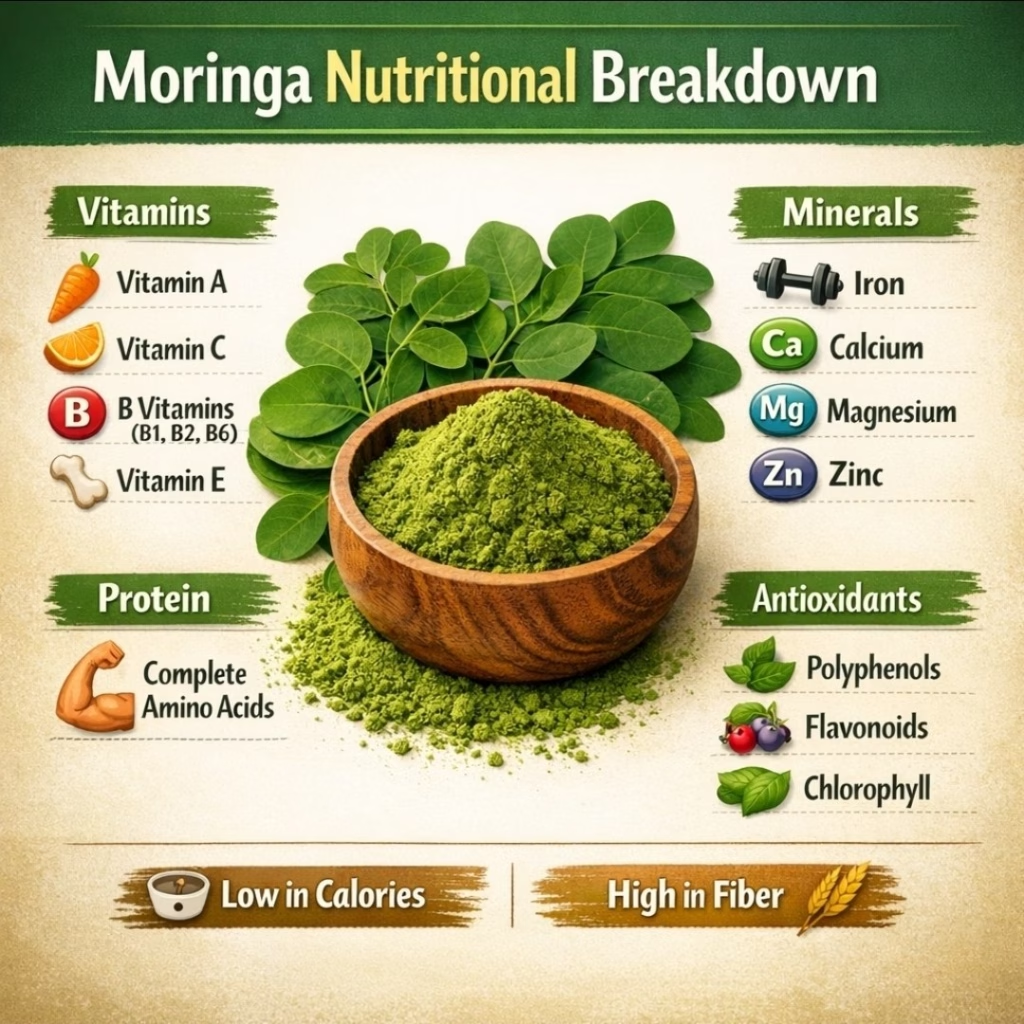
Now let’s get into the part most people care about — what you actually get nutritionally when you consume moringa.
One important thing to keep in mind:
Nutrition is often listed per 100g, but no one eats that much moringa powder in a day. A more realistic serving is about 1 tablespoon (≈5–7g). So we’ll look at both to give you a clear, practical picture.
3.1 Macronutrients
Moringa is surprisingly balanced for a leafy plant — especially when it comes to protein.
Per 100g (Dried Moringa Powder – Reference)
- Calories: ~300 kcal
- Protein: ~25–30g
- Carbohydrates: ~35–40g
- Fiber: ~15–20g
- Fat: ~5–6g
That protein content is what makes moringa stand out compared to most greens.
Per 1 Tablespoon (≈5–7g – Practical Serving)
- Calories: ~15–25 kcal
- Protein: ~1–2g
- Carbohydrates: ~2–3g
- Fiber: ~1–2g
- Fat: ~0.3g
👉 What this means in real life:
You’re not using moringa for calories — you’re using it for nutrient density in small amounts.
Quick Insight
- Protein is relatively high for a plant, but not enough to replace protein sources
- Fiber contributes to digestion
- Very low fat and calories → easy to add without affecting diet balance
3.2 Micronutrients (Vitamins)
This is where moringa really shines.
Key Vitamins in Moringa
Vitamin A (Beta-Carotene)
- Supports vision, immune function, and skin health
- Moringa is rich in beta-carotene, which your body converts into vitamin A
👉 Even small servings can contribute meaningfully toward daily needs.
Vitamin C
- Important for immunity and antioxidant protection
- Helps improve iron absorption
⚠️ Note: Some vitamin C is lost during drying, so fresh leaves contain more.
Vitamin E
- Supports skin health and cellular protection
- Acts as an antioxidant against oxidative stress
Vitamin K
- Essential for blood clotting and bone health
- Found in high amounts in leafy greens like moringa
B Vitamins (B1, B2, B3)
- Support energy metabolism
- Help your body convert food into usable energy
% Daily Value Perspective (Approximate)
In a small serving (1 tablespoon), moringa can contribute:
- ~10–20% of daily vitamin A
- ~5–10% of vitamin C
- Smaller but meaningful amounts of B vitamins
👉 Not a full multivitamin replacement — but a strong nutrient booster.
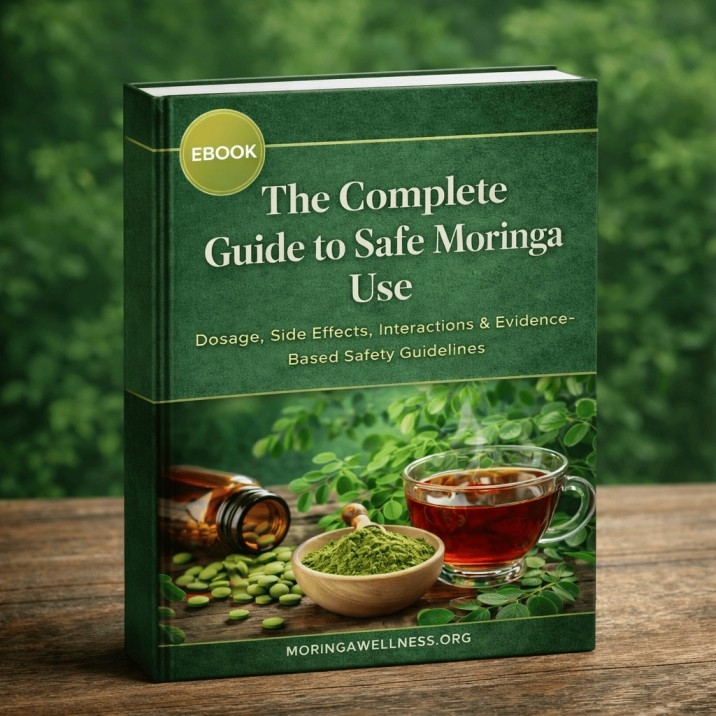
Before You Take Another Scoop —
Read This First
Most people take moringa without knowing the right dose, the risky combinations, or the signs to stop. This guide fixes that — with evidence-based answers, not guesswork.
- Exact safe dosage by body weight & health goal
- Drug & supplement interactions to avoid
- Who should NOT take moringa (and why)
- How to know when to stop or adjust
3.3 Minerals in Moringa
Moringa is also rich in essential minerals — especially important for people with nutrient gaps.
Key Minerals
Iron
- Supports oxygen transport and energy levels
- Often highlighted for people with low iron intake
👉 Compared to spinach, moringa can be similarly or more iron-dense per gram (dry weight)
Calcium
- Important for bone health and muscle function
👉 On paper, moringa powder contains more calcium per gram than milk
⚠️ But absorption (bioavailability) is lower — more on that below
Potassium
- Supports heart health and fluid balance
- Helps regulate blood pressure
Magnesium
- Involved in muscle function, sleep, and energy production
Zinc
- Supports immune function and skin health
⚠️ Bioavailability (Important but Often Ignored)
Here’s the reality most articles skip:
Even though moringa looks extremely rich in minerals, your body doesn’t absorb 100% of them.
Why?
- It contains plant compounds like phytates and oxalates
- These can reduce absorption of minerals like iron and calcium
👉 Example:
- Iron in moringa ≠ absorbed as efficiently as iron from meat
- Calcium ≠ absorbed as easily as dairy calcium
Comparison With Common Foods
- Moringa vs Spinach:
Similar iron density (dry weight), but both have absorption limits - Moringa vs Milk:
Higher calcium per gram (powder form), but lower absorption
Simple Takeaway
Moringa is not magic — but it is nutrient-dense for its size.
- High in plant-based protein (for a leaf)
- Rich in vitamins like A and C
- Contains key minerals like iron and calcium
- Best used as a nutritional supplement, not a primary source
It works best when added to an already balanced diet — not as a replacement for whole foods.
4. Moringa’s Antioxidants & Bioactive Compounds
When people talk about moringa being “powerful,” they’re usually not just referring to its vitamins and minerals — they’re talking about its antioxidants and bioactive compounds.
These are the plant compounds that go beyond basic nutrition and interact with your body at a deeper level.
4.1 Key Compounds
Moringa contains several important plant compounds that are commonly studied in nutrition and health research.
Polyphenols
Think of polyphenols as one of the main reasons moringa is considered beneficial.
They help:
- Neutralize free radicals
- Support overall cellular health
Moringa leaves are naturally rich in these compounds, especially when dried into powder.
Flavonoids
Flavonoids are a specific type of polyphenol, and moringa contains several of them.
They’re known for:
- Anti-inflammatory effects
- Supporting heart health
- Helping protect cells from damage
You’ll often see flavonoids mentioned in studies looking at plant-based diets and long-term health.
Chlorogenic Acid
This is the same compound found in coffee — and it’s been studied for its role in:
- Supporting blood sugar balance
- Slowing glucose absorption
- Acting as an antioxidant
In moringa, chlorogenic acid adds another layer to its metabolic support potential.
Quercetin
Quercetin is one of the most well-known plant antioxidants.
It’s associated with:
- Anti-inflammatory effects
- Potential blood pressure support
- Immune system modulation
Moringa is considered a natural source of quercetin, which contributes to its overall antioxidant profile.
4.2 Why They Matter
So what do all these compounds actually do in your body?
Oxidative Stress Reduction
Your body constantly produces free radicals — unstable molecules that can damage cells over time.
Antioxidants in moringa help:
- Neutralize these free radicals
- Reduce oxidative stress
- Support long-term cellular health
This is one of the main reasons antioxidant-rich foods are linked to better health outcomes.
Inflammation Pathways
Chronic, low-grade inflammation is connected to many modern health issues.
Compounds like flavonoids and quercetin in moringa may help:
- Regulate inflammatory signals
- Reduce excessive inflammation
⚠️ Important: This doesn’t mean moringa is a treatment — but it may support the body’s natural balance.
Cellular Protection
At a basic level, these compounds help protect your cells from damage caused by:
- Environmental stress
- Poor diet
- Natural aging processes
Over time, this kind of protection plays a role in overall health and resilience.
Simple Takeaway
Moringa isn’t just about vitamins — it’s also rich in bioactive compounds that support your body at a cellular level.
- Polyphenols and flavonoids → antioxidant support
- Chlorogenic acid → metabolic support
- Quercetin → anti-inflammatory potential
Together, these compounds are a big part of what makes moringa more than just a “nutrient source” — it’s also a functional food.
Related posts
Moringa Supplementation: Evidence-Based Benefits, Dosage, and Safety
7 Critical Moringa Side Effects You Must Know Before Taking It
Top 15 Evidence-Based of Moringa Powder Benefits(With Dosage & Warnings)
Organic Moringa Powder vs Capsules: Which Is Better for You?
5. Moringa Protein: Is It a Complete Protein?
Moringa is often praised for its protein content — especially for a leafy plant. But a common question is: is it actually a complete protein? And more importantly, how useful is that protein in real life?
Let’s break it down in a simple, practical way.
Amino Acid Profile
Protein is made up of amino acids, and moringa contains a wide range of them, including all nine essential amino acids your body can’t produce on its own.
These include:
- Leucine
- Isoleucine
- Valine
- Lysine
- Methionine
- Threonine
- Phenylalanine
- Tryptophan
- Histidine
👉 On paper, this means moringa has a “complete amino acid profile.”
Essential vs Non-Essential Amino Acids
- Essential amino acids → must come from food
- Non-essential amino acids → your body can produce them
Moringa contains both, which is why it often gets labeled as a “complete protein source.”
But here’s the important part most articles skip…
⚠️ Quantity Matters More Than Profile
Even though moringa contains all essential amino acids, the amount per serving is relatively small.
From earlier:
- ~1–2g of protein per tablespoon
Compare that to:
- Eggs → ~6g per egg
- Chicken → ~20–25g per serving
- Lentils → ~15–18g per cup
👉 So yes, it’s technically complete — but not a primary protein source.
Comparison to Other Plant Proteins
Let’s put it into perspective:
- Moringa vs Beans/Lentils:
Beans provide much more total protein per serving - Moringa vs Spirulina:
Spirulina is significantly higher in protein concentration - Moringa vs Leafy Greens:
Moringa wins — it’s much higher in protein than spinach or kale
👉 So moringa sits somewhere in between:
- Better than most greens
- Not comparable to true protein foods
Realistic Intake Expectations
This is where expectations matter.
Moringa protein is best seen as:
- A nutritional bonus, not the main goal
- A way to add extra amino acids to your diet
- Useful for plant-based eaters — but not sufficient alone
To rely on moringa as a primary protein source, you’d need very large amounts — which isn’t practical (or necessary).
Simple Takeaway
- Moringa contains all essential amino acids
- Technically qualifies as a complete protein
- But provides small amounts per serving
👉 Bottom line:
Moringa is a nutrient-dense supplement with added protein benefits, not a replacement for полноценный protein sources like legumes, eggs, or meat.
Before You Take Another Scoop —
Read This First
Most people take moringa without knowing the right dose, the risky combinations, or the signs to stop. This guide fixes that — with evidence-based answers, not guesswork.
- Exact safe dosage by body weight & health goal
- Drug & supplement interactions to avoid
- Who should NOT take moringa (and why)
- How to know when to stop or adjust
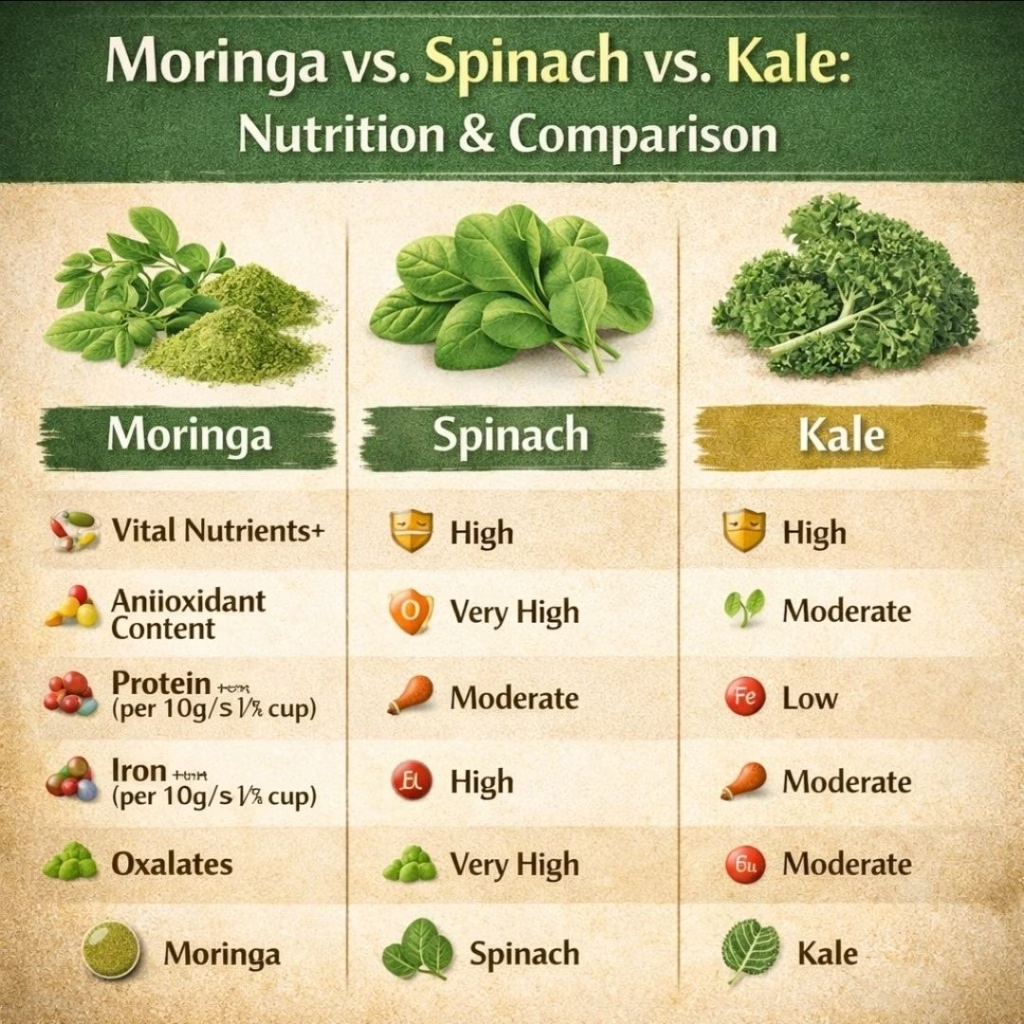
6. Moringa Nutrition vs Other Superfoods
Moringa often gets labeled as a “superfood,” but how does it actually compare to other well-known nutrient-dense foods? Let’s break it down in a practical way so you can see where it stands — not based on hype, but on real nutritional differences.
6.1 Moringa vs Spinach
Both moringa (from Moringa oleifera) and spinach are nutrient-rich greens, but they’re usually consumed differently — spinach fresh, moringa often as powder.
Iron
- Moringa (powder form) is more concentrated in iron per gram
- Spinach contains iron too, but also high oxalates that reduce absorption
👉 In reality, both are plant-based iron sources, so absorption is limited compared to animal sources.
Calcium
- Moringa powder appears higher in calcium (per gram)
- Spinach contains calcium, but again, absorption is reduced due to oxalates
👉 Neither is as bioavailable as dairy, but moringa is more concentrated.
Vitamins
- Both are rich in vitamin A and vitamin K
- Spinach has more vitamin C (when fresh)
- Moringa powder is more nutrient-dense per spoon
Bottom Line
- Moringa = more concentrated (because it’s dried)
- Spinach = more practical as a daily vegetable
6.2 Moringa vs Kale
Kale is another popular “superfood,” especially in Western diets.
Antioxidants
- Both are rich in antioxidants
- Moringa contains polyphenols and compounds like quercetin
- Kale is high in carotenoids and vitamin C
👉 Both support oxidative stress reduction, just through slightly different compounds.
Vitamin Density
- Kale is extremely high in vitamin K and vitamin C
- Moringa provides a broader mix of micronutrients per gram
Real Difference
- Kale is typically eaten in larger quantities (salads, meals)
- Moringa is used in small amounts but is more concentrated
Bottom Line
- Kale = everyday nutrient-rich vegetable
- Moringa = concentrated nutrient booster
6.3 Moringa vs Spirulina
This is one of the most interesting comparisons because both are often sold as supplements.
Protein
- Spirulina is much higher in protein (~60–70% by weight)
- Moringa has protein, but significantly less
👉 Spirulina wins for protein density.
Micronutrients
- Moringa is richer in:
- Vitamin A (beta-carotene)
- Calcium
- Certain plant antioxidants
- Spirulina is rich in:
- B vitamins
- Iron (high, but still plant-based)
Functionality
- Spirulina → often used for protein + energy support
- Moringa → used for broad-spectrum nutrition
Bottom Line
- Spirulina = protein-focused superfood
- Moringa = micronutrient-focused superfood
Simple Takeaway
Each “superfood” has its strength:
- Moringa: best for concentrated vitamins and minerals
- Spinach: best as a daily whole food
- Kale: strong antioxidant and vitamin source
- Spirulina: high-protein supplement
👉 Instead of choosing one, the smarter approach is understanding what each one actually does best — and using them accordingly.
7. Health Implications of Moringa’s Nutritional Profile
Once you understand what’s inside moringa, the next question is: what does that actually mean for your health?
The key here is to stay realistic. Moringa (from Moringa oleifera) can support certain functions because of its nutrient profile — but it’s not a cure or a replacement for a balanced diet.
Let’s break down what it may support based on what it contains.
7.1 Energy & Fatigue Support
Moringa isn’t a stimulant like caffeine, but it can still play a role in energy — just in a different way.
It contains:
- Iron → supports oxygen transport in the blood
- B vitamins → help convert food into energy
- Magnesium → involved in muscle and nerve function
👉 If someone is low in these nutrients, adding moringa could help reduce fatigue over time.
⚠️ But:
- It won’t give you an instant energy boost
- Effects are subtle and depend on overall diet
7.2 Immune System Support
Moringa provides nutrients that are important for immune function, including:
- Vitamin A → supports immune cell function
- Vitamin C → antioxidant and immune support
- Zinc → involved in immune response
👉 These nutrients help your immune system function properly, especially if your intake is low.
⚠️ Important:
- Moringa does not “boost” immunity in a dramatic way
- It supports normal immune function — not replaces medical care
7.3 Bone Health (Calcium + Magnesium)
Moringa contains both calcium and magnesium, which are essential for:
- Bone structure
- Muscle contraction
- Nerve signaling
On paper, moringa powder looks very high in calcium.
👉 But here’s the nuance:
- Absorption is lower than dairy sources
- You’re consuming small amounts per serving
So it works best as a supporting source, not your main calcium intake.
7.4 Blood Health (Iron Content)
Iron is one of the most talked-about nutrients in moringa.
It plays a key role in:
- Red blood cell production
- Oxygen transport
- Energy levels
👉 This makes moringa potentially useful for:
- People with low iron intake
- Plant-based diets
⚠️ But again:
- It’s non-heme iron (plant-based), so absorption is lower
- Pairing with vitamin C improves absorption
Simple Takeaway
Moringa’s health effects come from its nutrient density, not magic properties.
It may support:
- Energy (through micronutrients)
- Immune function (through vitamins and minerals)
- Bone health (as a supplemental source)
- Blood health (iron support)
👉 The best way to think about it:
Moringa is a nutritional support tool, not a treatment — and it works best when combined with a well-balanced diet.
8. Bioavailability: How Well Are Nutrients Absorbed?
Looking at moringa nutrition facts on paper is one thing — but what actually matters is how much your body can absorb and use. That’s what bioavailability means.
And this is where things get a bit more nuanced.
Plant-Based Iron Absorption Limits
Moringa contains iron, which is great — but it’s a plant-based (non-heme) form of iron.
Here’s the key difference:
- Heme iron (from animal foods): easily absorbed
- Non-heme iron (from plants like moringa): less efficiently absorbed
👉 In practical terms:
Even if moringa looks high in iron, your body might only absorb a small percentage of it.
That doesn’t make it useless — it just means:
- It works best as part of a balanced diet
- It’s not a direct replacement for high-absorption iron sources
Role of Vitamin C (Important Trick)
Here’s where things get interesting.
Vitamin C can significantly improve iron absorption from plant sources.
Moringa actually contains some vitamin C (especially in fresh leaves), but you can boost absorption even more by pairing it with:
- Citrus fruits (lemon, orange)
- Tomatoes
- Bell peppers
👉 Example:
Adding moringa powder to a smoothie with fruit = better iron absorption.
Anti-Nutrients (Oxalates & Phytates)
This is something most “superfood” articles ignore.
Moringa contains natural plant compounds called anti-nutrients, including:
- Oxalates
- Phytates
These can:
- Bind to minerals like calcium and iron
- Reduce how much your body absorbs
👉 This doesn’t make moringa unhealthy — it’s common in many plant foods (like spinach, beans, and grains).
It just means:
- You won’t absorb 100% of what’s listed on the label
- Variety in your diet matters
Fresh vs Powder: Does It Make a Difference?
Yes — and this is often overlooked.
Fresh Leaves
- Higher in vitamin C
- Less concentrated overall
- Better for hydration and whole-food intake
Dried Powder
- More nutrient-dense per gram
- Longer shelf life
- Some nutrients (like vitamin C) are reduced during drying
👉 So:
- Fresh = better for certain vitamins
- Powder = better for overall concentration and convenience
Simple Takeaway
Moringa is nutrient-rich, but absorption isn’t perfect — and that’s normal for plant foods.
- Iron is present, but less absorbable
- Vitamin C helps improve absorption
- Anti-nutrients slightly reduce mineral uptake
- Fresh vs powder affects nutrient balance
9. Moringa Powder vs Fresh Leaves (Nutrition Differences)
When it comes to nutrition, not all forms of moringa are the same. The biggest difference most people notice is between fresh leaves and moringa powder — and each has its own advantages depending on how you use it.
Nutrient Concentration
This is the most important difference.
- Moringa powder is made by drying and grinding the leaves
- When water is removed, the nutrients become more concentrated per gram
👉 That’s why a small amount of powder (like 1 teaspoon) can deliver a noticeable amount of vitamins and minerals.
On the other hand:
- Fresh leaves contain water, so they’re less concentrated
- You’d need a much larger portion to match the same nutrient levels
👉 Think of it like this:
- Powder = concentrated
- Fresh = diluted but still nutritious
Drying Impact on Vitamin C
Here’s where fresh leaves have an advantage.
Vitamin C is sensitive to:
- Heat
- Air exposure
- Drying processes
So during the drying process:
- Some vitamin C is lost
👉 This means:
- Fresh moringa leaves typically have more vitamin C
- Powder still contains nutrients, but less vitamin C compared to fresh
Practical Accessibility
This is where powder wins for most people.
Fresh Leaves
- Only available in regions where moringa grows
- Require cooking or preparation
- Short shelf life
Moringa Powder
- Easy to store
- Long shelf life
- Can be added to smoothies, tea, or food
- Widely available worldwide
👉 For most people, powder is simply more convenient and realistic to use consistently.
Simple Takeaway
- Powder = more concentrated + more practical
- Fresh leaves = more natural + higher vitamin C
👉 If you have access to fresh moringa, it’s a great option.
But for everyday use, moringa powder is the most practical way to benefit from its nutrition.
10. Recommended Daily Intake Based on Nutrition
Once you know what’s inside moringa, the next question is: how much should you actually take?
The goal isn’t to take as much as possible — it’s to take enough to benefit without overdoing it
Typical Serving (What Most People Use)
For moringa powder, a common daily amount is:
- 1–2 teaspoons (≈2–5 grams per day)
This is the range most people use for:
- General nutrition support
- Adding vitamins and minerals
- Maintaining consistency without side effects
👉 It’s also the amount that’s easy to mix into:
- Smoothies
- Tea
- Yogurt or meals
Upper Safe Range
While moringa is generally well tolerated, more isn’t always better.
A practical upper range is:
- Up to ~10 grams per day (spread out if needed)
Going beyond that may increase the chance of:
- Digestive discomfort
- Nausea or bloating
👉 Most benefits don’t require high doses — consistency matters more than quantity.
Who May Need More
Some people might benefit from slightly higher intake (within safe limits), especially if they have increased nutritional needs.
This may include:
- People with low iron intake (e.g., plant-based diets)
- Individuals with nutrient deficiencies
- Those with higher oxidative stress (poor diet, high stress lifestyle)
👉 Even then, moringa should be seen as support, not a primary treatment.
Who Should Limit Intake
Certain groups should be more cautious:
- Pregnant women → high doses are not recommended
- People with iron overload conditions
- Individuals taking medications (especially for blood pressure or blood sugar)
- Those sensitive to new supplements (start with small amounts)
👉 If unsure, it’s always better to start low and see how your body responds.
11. Who Benefits Most from Moringa Nutrition
Moringa isn’t something everyone needs — but for certain people, it can be a really helpful addition. The biggest benefits tend to show up when there’s already a nutritional gap or increased demand in the body.
Here’s who is most likely to benefit from adding moringa to their routine.
People With Low Iron Intake
If your diet is low in iron, moringa can be a useful supporting source.
It contains plant-based iron, which can help:
- Support red blood cell production
- Reduce fatigue linked to low iron intake
👉 This is especially relevant if you:
- Don’t eat much meat
- Have a diet low in iron-rich foods
⚠️ Just remember:
It’s non-heme iron (plant-based), so absorption is lower — pairing it with vitamin C helps.
People on Plant-Based Diets
If you follow a vegetarian or vegan diet, moringa can help fill some common nutrient gaps.
It provides:
- Iron
- Calcium
- Certain B vitamins
- Antioxidants
👉 It’s not a replacement for a well-planned diet, but it can act as a nutrient booster in small amounts.
Nutrient-Deficient Populations
Moringa is often used in regions where access to diverse foods is limited because it packs a lot of nutrients into a small amount.
It may be helpful for:
- People with limited food variety
- Individuals recovering from poor dietary intake
- Situations where micronutrient intake is low
👉 In these cases, even small additions can make a noticeable difference over time.
People With High Oxidative Stress
If your lifestyle includes factors like:
- High stress
- Poor diet
- Environmental exposure
- Intense physical activity
…your body may experience higher oxidative stress.
Moringa contains antioxidants like polyphenols and flavonoids that may help:
- Support cellular protection
- Balance oxidative stress levels
⚠️ Again, this is supportive — not a cure or treatment.
Simple Takeaway
Moringa works best when there’s a gap to fill, not when everything is already optimal.
It’s most useful for:
- Low iron intake
- Plant-based diets
- Nutrient deficiencies
- Higher oxidative stress
👉 Think of it as a nutritional support tool, not something everyone needs daily.
12. Who Should Be Careful
Moringa is generally safe for most people when used in moderate amounts, but there are a few situations where you should be more cautious. This isn’t about fear — it’s about using it smartly and appropriately.
Pregnancy (Dosage Concerns)
Moringa leaves are commonly eaten as food in some cultures, but high-dose supplements are a different story.
- Large amounts (especially extracts or concentrated forms) haven’t been well studied in pregnancy
- Other parts of the plant (like root or bark) are not considered safe
👉 If you’re pregnant:
- Stick to food-level amounts only (if at all)
- Avoid high-dose supplements unless approved by a healthcare professional
Iron Overload Conditions
Moringa contains iron, which is helpful for many people — but not for everyone.
If you have conditions like:
- Hemochromatosis
- High iron levels
👉 Adding extra iron (even from plants) may not be ideal.
While plant-based iron is less absorbable, regular intake still adds up over time.
Medication Interactions
Moringa may interact with certain medications because of how it affects the body.
Potential areas of interaction include:
- Blood sugar medications → may enhance glucose-lowering effects
- Blood pressure medications → may contribute to further lowering
- Thyroid or metabolic medications → possible indirect effects
👉 This doesn’t mean it’s dangerous — but it does mean:
- Effects can stack with medications
- Monitoring may be needed
14. FAQs
Here are some of the most common questions people ask about moringa — answered in a simple, practical way.
Is moringa more nutritious than spinach?
Not exactly — it depends on how you compare them.
Moringa (from Moringa oleifera) in powder form is more concentrated than fresh spinach, so per gram it may look higher in certain nutrients like iron or calcium.
But:
- Spinach is eaten in larger amounts
- Both contain similar plant-based nutrients
- Both have absorption limitations (like oxalates)
👉 So it’s not about one being “better.”
Moringa is more concentrated, while spinach is more practical as a daily vegetable.
How much moringa should I take daily?
A typical daily amount is:
- 1–2 teaspoons (about 2–5 grams) of moringa powder
This is enough to:
- Add nutritional support
- Avoid side effects
- Be easy to use consistently
👉 You don’t need large amounts — consistency matters more than dosage.
Is moringa high in protein?
Moringa is high in protein compared to most leafy plants, but not compared to actual protein foods.
- About 1–2 grams per tablespoon
- Contains all essential amino acids (technically a complete protein)
👉 That said:
It’s a bonus protein source, not something you rely on for daily protein needs.
Can you take moringa every day?
Yes, most people can take moringa daily in moderate amounts.
It’s commonly used as a daily nutritional supplement, especially in powder or capsule form.
👉 Just keep it within a reasonable range (around 2–5g/day) and monitor how your body responds.
Does drying destroy nutrients?
Drying does affect some nutrients — but not all.
- Vitamin C is reduced during drying
- Minerals (iron, calcium) remain stable
- Many antioxidants are still preserved
👉 So while fresh leaves may have more vitamin C,
moringa powder is still very nutrient-dense and more practical for daily use.
15. Practical Ways to Add Moringa to Your Diet
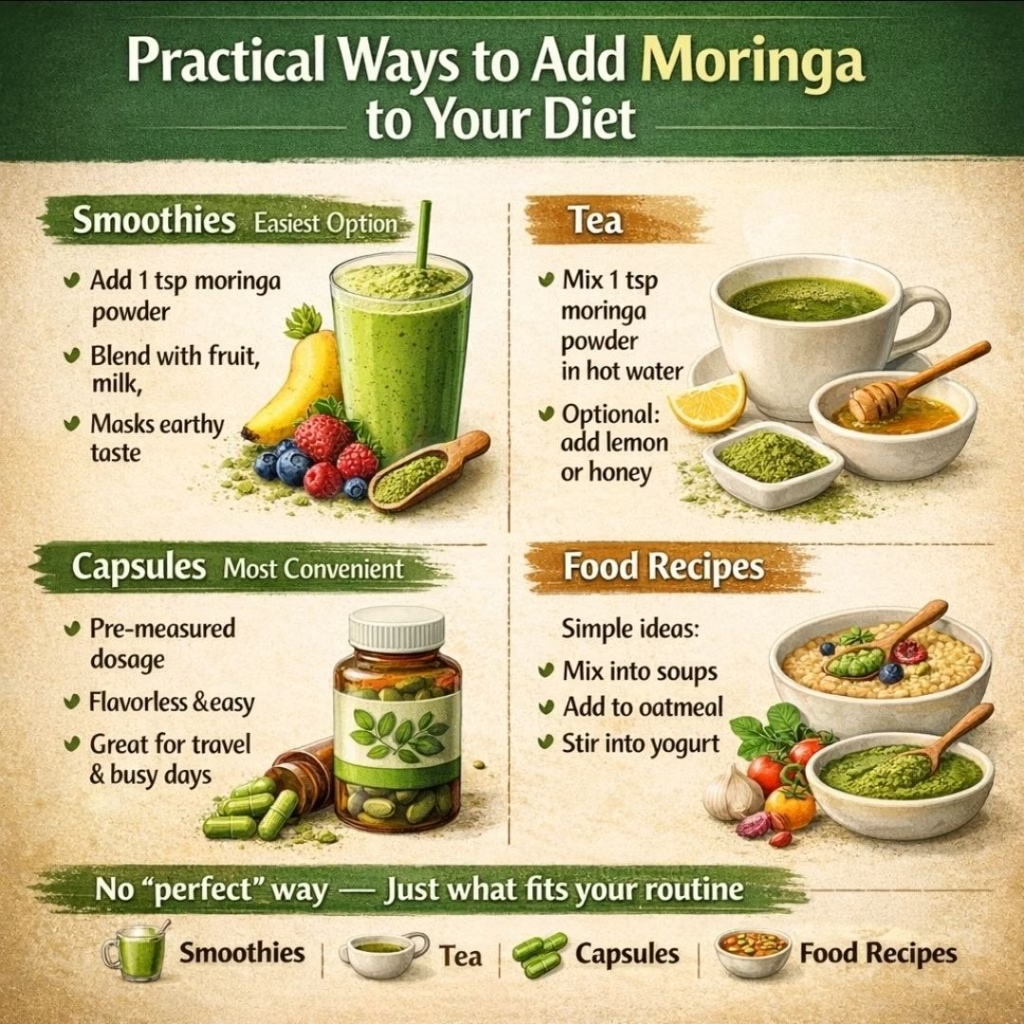
Knowing moringa is nutritious is one thing — actually using it consistently is another. The good news is, it’s pretty easy to add to your routine once you know a few simple ways.
Most people use moringa from Moringa oleifera in powder or capsule form, depending on convenience and taste preference.
Smoothies (Easiest Option)
This is one of the most popular ways to use moringa.
Just add:
- 1 teaspoon of moringa powder
- Fruit (banana, mango, berries)
- Milk or plant-based milk
👉 Why it works:
- The fruit helps mask the slightly earthy taste
- You get a nutrient boost without changing your routine
Tea
Moringa can also be used as a simple herbal tea.
How:
- Mix 1 teaspoon of moringa powder in hot water
- Optional: add lemon or honey
👉 Why it works:
- Quick and easy
- Good option if you don’t want calories from smoothies
Capsules (Most Convenient)
If you don’t like the taste at all, capsules are the easiest solution.
- No flavor
- Pre-measured dosage
- Easy to take daily
👉 Best for:
- Busy schedules
- Travel
- People who prefer supplements over food prep
Food Recipes
You can also mix moringa into everyday meals.
Simple ideas:
- Stir into soups or stews
- Add to oatmeal
- Mix into yogurt
- Sprinkle into sauces
👉 Tip:
Start with small amounts (½–1 teaspoon) so the flavor doesn’t overpower your food.
16. Final Verdict: Is Moringa Nutritionally Worth It?
So after looking at all the moringa nutrition facts, the real question is: is it actually worth adding to your diet?
The honest answer is — yes, but with realistic expectations.
Moringa (from Moringa oleifera) has some clear strengths. It’s rich in micronutrients like vitamin A, iron, and calcium, and it also contains antioxidants such as polyphenols and flavonoids. What makes it stand out is how concentrated these nutrients are in a small amount, especially in powder form. That makes it a convenient way to boost your overall nutrient intake without needing large portions.
But it’s not perfect.
There are a couple of important limitations:
- Bioavailability: your body doesn’t absorb all the nutrients equally, especially minerals like iron and calcium
- Serving size reality: you’re only taking a small amount daily (1–2 teaspoons), so it won’t meet all your nutrient needs
👉 This is where most people get it wrong — they expect moringa to do too much.
So What’s the Best Way to Use It?
The smartest way to think about moringa is:
- Not a replacement for whole foods
- Not a multivitamin substitute
- Not a quick fix
Instead, it works best as a:
👉 Nutritional supplement to support an already balanced diet
Simple Bottom Line
- ✔ Good for adding extra micronutrients
- ✔ Provides antioxidants and plant compounds
- ✔ Easy to use daily
- ❌ Not a complete nutrition solution
- ❌ Not highly absorbable for all nutrients
- ❌ Not a iracle superfood
If this article SAVES you time, consider buying us a coffee ☕
Your support helps us create more helpful content like this. BUY US COFFEE
Before You Take Another Scoop —
Read This First
Most people take moringa without knowing the right dose, the risky combinations, or the signs to stop. This guide fixes that — with evidence-based answers, not guesswork.
- Exact safe dosage by body weight & health goal
- Drug & supplement interactions to avoid
- Who should NOT take moringa (and why)
- How to know when to stop or adjust