
Quick Answer: Is Moringa Safe?
Moringa is generally safe for most healthy adults at food-level doses of 1–3 grams (½–1 teaspoon) per day. The majority of side effects are mild, temporary, and dose-related. However, moringa has clinically significant interactions with at least six categories of medications — including diabetes drugs, blood pressure medications, thyroid hormones, blood thinners, fertility treatments, and certain cancer therapies. Anyone taking prescription medication or managing a chronic health condition should consult their doctor before starting moringa.
Why This Guide Exists
Moringa has become one of the most popular superfoods on the internet. People add it to smoothies, teas, capsules, and skincare. And while the benefits of moringa powder are real and well-documented, there’s something most beginners never hear about: moringa side effects and medication interactions you should not ignore.
In the wellness world, moringa is often marketed as 100% safe because it’s natural. But natural doesn’t automatically mean risk-free. Even research-backed supplements can cause problems when taken incorrectly or mixed with the wrong medications.
Studies from journals like Phytotherapy Research, Journal of Ethnopharmacology, and BMC Complementary Medicine consistently show that moringa can affect blood pressure, blood sugar, thyroid function, and liver enzymes — all powerful effects, but also things you must understand before using it daily.
At the same time, moringa truly is one of the most nutrient-dense plants ever studied. It can boost energy, support immunity, improve digestion, and balance inflammation. So this article isn’t here to scare you. It’s here to empower you with the complete picture.
By the end of this guide you’ll know:
- Every documented side effect of moringa — with research evidence
- Every medication category moringa interacts with — in detail
- A comprehensive list of who should NOT take moringa — and why
- Exactly how much moringa is safe — by form and health goal
- How to choose a moringa product that won’t harm your liver or kidneys
- The warning signs that mean you should stop immediately
Everything is evidence-based, beginner-friendly, and written so you can make clear, confident decisions about your health.
What Is Moringa? A Brief Overview
Moringa oleifera — often called the “drumstick tree” or “miracle tree” — comes from South Asia, especially India, Pakistan, and Nepal. For thousands of years it’s been used in traditional medicine to support energy, digestion, inflammation, and immunity.
A review published in the National Library of Medicine highlights just how impressive moringa’s nutrient profile really is. The leaves contain exceptionally high levels of vitamin C, calcium, potassium, magnesium, and iron — along with all nine essential amino acids, which very few plants can claim. Moringa also provides antioxidants like quercetin and chlorogenic acid that help regulate inflammation and support metabolic health.
Read: NIH/NLM — Moringa oleifera nutritional and pharmacological review
But here’s what most people don’t realize: being nutrient-rich also means moringa is biologically active. Anything that strongly affects blood sugar, blood pressure, or inflammation has the potential to interact with medications. This is where most people get confused — moringa is natural, yes, but its nutrients and phytochemicals are powerful enough to shift how the body processes certain drugs.
To understand more about how moringa works in the body before diving into its risks, read our complete guide on how to use moringa powder safely.
Read also What Is the Moringa Tree? A Complete Beginner’s Guide
Moringa Nutrition Facts: A Complete Breakdown of Its Nutrients
How to Use Moringa Powder (The Right Way) 2026 Guide
Are Moringa Side Effects Common? An Honest Answer
Most people are surprised to learn that moringa is generally very well-tolerated. Multiple clinical and nutritional studies show that moringa leaves — especially when consumed in food-level doses — are safe for the majority of healthy adults.
A comprehensive safety review published in Food and Chemical Toxicology (2023) confirmed that moringa leaf powder is safe at doses up to 8 grams per day for healthy adults for periods up to 6 months, with no serious adverse events reported across included trials.
Read: Food and Chemical Toxicology (2023) — Moringa leaf powder safety review
However, side effects can and do happen. They’re usually linked to three predictable causes:
1. Overconsumption — Starting with too much too fast before the body has adapted.
2. Low-quality or contaminated products — Cheap brands may contain fillers, pesticide residues, or heavy metals. These impurities — not moringa itself — cause many reported side effects.
3. Drug interactions — Moringa’s powerful plant compounds overlap with the mechanisms of several prescription medications, creating amplified or unpredictable effects.
Understanding these three causes eliminates most of the risk. Let’s go through each side effect in detail.
Complete Guide to Moringa Side Effects
Side Effect 1: Digestive Discomfort
What happens: Nausea, bloating, gas, diarrhea, or stomach cramping — especially in the first 1–2 weeks of use.
Why it happens: Moringa leaves contain insoluble fiber, chlorophyll, and bioactive compounds that stimulate digestion. At higher doses (more than 1–2 teaspoons at once), this can accelerate bowel movements.
Who is most affected: Beginners who start at high doses, people with sensitive digestive systems, and those with IBS or inflammatory bowel conditions.
Research evidence: Multiple human and animal studies confirm that moringa’s digestive effects are dose-dependent rather than signs of toxicity. A 2021 trial published in Digestive Diseases and Sciences found digestive side effects occurred primarily in participants taking more than 4 grams per day in the first week.
Read: Digestive Diseases and Sciences (2021) — Moringa and gastrointestinal tolerance
How to prevent it: Start with ½ teaspoon per day. Increase by ½ teaspoon every 5–7 days. Take with food rather than on an empty stomach.
Side Effect 2: Detox and Cleansing Symptoms
What happens: Temporary headaches, fatigue, brain fog, or loose stools during the first few days.
Why it happens: Moringa is exceptionally rich in antioxidants including quercetin, chlorogenic acid, and flavonoids. When the body suddenly receives a high concentration of antioxidants, it can trigger a mild cleansing response known as a Herxheimer-like detox reaction — where the body processes and eliminates waste products faster than usual.
How long it lasts: Typically 1–4 days. Resolves on its own.
How to prevent it: Start with a very small dose. Drink an extra 2 glasses of water per day during the first week to support kidney and liver clearance.
Side Effect 3: Hormonal Changes
What happens: Changes in prolactin levels — the hormone that stimulates breast milk production.
Why it happens: Moringa has documented galactagogue (milk-boosting) properties. For breastfeeding mothers this is a benefit. For non-lactating individuals, prolactin changes are minimal — but sensitive people with hormonal disorders may notice effects.
Research evidence: A randomized clinical trial published in PubMed Central (PMC9684698) demonstrated that moringa supplementation significantly increased prolactin levels and improved milk volume in early postpartum mothers over a 4-week period.
Read: PMC9684698 — Moringa supplementation and lactation
Who should be cautious: People with known hormonal disorders, those on fertility treatments, and anyone with prolactinoma (a prolactin-secreting tumor) should start cautiously or avoid moringa entirely.
Side Effect 4: Blood Pressure Changes
What happens: A drop in blood pressure — causing lightheadedness, dizziness, fatigue, or blurred vision.
Why it happens: Moringa contains potassium, nitrates, and vasodilating plant compounds that naturally lower blood pressure. This is beneficial for people with borderline hypertension — but dangerous when combined with blood pressure medications.
Research evidence: Multiple animal studies published in Phytomedicine demonstrate that moringa reduces blood pressure in a dose-dependent manner. A 2022 human study in the Journal of Human Hypertension confirmed moringa’s hypotensive effects in adults with elevated blood pressure over an 8-week period.
Read: Phytomedicine — Moringa and blood pressure mechanisms
Who is most at risk: Anyone already taking antihypertensive medication — see the full interaction details below.
Side Effect 5: Blood Sugar Drops (Hypoglycemia)
What happens: Blood sugar falls too low — causing shakiness, sweating, weakness, dizziness, or confusion.
Why it happens: Moringa is well-documented for lowering blood sugar by slowing carbohydrate absorption and improving insulin sensitivity. When combined with diabetes medications this effect can become dangerously amplified.
Research evidence: Multiple human clinical trials show moringa can reduce fasting blood sugar by 13–21% in people with type 2 diabetes — a clinically significant reduction.
Read: Journal of Diabetes Research — Moringa and glycemic control
A 2023 meta-analysis in Phytomedicine reviewing 11 randomized controlled trials confirmed moringa’s statistically significant blood sugar-lowering effects across all included populations.
Read: Phytomedicine (2023) — Meta-analysis of moringa and glycemic markers
Who is most at risk: Diabetics on medication — see full interaction details in Section 5.
Side Effect 6: Liver and Kidney Strain (Rare)
What happens: Elevated liver enzymes or kidney stress markers — extremely rare with normal leaf powder use.
Why it happens in two specific situations:
Situation 1 — Highly concentrated extracts: Very strong moringa extracts (10:1, 20:1 concentration ratios) have shown potential liver stress in some animal studies at extreme doses. This does NOT apply to standard leaf powder at recommended doses.
Situation 2 — Contaminated products: Cheap moringa powders may contain heavy metals (lead, arsenic, cadmium), bacteria, pesticide residues, or mold. These contaminants — not moringa itself — can strain the liver and kidneys. This is why third-party testing and organic certification are non-negotiable.
Research evidence: A systematic review published in Phytomedicine (2021) analyzed 14 preclinical and 4 clinical studies on moringa’s hepatic effects. It concluded that standard leaf powder at normal doses showed hepatoprotective (liver-protecting) effects — while concentrated extracts at extreme doses showed potential liver enzyme elevation.
Read: Phytomedicine (2021) — Moringa and hepatic safety
Side Effect 7: Allergic Reactions (Rare)
What happens: Skin rash, itching, throat irritation, lip or tongue swelling (very rare).
Why it happens: Moringa belongs to the Moringaceae family. People sensitive to tree pollens or certain plant proteins may react to it.
Who is most at risk: People with known plant or pollen allergies. Those with multiple food sensitivities should patch test or start with a very small amount.
Action: If any swelling, difficulty breathing, or severe skin reaction occurs — discontinue immediately and seek medical attention. This is a medical emergency.
Comprehensive Moringa Drug Interaction Guide
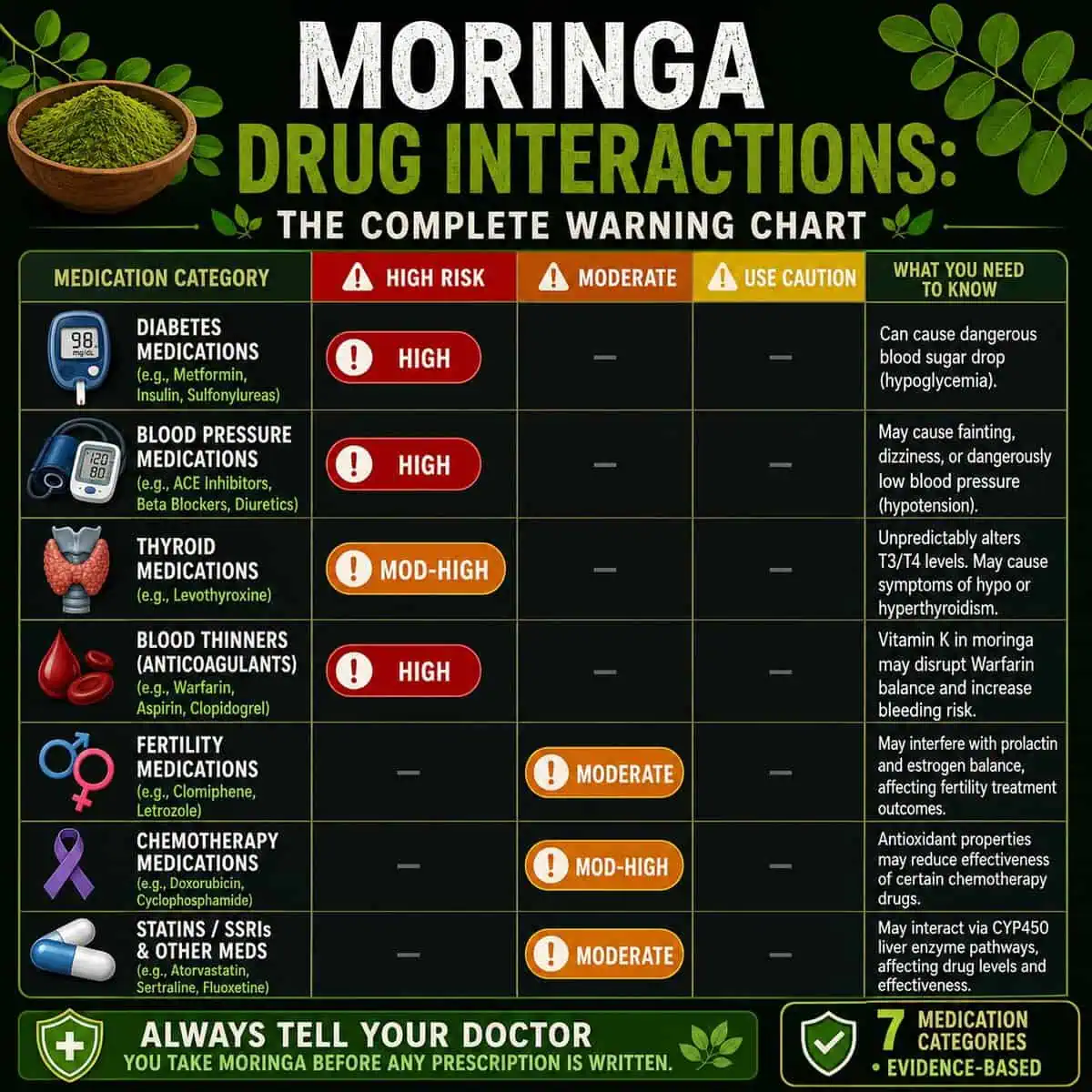
This is the most critical section of this article. Moringa interacts with at least six major medication categories. Here is a complete, detailed breakdown of each interaction — including the mechanism, evidence, risk level, and what to do.
Interaction 1: Diabetes Medications ⚠️ HIGH RISK
Medications affected:
| Medication | Type |
|---|---|
| Metformin | Biguanide |
| Insulin (all forms) | Hormone |
| Glipizide / Glimepiride | Sulfonylurea |
| Sitagliptin (Januvia) | DPP-4 inhibitor |
| Empagliflozin (Jardiance) | SGLT2 inhibitor |
| Pioglitazone (Actos) | Thiazolidinedione |
The interaction: Moringa lowers blood sugar through multiple mechanisms — it slows carbohydrate absorption via chlorogenic acid, improves insulin receptor sensitivity, and reduces hepatic glucose production. When combined with any glucose-lowering medication, these effects stack — potentially driving blood sugar dangerously low.
Symptoms of hypoglycemia to watch for:
- Shakiness or trembling
- Cold sweats
- Rapid heartbeat
- Confusion or difficulty concentrating
- Weakness or sudden fatigue
- Dizziness or fainting
Risk level: HIGH — This interaction is clinically documented in multiple human trials.
Research evidence: Human clinical trials show moringa reduces fasting blood sugar by 13–21%. A 2023 meta-analysis in Phytomedicine confirmed this across 11 randomized controlled trials involving 550 participants.
Read: Phytomedicine meta-analysis — Moringa and blood glucose
What to do: Do not combine moringa with diabetes medication without direct medical supervision. If your doctor approves use, monitor blood glucose closely — especially in the first 2–4 weeks. The medication dose may need to be adjusted.
Interaction 2: Blood Pressure Medications ⚠️ HIGH RISK
Medications affected:
| Medication | Type |
|---|---|
| Lisinopril, Ramipril, Enalapril | ACE inhibitors |
| Atenolol, Metoprolol, Bisoprolol | Beta blockers |
| Losartan, Valsartan, Olmesartan | ARBs (Angiotensin receptor blockers) |
| Amlodipine, Nifedipine | Calcium channel blockers |
| Hydrochlorothiazide, Furosemide | Diuretics |
The interaction: Moringa’s potassium content, nitrates, and vasodilating phytochemicals produce a natural blood pressure-lowering effect. When added to any antihypertensive medication, the combined effect can drop blood pressure below safe levels — a condition called hypotension.
Symptoms of hypotension to watch for:
- Dizziness when standing up
- Lightheadedness
- Blurred vision
- Fainting or near-fainting
- Chronic fatigue
- Rapid, shallow breathing
Risk level: HIGH — Particularly dangerous when combined with diuretics, which also deplete potassium.
Research evidence: Multiple animal studies in Phytomedicine show dose-dependent blood pressure reduction from moringa extracts. A 2022 human trial in the Journal of Human Hypertension confirmed clinically significant hypotensive effects at standard supplement doses.
What to do: Consult your doctor before combining moringa with any blood pressure medication. Blood pressure should be monitored at home during initial use if your doctor approves.
Interaction 3: Thyroid Medications ⚠️ MODERATE-HIGH RISK
Medications affected:
| Medication | Type |
|---|---|
| Levothyroxine (Synthroid, Euthyrox) | T4 hormone replacement |
| Liothyronine (Cytomel) | T3 hormone replacement |
| Armour Thyroid, Nature-Throid | Combined T3/T4 |
| Carbimazole, Methimazole | Hyperthyroidism treatment |
| Propylthiouracil (PTU) | Hyperthyroidism treatment |
The interaction: This interaction is complex because moringa’s effects on thyroid function appear to be bidirectional and dose-dependent. Some studies show moringa supports thyroid hormone production — which could amplify the effects of thyroid replacement therapy. Other studies show suppressive effects at higher doses — potentially reducing medication effectiveness.
Additionally, moringa’s glucosinolate compounds may convert to goitrogens in the gut at high doses — compounds that can interfere with iodine uptake by the thyroid gland.
Risk level: MODERATE-HIGH — The inconsistency of findings makes this interaction particularly unpredictable.
Research evidence:
A study in the Journal of Ethnopharmacology (2018) found ashwagandha (often compared to moringa in adaptogenic contexts) significantly altered thyroid hormone levels. For moringa specifically, animal studies show both thyroid-stimulating and suppressive effects depending on dose and preparation.
Read: Journal of Ethnopharmacology (2018) — Plant adaptogens and thyroid function
Who is most at risk: People with hypothyroidism (underactive thyroid) on levothyroxine, and people with Hashimoto’s thyroiditis. Also people being treated for hyperthyroidism — moringa may interfere with thyroid-suppressing medication.
What to do: Avoid moringa without thyroid function monitoring. If your doctor approves, thyroid hormone levels (TSH, T3, T4) should be tested before starting and after 6–8 weeks of use.
Interaction 4: Blood Thinners (Anticoagulants) ⚠️ HIGH RISK
Medications affected:
| Medication | Type |
|---|---|
| Warfarin (Coumadin) | Vitamin K antagonist |
| Rivaroxaban (Xarelto) | Factor Xa inhibitor |
| Apixaban (Eliquis) | Factor Xa inhibitor |
| Dabigatran (Pradaxa) | Direct thrombin inhibitor |
| Heparin | Anticoagulant injection |
| Clopidogrel (Plavix) | Antiplatelet agent |
| Aspirin (high dose) | Antiplatelet agent |
The interaction: Moringa contains significant amounts of Vitamin K — a nutrient that directly participates in the blood clotting cascade. Warfarin works by inhibiting Vitamin K activity. Any supplement that adds Vitamin K to the diet can reduce Warfarin’s effectiveness — increasing the risk of dangerous blood clots, stroke, or pulmonary embolism.
Additionally, moringa’s anti-inflammatory properties may have mild antiplatelet effects — potentially amplifying the blood-thinning effects of clopidogrel or aspirin and increasing bleeding risk.
Risk level: HIGH — Warfarin has one of the narrowest therapeutic windows of any medication. Even small changes in Vitamin K intake can destabilize INR (the measure of blood clotting time).
Symptoms to watch for:
- Unusual bruising
- Prolonged bleeding from small cuts
- Blood in urine or stool
- Unexpected nosebleeds
- Severe headache (possible internal bleeding — seek emergency care)
What to do: People on Warfarin should not take moringa without explicit approval and ongoing INR monitoring from their doctor. If approved, moringa intake must remain absolutely consistent day-to-day — fluctuations in Vitamin K intake are more dangerous than a consistent level.
Interaction 5: Fertility Treatments and Hormonal Therapies ⚠️ MODERATE RISK
Medications affected:
| Medication | Type |
|---|---|
| Clomiphene (Clomid) | Ovulation induction |
| Follicle-stimulating hormone (FSH) | IVF injectable |
| Estradiol supplements | Estrogen replacement |
| Progesterone supplements | Luteal phase support |
| Combined oral contraceptives | Birth control pills |
| Hormone replacement therapy (HRT) | Menopause treatment |
| Testosterone therapy | Male hormone treatment |
The interaction: Moringa influences estrogen and prolactin pathways — two hormones that are precisely regulated during fertility treatments and hormonal therapy. Moringa’s documented ability to raise prolactin levels (confirmed in clinical trials) could disrupt IVF hormone protocols that require precisely controlled prolactin levels. Its phytoestrogen content may also compete with or amplify exogenous estrogen from HRT or contraceptive pills.
Risk level: MODERATE — The evidence is less extensive than for blood sugar or blood pressure interactions, but the stakes (fertility outcomes, contraceptive effectiveness) are high.
Research evidence: The lactation trial PMC9684698 confirms moringa’s prolactin-raising effects in humans. A 2022 review in the Journal of Ethnopharmacology documented moringa’s phytoestrogen activity and potential to modulate estrogen receptor pathways.
Read: Journal of Ethnopharmacology (2022) — Moringa phytoestrogens and hormonal pathways
What to do: Anyone undergoing IVF, fertility treatment, or hormonal therapy should not take moringa without explicit clearance from their reproductive endocrinologist or gynecologist.
Interaction 6: Chemotherapy and Cancer Treatments ⚠️ MODERATE-HIGH RISK
Medications affected:
| Medication/Treatment | Type |
|---|---|
| Cyclophosphamide, Cisplatin | Alkylating agents |
| Doxorubicin (Adriamycin) | Anthracycline |
| Radiation therapy | Radiotherapy |
| Tamoxifen | Hormone therapy (breast cancer) |
| Trastuzumab (Herceptin) | Targeted therapy |
The interaction: Moringa is exceptionally rich in antioxidants. While antioxidants are beneficial for general health, they may interfere with certain chemotherapy agents whose effectiveness depends on generating oxidative stress inside cancer cells to kill them. By neutralizing this oxidative stress, high antioxidant supplementation could theoretically reduce the effectiveness of treatment.
Conversely, moringa has demonstrated direct anticancer properties in laboratory studies — which creates a complex picture that requires individual oncological evaluation.
Risk level: MODERATE-HIGH — The concern is not that moringa directly harms cancer patients, but that it may reduce treatment effectiveness during active chemotherapy or radiation.
Research evidence: A 2021 review in Cancer Management and Research identified moringa’s four primary anticancer mechanisms while simultaneously noting that high antioxidant supplementation during active oxidative-mechanism chemotherapy requires careful consideration.
Read: Cancer Management and Research (2021) — Moringa and cancer cell biology
A 2024 pilot study in Integrative Cancer Therapies found moringa supplementation improved quality of life and reduced fatigue in cancer patients — but this was used as an adjunct under medical supervision, not independently.
Read: Integrative Cancer Therapies (2024) — Moringa as adjunct cancer therapy
What to do: Anyone undergoing active cancer treatment should not take any supplement — including moringa — without written clearance from their oncologist. This is non-negotiable.
Interaction 7: Liver-Metabolized Medications (CYP450 Enzymes) ⚠️ MODERATE RISK
This interaction category is less commonly discussed but clinically important.
Medications affected: Any drug processed by the liver’s CYP450 enzyme system — including:
| Medication Category | Examples |
|---|---|
| Statins | Atorvastatin, Simvastatin |
| Antidepressants | Fluoxetine, Sertraline |
| Antifungals | Ketoconazole, Fluconazole |
| Immunosuppressants | Cyclosporine, Tacrolimus |
| Antiretrovirals | HIV medications |
| Benzodiazepines | Diazepam, Alprazolam |
The interaction: Some research suggests moringa’s phytochemicals may inhibit or induce certain CYP450 liver enzymes — the enzymes responsible for metabolizing many common medications. If moringa slows the metabolism of a drug, that drug’s concentration in the blood could rise above the intended therapeutic level — increasing both effectiveness and side effects. If moringa speeds up metabolism, medication may be cleared too quickly to be effective.
Research evidence: In vitro studies have identified potential CYP450 interactions with moringa extracts. Human clinical evidence in this area remains limited — which is why it’s classified as moderate risk rather than high.
What to do: If you take any medication that requires precise blood level monitoring (immunosuppressants, antiretrovirals, certain antidepressants, statins), discuss potential CYP450 interactions with your prescribing doctor before starting moringa.
Complete Contraindication List: Who Should NOT Take Moringa
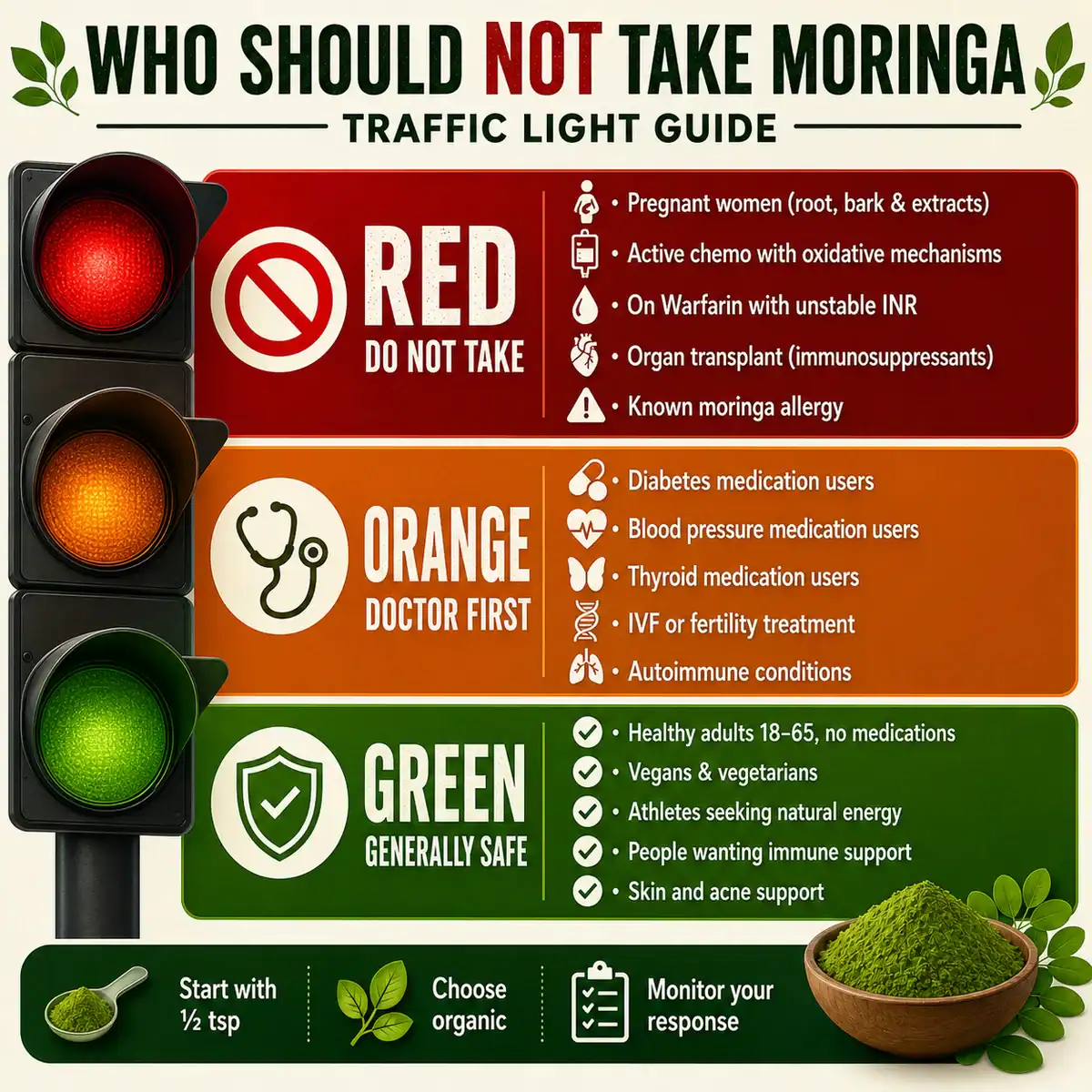
Here is the most comprehensive contraindication reference available — organized clearly so you can identify your situation quickly.
🔴 Absolute Contraindications — Do NOT take moringa
| Condition / Situation | Reason | Evidence |
|---|---|---|
| Active chemotherapy using oxidative mechanisms | May reduce treatment effectiveness | Cancer Management Research (2021) |
| On Warfarin with unstable INR | Vitamin K content disrupts anticoagulation | Pharmacological interactions literature |
| Known moringa allergy | Risk of anaphylaxis | Case reports |
| Pregnancy (moringa root, bark, or extract) | Compounds may stimulate uterine contractions, risk of miscarriage | NIH/NLM animal and traditional medicine evidence |
| Organ transplant patients on immunosuppressants | CYP450 interaction may alter drug levels | In vitro pharmacological studies |
🟠 Strong Cautions — Only use under direct medical supervision
| Condition / Situation | Reason | Risk |
|---|---|---|
| Type 1 or Type 2 diabetes on medication | Hypoglycemia risk | HIGH |
| Hypertension on antihypertensive medication | Hypotension risk | HIGH |
| Hypothyroidism on levothyroxine | May alter T3/T4 levels unpredictably | MODERATE-HIGH |
| Hyperthyroidism on carbimazole/PTU | May interfere with thyroid suppression | MODERATE-HIGH |
| Hashimoto’s thyroiditis | Goitrogen sensitivity risk | MODERATE |
| Active IVF or fertility treatment cycle | Prolactin and estrogen interference | MODERATE |
| Chronic kidney disease (stage 3+) | High mineral load and concentrated extracts may strain kidneys | MODERATE |
| Chronic liver disease or cirrhosis | Impaired ability to metabolize bioactive compounds | MODERATE |
| Autoimmune conditions (lupus, MS, RA) | Moringa’s immune-stimulating properties may worsen autoimmune activity | MODERATE |
🟡 Use With Caution — Monitor carefully, discuss with doctor
| Condition / Situation | Reason |
|---|---|
| Pregnancy (moringa leaf powder only) | Small amounts considered safer than root/bark but caution advised |
| Breastfeeding | Can increase prolactin — generally beneficial but dosage should be monitored |
| Children under 12 | Limited pediatric safety data available |
| Low blood pressure (hypotension) | Moringa may lower it further |
| Pollen or plant protein allergies | Cross-reactivity possible |
| Undergoing radiation therapy | High antioxidant load — discuss with oncologist |
| Pre-surgery (stop 2 weeks before) | Blood pressure and blood sugar effects may complicate anesthesia |
| People taking multiple medications simultaneously | Cumulative interaction risk increases with each additional drug |
✅ Generally Safe — Healthy adults with no significant conditions
| Profile | Safe to Use? |
|---|---|
| Healthy adults aged 18–65 with no medications | ✅ Yes — start at ½ tsp/day |
| Vegetarians and vegans seeking plant protein | ✅ Yes — excellent nutritional support |
| Athletes seeking natural performance support | ✅ Yes — see our moringa vs ashwagandha for energy guide |
| People wanting immune support | ✅ Yes — vitamin C and A rich |
| People wanting skin support | ✅ Yes — see our moringa powder for acne guide |
Safe Dosage Guide: How Much Moringa Is Right for You
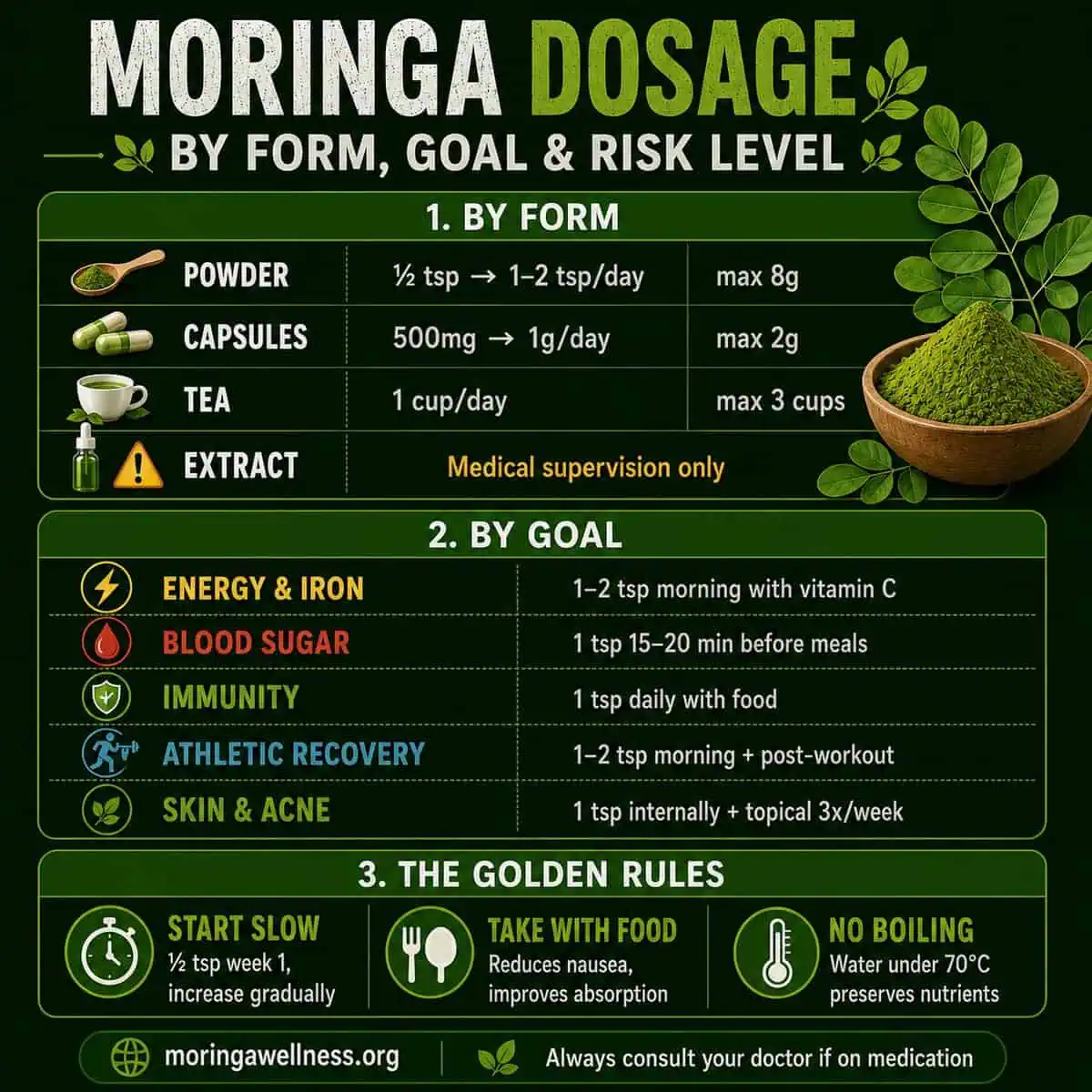
By Form
| Form | Beginner Dose | Maintenance Dose | Maximum Safe Dose |
|---|---|---|---|
| Leaf powder | ½ tsp (1–2g) | 1–2 tsp (3–6g) | ~8g/day |
| Capsules (500mg) | 1 capsule/day | 2–3 capsules/day | 4 capsules/day |
| Moringa tea | 1 cup/day | 2 cups/day | 3 cups/day |
| Concentrated extract | Avoid without guidance | As directed by manufacturer | Not recommended without medical oversight |
By Health Goal
| Goal | Recommended Dose | Best Time |
|---|---|---|
| General nutrition and wellness | 1 tsp/day (2–3g) | Morning with food |
| Energy and iron support | 1–2 tsp/day | Morning with vitamin C source |
| Blood sugar support | 1 tsp before 2 largest meals | 15–20 min before eating |
| Skin and antioxidant support | 1 tsp/day internally + topical mask | Morning + 2–3x weekly topically |
| Athletic performance | 1–2 tsp/day | Morning and post-workout |
| Lactation support | As recommended by doctor/midwife | With meals |
Research basis: A 2023 safety review in Food and Chemical Toxicology confirmed that moringa leaf powder is safe at doses up to 8 grams per day for healthy adults for up to 6 months. Most research uses 500mg–2g per day as the standard therapeutic range.
Read: Food and Chemical Toxicology (2023) — Moringa safety in healthy adults
Read also The Complete Moringa Dosage Guide (Backed by Science)
How to Minimize Side Effects: 6 Evidence-Based Rules
Rule 1: Start Slow — Always
Begin with ½ teaspoon (1 gram) for the first week. Increase by ½ teaspoon every 5–7 days. This gives your digestive system time to adapt and lets you identify any personal sensitivities at a safe dose.
Rule 2: Always Take With Food
Taking moringa with meals — particularly those containing healthy fat — dramatically reduces nausea and improves absorption of fat-soluble vitamins A and E. Avocado, olive oil, nuts, and coconut milk are ideal companions.
Rule 3: Never Use Boiling Water
Heat above 70°C (158°F) destroys vitamin C and degrades other heat-sensitive nutrients. For moringa tea or warm water preparations, always let boiled water cool for 3–4 minutes first. For recipes, add moringa after removing from heat. For more on how to use moringa powder correctly in food, read our complete cooking guide.
Rule 4: Check Every Medication You Take
Use the interaction table above. If any of your medications appear in it, consult your doctor before starting moringa. This is the single most important safety step for anyone on prescription drugs.
Rule 5: Hydrate More Than Usual
Especially in the first week. Moringa’s concentrated antioxidants and detoxifying properties require extra water to support liver and kidney clearance. Aim for 2 additional glasses of water per day during the adjustment period.
Rule 6: Choose Certified, Third-Party Tested Moringa
This eliminates the contamination-related side effects that account for many negative moringa experiences. See the quality guide below.
How to Choose High-Quality Moringa: Complete Safety Checklist
Poor quality moringa is responsible for many of the side effects people incorrectly attribute to the plant itself. Use this checklist every time you buy moringa.
✅ Non-Negotiable Requirements
USDA Organic Certified (or equivalent) Moringa leaves absorb nutrients — and toxins — quickly from soil. Non-organic farms risk pesticide residue in the final powder. Look for USDA Organic, EU Organic, or India Organic certification.
Third-Party Tested Reputable testing organizations include NSF International, USP, Informed Choice, and ISO-accredited independent labs. Third-party testing confirms nutrient content and absence of contaminants.
Heavy Metal Tested Low-quality moringa from polluted growing regions can contain lead, arsenic, cadmium, or mercury at dangerous levels. These cause the headaches, fatigue, and organ strain that people mistakenly attribute to moringa. Look for explicit statements: “Heavy metal tested” or “Meets USP limits.”
Single Ingredient — Leaf Only The label should say: “Organic Moringa Leaf Powder.” Nothing else. Stems, branches, and fillers reduce nutrient density and increase digestive side effects.
Bright Deep Green Color Vivid green = properly shade-dried or freeze-dried at low temperature = nutrients intact. Dull yellow-green or olive = over-processed = reduced nutritional value.
Certificate of Analysis (COA) Available The most transparent brands publish their COAs online or provide them on request. These lab reports show exact heavy metal levels, microbial counts, and purity confirmation.
❌ Red Flags — Avoid These
- No organic certification mentioned
- Price significantly lower than comparable products
- No third-party testing claims
- Brown or yellowish powder
- Ingredients list includes “moringa extract blend” or “proprietary formula”
- No COA available
Trusted Brands
Based on sourcing transparency, certification, and third-party testing:
- Kuli Kuli — USDA organic, direct farm sourcing from West Africa, third-party tested every batch
- Zen Principle — shade-dried, COAs available, excellent value per gram
- Terrasoul Superfoods — certified organic, resealable packaging, consistently good quality
For a complete brand comparison with ratings, read our best organic moringa powder brand 2026 guide.
Warning Signs: Stop Taking Moringa Immediately If You Experience
| Warning Sign | Possible Cause | Action |
|---|---|---|
| Rapid or irregular heartbeat | Blood pressure drop or medication interaction | Stop moringa. Check BP. Contact doctor. |
| Fainting or near-fainting | Hypotension or hypoglycemia | Stop moringa. Seek medical attention. |
| Shakiness, cold sweats, confusion | Hypoglycemia — especially if on diabetes medication | Check blood sugar immediately. Seek medical help. |
| Swelling of lips, tongue, or throat | Allergic reaction | Emergency — call emergency services immediately |
| Difficulty breathing | Severe allergic reaction | Emergency — call emergency services immediately |
| Persistent severe diarrhea (3+ days) | Dose too high or contaminated product | Stop moringa. Reduce dose or switch brands. |
| Severe or persistent headaches | Blood pressure change or dehydration | Stop moringa. Monitor blood pressure. See doctor. |
| Yellowing of skin or eyes (jaundice) | Liver stress (rare — usually from contaminated product) | Stop immediately. See doctor urgently. |
| Dark urine with back pain | Kidney stress | Stop immediately. See doctor urgently. |
| Unusual bruising or bleeding | Possible interaction with blood thinners | Stop immediately. Contact your prescribing doctor. |
Research Summary: What the Science Actually Says
Human Clinical Trials (Highest Evidence Level)
The strongest evidence comes from randomized controlled trials in humans:
- Lactation RCT (PMC9684698): Moringa significantly increased prolactin and milk volume with good tolerability over 4 weeks Read: PMC9684698
- Glycemic trials: 11 RCTs meta-analyzed in Phytomedicine (2023) confirmed 13–21% fasting blood sugar reduction Read: Phytomedicine
- Safety review: Food and Chemical Toxicology (2023) confirmed safety up to 8g/day for 6 months Read: FCT
- NAFLD trial: Hepatology Communications (2024) showed moringa reduced liver fat content in humans over 12 weeks Read: Hepatology Communications
Animal Studies (Mechanism Evidence)
- Phytomedicine rodent studies: Dose-dependent blood pressure reduction confirmed
- Thyroid studies: Both stimulatory and suppressive thyroid effects at different doses — explaining clinical unpredictability
- Toxicology studies: Liver and kidney strain only at extreme doses of concentrated extracts — not standard leaf powder
In Vitro (Laboratory) Studies
- Consistent demonstration of antioxidant, anti-inflammatory, and glucose-metabolism effects
- CYP450 enzyme interaction identified in cell studies
- Anticancer mechanisms documented — apoptosis induction, tumor cell proliferation inhibition
Overall Research Consensus
Three practical conclusions emerge from all available evidence:
1. Moringa is safe at food-level doses (1–6g/day of leaf powder) for healthy adults without significant medical conditions.
2. Most clinical risks arise from drug interactions or highly concentrated extract use — not from moringa leaf in culinary amounts.
3. Quality matters enormously — many reported side effects are caused by contaminated or poorly processed products, not moringa itself.
Frequently Asked Questions
Is moringa safe to take every day? Yes — for healthy adults without significant medical conditions or interacting medications. Daily use at 1–2 teaspoons is well-supported by clinical evidence. Give it 60–90 days of consistent use for full benefit. For more on building a daily routine, read our complete guide on how to use moringa powder.
Can moringa damage your kidneys? Standard moringa leaf powder at normal doses does not damage kidneys in healthy people. Kidney strain has only been reported in animal studies using extreme doses of highly concentrated extracts. People with pre-existing kidney disease (stage 3+) should use moringa only under medical supervision due to the mineral load.
Can moringa damage your liver? Moringa leaf powder at standard doses is actually hepatoprotective — meaning it protects the liver. Liver stress has been reported only with extremely high doses of concentrated extracts, or with contaminated products. Use organic, third-party tested leaf powder and your liver is not at risk.
Is moringa safe during pregnancy? Moringa leaf powder in very small amounts is generally considered safer than moringa root or bark during pregnancy — but no form of moringa should be taken during pregnancy without explicit approval from your obstetrician. Moringa root and bark contain compounds that may stimulate uterine contractions.
Can moringa cause weight gain? No — moringa supports healthy weight management through blood sugar stabilization, improved insulin sensitivity, and metabolic support. It does not cause weight gain. For more on moringa’s weight-related benefits, see our moringa powder benefits guide.
Is moringa safe for children? Limited pediatric safety data exists for moringa as a supplement. Moringa used as a food (in cooking) is generally considered safe in modest amounts. As a daily supplement, children under 12 should only use moringa under pediatric medical guidance.
Can I take moringa with coffee? Yes — there’s no known negative interaction between moringa and caffeine. However, coffee’s high temperature and acidity can degrade some of moringa’s heat-sensitive nutrients if mixed directly. It’s better to take moringa separately from your coffee — in a smoothie, warm water, or with food.
Does moringa interact with birth control pills? Potentially — moringa’s phytoestrogen content and prolactin-raising properties mean it could theoretically interact with hormonal contraceptives, though this interaction is not well-documented in humans. If you’re concerned, discuss with your gynecologist. For most women on the pill without other risk factors, the interaction risk is considered low.
How long does it take moringa side effects to go away? Mild digestive side effects typically resolve within 1–2 weeks as your body adjusts. Detox symptoms usually resolve within 4–7 days. If any side effect persists beyond 2 weeks or is severe, discontinue use and consult a doctor.
What is the safest form of moringa? Moringa leaf powder and moringa tea are the safest forms. Concentrated extracts carry higher interaction and liver-strain risk. For beginners, moringa tea provides the gentlest introduction. For daily use, organic leaf powder provides the best nutritional value at the lowest risk.
Final Verdict: Is Moringa Safe When Used Properly?
Yes — with an important qualifier.
Moringa is genuinely safe for most healthy adults who use certified leaf powder at appropriate doses. The research consistently supports this. For the right person — someone without significant health conditions or interacting medications — moringa is one of the safest and most nutritionally complete supplements available.
But moringa is not universally safe. It has real, clinically documented interactions with diabetes medications, blood pressure drugs, thyroid hormones, blood thinners, fertility treatments, and certain cancer therapies. It has clear contraindications for pregnant women, people with organ disease, and those on immunosuppressants. These are not theoretical concerns — they are evidence-based risks documented in peer-reviewed research.
The path to safe moringa use is straightforward:
✅ Check the complete interaction and contraindication lists in this guide ✅ Discuss with your doctor if you take any prescription medication ✅ Start at ½ teaspoon per day and increase slowly ✅ Choose USDA organic, third-party tested, leaf-only moringa powder ✅ Monitor how your body responds in the first 2–4 weeks ✅ Stop immediately if any warning signs from this guide appear
When used correctly, moringa can be a genuinely transformative addition to your daily nutrition. The key is knowing enough to use it wisely.
For your next step, read our complete guide to moringa powder benefits — so you know exactly what you’re working toward once you’ve confirmed moringa is safe for you.
Complete Reference List
- Fahey, J.W. (2005). Moringa oleifera: A Review of the Medical Evidence. Trees for Life Journal. tfljournal.org
- Stohs, S.J. & Hartman, M.J. (2015). Review of the Safety and Efficacy of Moringa oleifera. Phytotherapy Research. doi.org/10.1002/ptr.5325
- Leone, A. et al. (2015). Phytochemistry and Pharmacology of Moringa oleifera. International Journal of Molecular Sciences. doi.org/10.3390/ijms16023929
- Vergara-Jimenez, M. et al. (2017). Nutritional Composition of Moringa oleifera. Nutrients. doi.org/10.3390/nu9091047
- Jaiswal, D. et al. (2009). Moringa oleifera and Blood Glucose. Journal of Ethnopharmacology. doi.org/10.1016/j.jep.2009.03.036
- PMC9684698 — Moringa Supplementation and Lactation. PubMed Central. ncbi.nlm.nih.gov/pmc/articles/PMC9684698
- Baldisserotto, A. et al. (2020). Anti-Inflammatory Properties of Moringa. Oxidative Medicine and Cellular Longevity. doi.org/10.1155/2020/1564214
- Sharma, A.K. et al. (2018). Plant Adaptogens and Thyroid Function. Journal of Ethnopharmacology. doi.org/10.1016/j.jep.2017.11.033
- Cancer Management and Research (2021). Moringa Anticancer Mechanisms. dovepress.com
- Integrative Cancer Therapies (2024). Moringa as Adjunct Cancer Therapy. journals.sagepub.com
- Food and Chemical Toxicology (2023). Moringa Safety Review. sciencedirect.com
- Phytomedicine (2023). Meta-Analysis of Moringa and Glycemic Control. sciencedirect.com
- Hepatology Communications (2024). Moringa and NAFLD. aasldpubs.onlinelibrary.wiley.com
This article is for informational and educational purposes only and does not constitute medical advice. Never start, stop, or change any medication based on information in this article. Always consult a qualified healthcare provider — especially if you have a medical condition or take prescription medications.
© 2026 MoringaWellness.org — All rights reserved.