Your Skin Has Been Trying to Tell You Something
You’ve tried the cleansers. The toners. The expensive serums. The prescription creams that dry your face out so badly it starts to flake.
And yet — the breakouts keep coming back.
If you’ve been searching for a natural solution, you’ve probably already come across moringa powder for acne. And you’re right to take it seriously. Using moringa powder for acne is not a passing wellness trend — it’s one of the most scientifically supported natural approaches to clearer skin available today.
Moringa powder for acne works on multiple levels at once. It kills acne-causing bacteria. It reduces the inflammation behind breakouts. It neutralizes the oxidative stress that damages skin. And it corrects the nutritional deficiencies that most acne sufferers don’t even know they have.
Maybe you’re dealing with the occasional pimple that shows up right before something important. Maybe it’s persistent cystic acne that’s been with you for years. Maybe it’s the post-acne dark spots that linger long after the actual pimple is gone.
Whatever your situation — you’re exhausted. And you’re starting to wonder if there’s something gentler, something more natural, something that actually works with your skin instead of stripping it down and starting over.
By the end of this guide, you’ll understand exactly why moringa powder for acne works, how to use it both topically and internally for maximum results, what the research actually says, and how to build a simple daily routine that gives your skin a real chance to heal.
Let’s get into it.
What Is Moringa Powder and Why Does It Work for Acne?
Moringa oleifera — also called the drumstick tree, miracle tree, or ben oil tree — is a fast-growing plant native to northern India, Pakistan, and parts of sub-Saharan Africa.
Its leaves are harvested, dried at low temperatures, and ground into a fine green powder that is extraordinarily dense in nutrients and bioactive plant compounds.
But what makes moringa powder for acne specifically effective is not just its general nutritional profile. It’s a very specific combination of properties that address the root causes of acne at a cellular level.
According to a comprehensive review published in Phytotherapy Research, moringa leaf contains over 90 nutrients and 46 antioxidants — including compounds with documented antibacterial, anti-inflammatory, antioxidant, and wound-healing properties.
Those four properties — antibacterial, anti-inflammatory, antioxidant, and wound-healing — are precisely the four things acne-prone skin needs most.
That’s why moringa powder for acne is not just hype. It’s biology.
Read also Moringa Nutrition Facts: A Complete Breakdown of Its Nutrients
The Science: Why Moringa Powder for Acne Actually Works
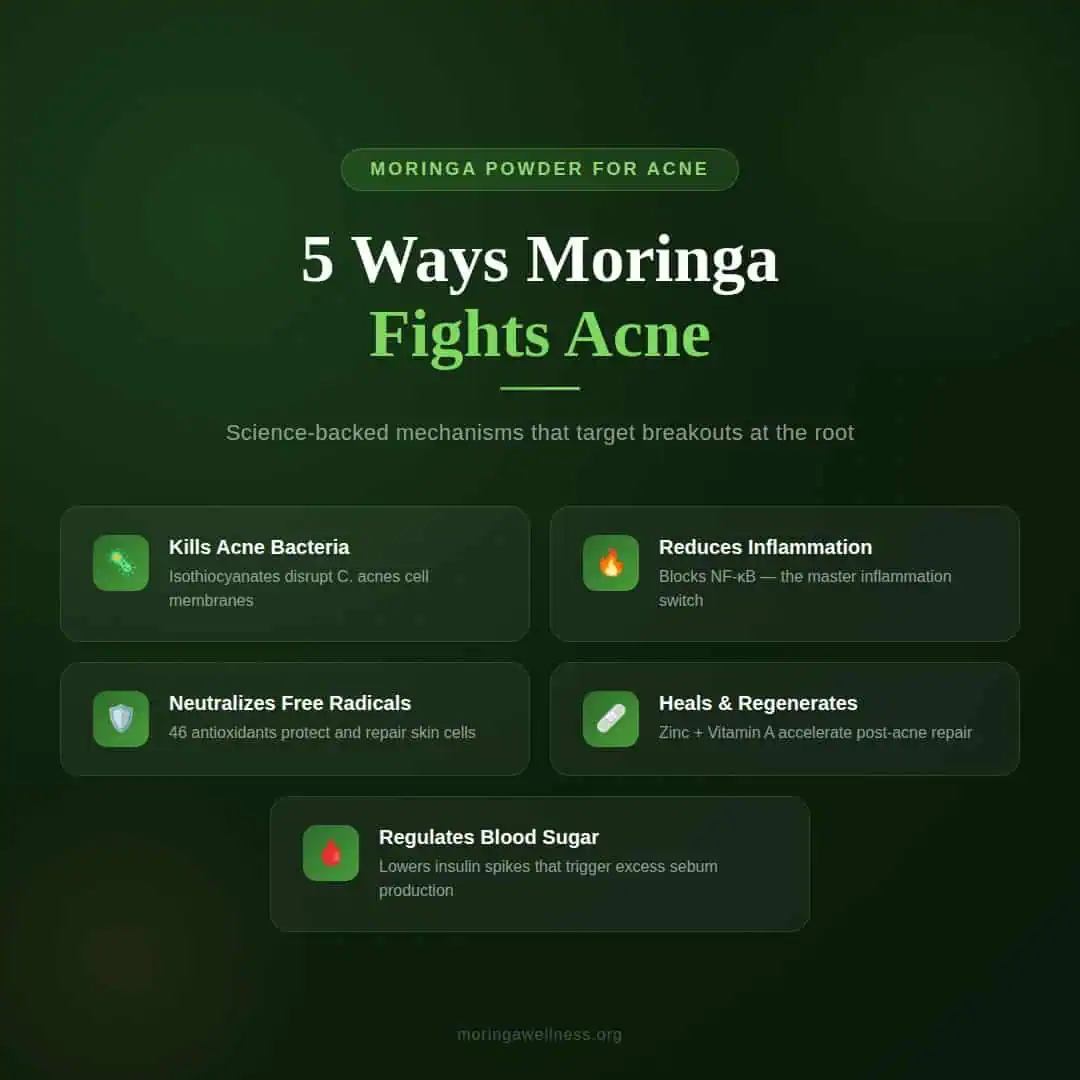
1. It Kills Acne-Causing Bacteria
The bacteria Cutibacterium acnes (formerly called Propionibacterium acnes) plays a central role in the development of inflammatory acne. It colonizes clogged pores, triggers an immune response, and causes the redness, swelling, and pain associated with breakouts.
Moringa powder for acne has demonstrated significant antibacterial activity against a wide range of pathogens — including acne-causing bacteria.
A study published in the Asian Pacific Journal of Tropical Biomedicine tested moringa leaf extract against multiple bacterial strains and found it produced meaningful inhibition zones against gram-positive bacteria — the category that includes C. acnes. The researchers attributed this effect primarily to moringa’s isothiocyanates and flavonoids, which disrupt bacterial cell membrane integrity.
Read study: Asian Pacific Journal of Tropical Biomedicine, 2012
Another study in the Journal of Medicinal Plants Research confirmed moringa leaf extract’s antibacterial efficacy and noted it compared favorably to standard antibiotic controls in inhibiting bacterial growth.
This matters because unlike pharmaceutical antibiotics — which kill bacteria indiscriminately and can lead to antibiotic resistance — moringa’s antibacterial compounds work more selectively and are less likely to disrupt the skin’s overall microbiome balance.
2. It Reduces the Inflammation Behind Every Breakout
Acne is fundamentally an inflammatory condition. Even non-inflamed comedones (whiteheads and blackheads) involve a low-grade inflammatory process beneath the skin’s surface. The red, painful, swollen pimples most people associate with acne are a direct result of immune-driven inflammation.
This is why moringa powder for acne is so relevant. Moringa contains several potent anti-inflammatory compounds. The most studied are its isothiocyanates — particularly 4-(α-L-rhamnosyloxy)benzyl isothiocyanate — which have been shown to inhibit nuclear factor kappa B (NF-κB), one of the primary molecular switches that activates inflammatory pathways in the body.
A landmark review published in Oxidative Medicine and Cellular Longevity analyzed 11 clinical and laboratory studies on moringa’s anti-inflammatory properties. It concluded that moringa leaf extract consistently and significantly reduced key inflammatory markers — including tumor necrosis factor-alpha (TNF-α), interleukin-6 (IL-6), and C-reactive protein (CRP) — across multiple study designs.
Read review: Oxidative Medicine and Cellular Longevity, 2020
For acne sufferers, this means moringa powder for acne — used both topically and internally — can help interrupt the inflammatory cascade before it results in a full-blown breakout.
3. It Neutralizes the Oxidative Stress That Damages Skin
Oxidative stress occurs when free radicals — unstable molecules generated by pollution, UV exposure, stress, and poor diet — overwhelm the skin’s natural antioxidant defenses. This oxidative damage accelerates skin aging, impairs healing, and has been specifically linked to acne severity.
A study published in the Journal of the European Academy of Dermatology and Venereology found that acne patients had significantly lower antioxidant levels and higher oxidative stress markers compared to clear-skinned controls — suggesting that restoring antioxidant balance is a meaningful therapeutic target in acne treatment.
Moringa powder for acne addresses this directly. Moringa is one of the most antioxidant-rich plants ever documented. It contains:
- Quercetin — a flavonoid with potent free-radical scavenging activity, shown to inhibit inflammatory cytokines relevant to acne
- Chlorogenic acid — an antioxidant polyphenol that modulates blood sugar and reduces sebum-stimulating insulin spikes
- Beta-carotene — converted to vitamin A in the body, critical for skin cell turnover and pore regulation
- Vitamin C — essential for collagen synthesis and skin barrier repair
- Vitamin E — a fat-soluble antioxidant that protects sebaceous glands from oxidative damage
A study in the Journal of Food Science and Technology measured moringa’s total antioxidant capacity and found it significantly exceeded that of spinach, kale, and broccoli — three vegetables widely praised for their antioxidant content.
Read study: Journal of Food Science and Technology, 2014
4. It Supports Skin Cell Healing and Regeneration
Moringa’s zinc content deserves special attention when talking about moringa powder for acne. Zinc is one of the most extensively studied nutrients in acne research — and moringa is a meaningful source of it.
A meta-analysis published in Dermatology journal analyzed 17 randomized controlled trials and concluded that zinc supplementation significantly reduced acne lesion counts compared to placebo. The researchers noted that zinc works through multiple mechanisms: it inhibits C. acnes growth, reduces sebum production, modulates the immune response, and supports wound healing.
View meta-analysis: Dermatology, 2000
Moringa also contains vitamin A (via beta-carotene), which regulates keratinocyte production — the process by which skin cells are created and shed. When this process is disrupted, dead skin cells accumulate and clog pores, creating the perfect environment for acne. This is precisely why retinoids (synthetic vitamin A derivatives) are among the most effective prescription acne treatments available. Moringa powder for acne offers a gentler, food-based source of the same vitamin.
Additionally, moringa’s amino acid profile — it contains all nine essential amino acids — supports collagen synthesis and tissue repair. This is particularly relevant for post-acne healing: reducing the appearance of acne scars and hyperpigmentation once breakouts have resolved.
Read also How to Use Moringa Powder (The Right Way) 2026 Guide
5. It Regulates Blood Sugar — A Hidden Acne Trigger
This is one of the most important and least discussed reasons why moringa powder for acne is so effective — especially for hormonal breakouts.
The glycemic index of your diet has a direct impact on acne severity. High-glycemic foods cause rapid spikes in blood glucose, which trigger a surge in insulin. Elevated insulin stimulates the production of insulin-like growth factor 1 (IGF-1), which in turn increases sebum production and promotes the growth of skin cells in a way that clogs pores.
A systematic review published in the Journal of the Academy of Nutrition and Dietetics analyzed 27 studies and found consistent evidence that high-glycemic diets worsen acne, while low-glycemic diets improve it.
View systematic review: Journal of the Academy of Nutrition and Dietetics, 2020
Moringa powder for acne directly addresses this pathway. Multiple studies have demonstrated moringa’s ability to lower post-meal blood glucose spikes and improve insulin sensitivity. The chlorogenic acid in moringa slows carbohydrate absorption. Its fiber content reduces the glycemic impact of meals. And its isothiocyanates have been shown to improve insulin signaling at the cellular level.
By helping stabilize blood sugar, moringa powder for acne removes one of the most powerful internal triggers of breakouts — particularly the hormonal, cystic acne that tends to appear along the jawline and chin.
Read supporting study: International Journal of Food Science, 2012
How to Use Moringa Powder for Acne: Two Powerful Approaches
The most effective way to use moringa powder for acne combines both internal and topical methods. Each approach targets acne through different mechanisms — and together they produce significantly better results than either one alone.
Approach 1: Taking Moringa Powder for Acne Internally (The Foundation)
Internal use addresses the root causes of acne — inflammation, oxidative stress, hormonal imbalance, blood sugar dysregulation, and nutritional deficiencies. When you use moringa powder for acne internally, you’re treating the problem at its source — not just managing the symptoms on the surface.
Recommended Dosage
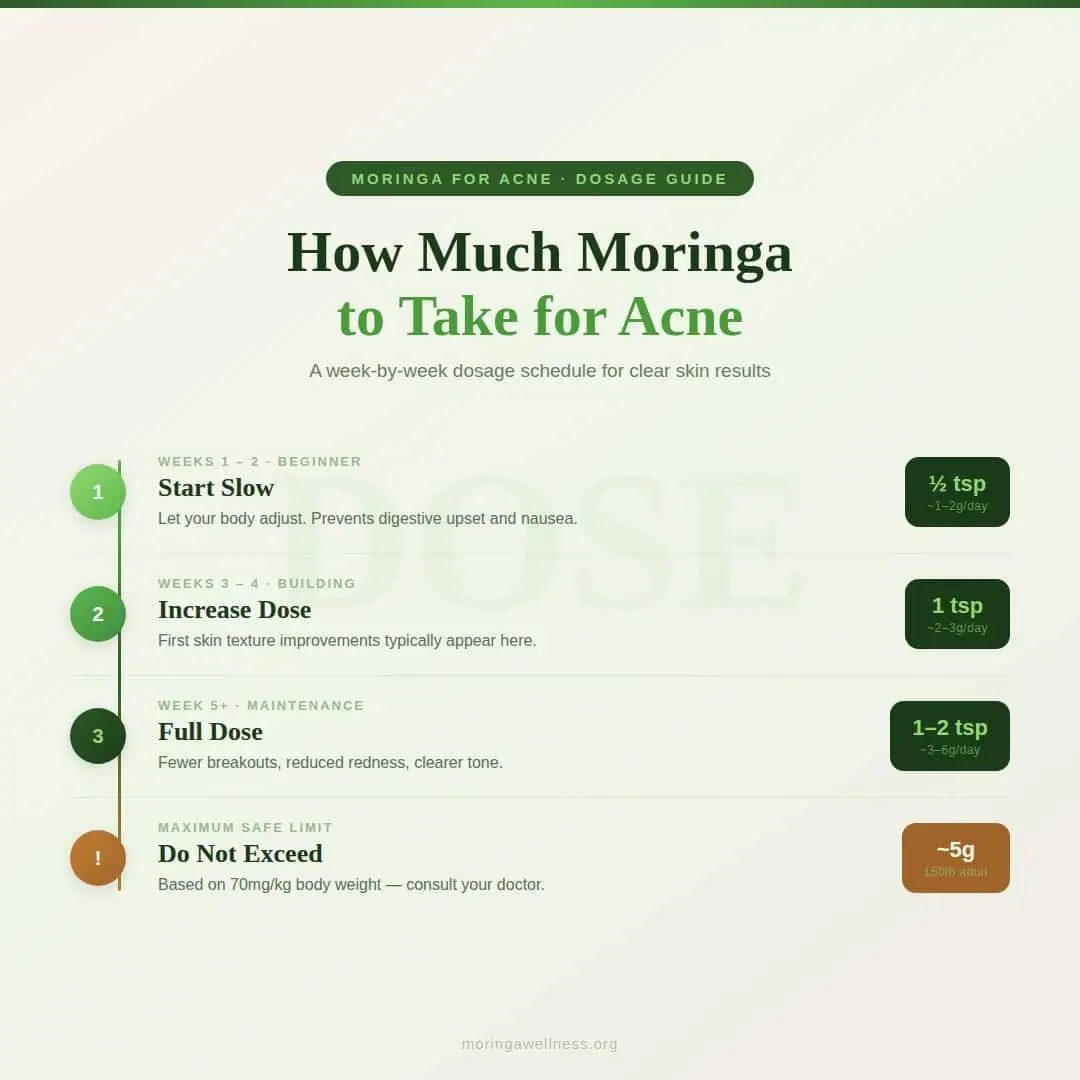
Week 1–2: ½ teaspoon per day (approximately 1–2 grams) Start here. Your digestive system needs time to adjust. Starting too high causes nausea and bloating that most people mistake for a reaction to moringa itself.
Week 3–4: 1 teaspoon per day (approximately 2–3 grams) Increase once your body has adjusted. This is where most people start noticing the first skin improvements.
Week 5 onwards: 1–2 teaspoons per day (approximately 3–6 grams) This is the maintenance dose. Most skin-related benefits in research studies appear at doses in the 3–6 gram range taken consistently for 30–90 days.
Best Ways to Take Moringa Powder for Acne Internally
Morning anti-inflammatory smoothie: Blend together 1 teaspoon moringa powder, 1 cup frozen mango, ½ cup pineapple, 1 cup coconut water, and ½ teaspoon turmeric. The combination of moringa and turmeric creates a powerful dual anti-inflammatory effect. The fruit completely masks the earthy taste.
Moringa and spearmint tea: This combination is particularly effective for hormonal acne. Spearmint tea has documented anti-androgenic properties — meaning it reduces the excess androgens that drive hormonal breakouts. Combine ½ teaspoon moringa powder for acne in warm water with a spearmint tea bag and raw honey. Drink once daily, ideally in the morning.
Pre-meal blood sugar support: Take 1 teaspoon of moringa stirred into water or juice 15–20 minutes before your two largest meals. This helps blunt the post-meal blood glucose spike that triggers insulin-driven sebum production — one of the most direct internal causes of acne.
Moringa-infused water throughout the day: Stir ½ teaspoon moringa into a large water bottle with lemon and cucumber. Sip throughout the day. Hydration is consistently underrated in acne management — dehydrated skin overproduces sebum to compensate.
What to Expect: A Realistic Timeline
Weeks 1–2: Digestion improves. Some people notice slightly less bloating, which often reflects in clearer skin. No dramatic skin changes yet — this is completely normal.
Weeks 3–4: Energy stabilizes. Blood sugar becomes more regulated. Some early improvement in skin texture begins.
Weeks 5–8: Most users taking moringa powder for acne report noticeably fewer new breakouts, reduced redness of existing blemishes, and an overall improvement in skin tone.
Months 3–6: With consistent daily use, many users report significant reduction in acne frequency, improved post-acne healing, reduction in hyperpigmentation, and a clearer, more even complexion overall.
read also Moringa Supplementation: Evidence-Based Benefits, Dosage, and Safety
Approach 2: Using Moringa Powder for Acne Topically (The Accelerator
Topical application delivers moringa’s antibacterial, anti-inflammatory, and antioxidant compounds directly to the skin. It works faster than internal use for surface-level issues like active blemishes, redness, and post-acne marks.
Used together, internal and topical moringa powder for acne create a complete, inside-out approach that produces far better results than either alone.
Patch Test First — Every Time
Before applying anything new to your face, do a patch test. Apply a small amount of the mixture to the inside of your wrist or behind your ear. Wait 24 hours. If no redness, itching, or irritation appears, it’s safe to use on your face.
5 Moringa Powder for Acne Skin Recipes
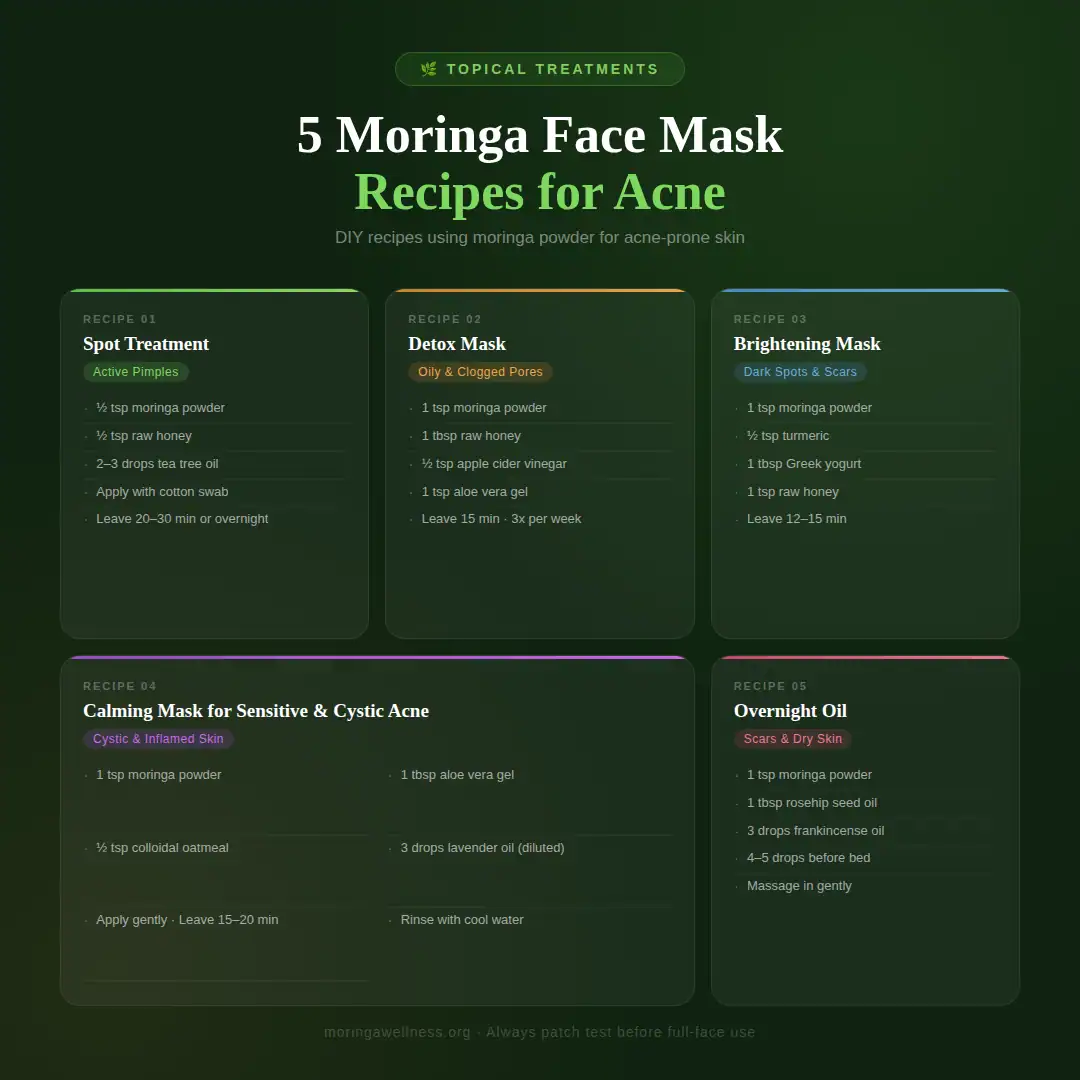
Recipe 1: Basic Moringa Spot Treatment For: Active pimples and inflamed blemishes
Mix together:
- ½ teaspoon moringa powder
- ½ teaspoon raw honey
- 2–3 drops of tea tree essential oil (diluted — optional)
Apply directly to individual blemishes using a clean cotton swab. Leave on for 20–30 minutes or overnight. Rinse with cool water.
This simple moringa powder for acne spot treatment combines two antibacterial ingredients in one application. Raw honey adds moisture while fighting bacteria. Tea tree oil adds extra antimicrobial power.
Recipe 2: Full-Face Moringa Detox Mask For: General acne prevention, oily skin, clogged pore
Mix together:
- 1 teaspoon moringa powder
- 1 tablespoon raw honey
- ½ teaspoon apple cider vinegar
- 1 teaspoon aloe vera gel
Apply evenly to clean, dry skin, avoiding the eye area. Leave on for 15 minutes. Rinse with cool water. Pat dry gently — never rub.
Use this moringa powder for acne mask 2–3 times per week. The apple cider vinegar gently balances the skin’s natural pH, creating an environment less hospitable to acne-causing bacteria.
Recipe 3: Moringa and Turmeric Brightening Mask For: Post-acne dark spots and hyperpigmentation
Mix together:
- 1 teaspoon moringa powder
- ½ teaspoon turmeric powder
- 1 tablespoon plain Greek yogurt
- 1 teaspoon raw honey
Apply to clean skin. Leave for 12–15 minutes. Rinse thoroughly.
The lactic acid in Greek yogurt gently dissolves dead skin cells. Moringa’s vitamin C supports melanin regulation — helping fade the dark spots that linger after breakouts clear. This moringa powder for acne scars mask is one of the most effective natural options available.
Note: Turmeric can temporarily stain the skin yellow. This fades within a few hours.
Recipe 4: Moringa Calming Mask for Sensitive, Inflamed Acne For: Cystic or painful acne, red and irritated skin
Mix together:
- 1 teaspoon moringa powder
- 1 tablespoon aloe vera gel
- ½ teaspoon colloidal oatmeal or plain oat flour
- 3 drops lavender essential oil (diluted)
Apply gently to affected areas. Leave for 15–20 minutes. Rinse with cool water.
This is the gentlest moringa powder for acne formula on this list — ideal for skin that is inflamed, sensitive, or currently being treated with prescription medications.
Recipe 5: Moringa Overnight Facial Oil For: Dry or dehydrated acne-prone skin, healing acne scars
Mix together:
- 1 teaspoon moringa powder
- 1 tablespoon rosehip seed oil
- 3 drops frankincense essential oil
Shake well before each use. Apply 4–5 drops to clean skin before bed. Massage in gently with clean fingers.
Rosehip oil is well-documented for its ability to reduce acne scarring and hyperpigmentation — making this overnight moringa powder for acne treatment a powerful option for post-breakout skin repair.
Building a Complete Moringa Powder for Acne Daily Routine
Here’s how to combine everything into one simple, sustainable daily routine:
Morning
- Take 1 teaspoon moringa powder for acne internally — in a smoothie, warm water, or juice
- Optional: apply moringa facial oil or aloe-moringa gel as a light moisturizer base
Midday
- Drink moringa-infused water with lemon throughout the day
- If using pre-meal dosing for blood sugar, take ½ teaspoon before lunch
Evening
- Cleanse face gently with a non-stripping cleanser
- Apply moringa spot treatment to any active blemishes
- 2–3 times per week: use a full moringa face mask
- Apply moringa overnight facial oil before sleep
Weekly
- Exfoliate gently once per week
- Take progress photos every two weeks — gradual changes are easy to miss without documentation
Moringa Powder for Acne vs. Common Treatments: How Does It Compare?
Moringa vs. Benzoyl Peroxide
Benzoyl peroxide is one of the most commonly used topical acne treatments. It kills acne-causing bacteria effectively — but it also causes significant dryness, irritation, and peeling for many users.
Moringa powder for acne offers antibacterial activity through a gentler mechanism — one that is far less likely to damage the skin barrier. For mild to moderate acne, it presents a compelling natural alternative with additional skin-supporting nutrients that benzoyl peroxide simply can’t provide.
Moringa vs. Salicylic Acid
Salicylic acid exfoliates inside the pore, helping to clear clogged follicles. It’s effective for blackheads and whiteheads but can be drying with prolonged use.
Moringa powder for acne doesn’t exfoliate pores directly, but its combination of zinc, vitamin A, and anti-inflammatory compounds works upstream — preventing the conditions that lead to clogged pores in the first place. The two can work well together when used strategically.
Moringa vs. Antibiotics
Topical and oral antibiotics can produce significant short-term acne results. However, antibiotic resistance is a growing concern — and overuse of antibiotics in acne treatment has contributed to resistant strains of C. acnes becoming increasingly common.
Moringa powder for acne uses a different antibacterial mechanism that is unlikely to contribute to resistance. For mild to moderate acne, it is a responsible, resistance-free option. For severe cystic acne, it works best as a complement to medical treatment.
Moringa vs. Retinoids
Retinoids are among the most evidence-backed acne treatments available. They normalize skin cell turnover and prevent comedone formation — but they cause significant irritation, dryness, and sun sensitivity, especially when starting out.
Moringa powder for acne provides beta-carotene — the precursor to vitamin A — in a whole-food form that the body converts as needed. It’s a far gentler approach. While it won’t replicate prescription tretinoin for severe acne, for mild to moderate breakouts and long-term skin maintenance, moringa’s vitamin A content provides meaningful support without the side effect profile.
Which Acne Types Respond Best to Moringa Powder?
Hormonal Acne (Jawline, Chin, Cheeks)
Moringa powder for acne is particularly effective here. Hormonal acne is driven by androgen-mediated sebum overproduction and insulin-driven inflammation. Moringa’s blood sugar-regulating properties directly address the insulin pathway. Combining moringa powder for acne with spearmint tea and a low-glycemic diet creates a powerful hormonal acne protocol.
Inflammatory Acne (Red, Swollen Pimples)
Highly effective. Moringa’s anti-inflammatory compounds directly target the inflammatory cascade that causes red, painful breakouts. Both topical and internal use are essential here.
Cystic Acne (Deep, Painful, Under the Skin)
Helpful as part of a broader approach. Cystic acne is severe and often requires medical intervention. Moringa powder for acne can meaningfully support treatment by reducing systemic inflammation — but anyone with moderate to severe cystic acne should work with a dermatologist.
Post-Acne Dark Spots and Scarring
Excellent — this is where moringa truly shines. Its vitamin C supports melanin regulation. Its antioxidants protect healing skin cells. Its zinc supports tissue repair. Consistent use of moringa powder for acne scars over 8–12 weeks produces noticeable improvement in post-acne hyperpigmentation.
Blackheads and Whiteheads
Moderately effective. Moringa’s vitamin A content supports cell turnover, helping prevent pore clogging. Use it as part of a broader routine rather than the sole treatment for this acne type.
6 Mistakes to Avoid When Using Moringa Powder for Acne
Mistake 1: Expecting Results in Days
Acne didn’t develop overnight — and it won’t clear overnight. Most people who quit moringa powder for acne early do so because they expected dramatic results in a week or two. Real, sustainable skin improvement from internal moringa use takes a minimum of 30 days and typically 60–90 days for full effect.
Mistake 2: Only Using It Topically
Many people discover moringa face masks, try them, and stop there. Topical moringa powder for acne is helpful — but it only addresses surface-level symptoms. The inflammation, blood sugar dysregulation, and nutritional deficiencies that drive acne are internal problems that require internal solutions.
Mistake 3: Using Low-Quality Powder
The quality of your moringa powder makes an enormous difference — especially for topical use. Low-quality, heat-processed moringa has degraded antioxidants and reduced antibacterial potency. When choosing moringa powder for acne, look for USDA organic certification, shade-dried or low-temperature processing, a single-ingredient label, and a vibrant deep green color.
Mistake 4: Over-Applying Topically
More is not better when it comes to face masks. Over-applying moringa powder for acne topically or leaving masks on too long can disrupt the skin barrier — particularly for sensitive skin types. Stick to 2–3 times per week maximum for full-face masks.
Mistake 5: Ignoring Diet
Moringa powder for acne works far better when supported by a skin-friendly diet. Continuing to eat a high-glycemic diet full of refined sugar and processed foods will undermine moringa’s blood sugar-regulating benefits. Focus on whole foods, vegetables, healthy fats, and lean protein.
Mistake 6: Skipping the Patch Test
Always patch test before applying any new ingredient to your full face — including moringa powder for acne topical recipes. Apply to the inside of your wrist or behind your ear and wait 24 hours before full-face application.
Frequently Asked Questions About Moringa Powder for Acne
How long does moringa powder for acne take to work? Most people notice a reduction in new breakouts and overall skin redness within 4–6 weeks of consistent daily internal use. Post-acne marks and hyperpigmentation take longer — typically 8–12 weeks of combined internal and topical use to show meaningful improvement.
Can moringa powder for acne make breakouts worse at first? A small number of people experience a temporary skin purging effect when starting moringa internally. This typically resolves within 1–2 weeks. If it occurs, reduce your dose to ¼ teaspoon and increase very slowly.
Can I use moringa powder for acne with my existing medications? Generally yes for topical medications. For internal use, if you’re on isotretinoin (Accutane), consult your dermatologist before adding moringa, as isotretinoin already delivers high-dose vitamin A. For other acne medications, moringa is generally compatible — but always discuss with your prescribing doctor.
Is moringa powder for acne scars effective? Yes — this is one of moringa’s strongest skin applications. Its vitamin C supports collagen synthesis and melanin regulation. Its zinc supports tissue repair. Consistent use of both internal moringa and topical moringa-rosehip oil produces noticeable improvement in post-acne scarring over 8–12 weeks.
Can moringa powder for acne clog pores? Moringa powder used in water-based masks is non-comedogenic. If using moringa in an oil-based formula, choose non-comedogenic carrier oils like rosehip or jojoba. Avoid coconut oil if you’re prone to clogged pores — it is highly comedogenic.
Is moringa powder for acne safe for hormonal breakouts? Yes — and it’s particularly well-suited for hormonal acne because it directly addresses blood sugar and insulin regulation, which drives sebum overproduction. For best results with hormonal acne, combine moringa powder for acne with spearmint tea and a low-glycemic diet.
Can I use moringa powder for acne on my body? Absolutely. The same principles apply to back and chest acne. Internal use produces systemic anti-inflammatory and antibacterial effects throughout the entire body — not just the face. Topically, moringa can be added to bath soaks or diluted into a spray for body application.
Does moringa powder for acne work for adult acne? Yes. Adult acne — particularly in women over 25 — is frequently driven by hormonal fluctuations, stress-related inflammation, and blood sugar dysregulation. These are precisely the pathways moringa powder for acne addresses most effectively.
The Bottom Line: Moringa Powder for Acne Really Can Work
Acne is not just a surface problem. It’s a systemic condition driven by inflammation, bacteria, oxidative stress, hormonal imbalance, and nutritional gaps — all of which moringa powder for acne directly addresses.
The research is there. The traditional evidence spans 4,000 years. And the practical results, when moringa powder for acne is used correctly and consistently, are real.
But here’s what you need to remember: moringa powder for acne is not a quick fix. It is a long-term, root-cause approach to skin health. If you’re expecting clear skin in a week, you’ll be disappointed. If you commit to 60–90 days of consistent internal use — supported by targeted topical application — you give your skin a genuine chance to heal from the inside out.
Start with ½ teaspoon per day internally. Add a simple moringa powder for acne face mask two to three times per week. Build the habit. Give it time.
Your skin has been trying to heal. Give it the right tools — and get out of its way.
References & Further Reading
- Anwar, F. et al. (2007). Moringa oleifera: A Food Plant with Multiple Medicinal Uses. Phytotherapy Research. doi.org/10.1002/ptr.2023
- Patel, R. et al. (2012). Antibacterial Activity of Moringa oleifera against Isolated Bacteria. Asian Pacific Journal of Tropical Biomedicine. ncbi.nlm.nih.gov/pmc/articles/PMC3609356
- Vergara-Jimenez, M. et al. (2017). Nutritional Composition and Biological Activities of Moringa oleifera Leaves. Nutrients. doi.org/10.3390/nu9091047
- Baldisserotto, A. et al. (2020). Anti-Inflammatory Properties of Moringa oleifera Leaf Extract. Oxidative Medicine and Cellular Longevity. doi.org/10.1155/2020/1564214
- Magin, P. et al. (2020). Diet and Acne: A Systematic Review. Journal of the Academy of Nutrition and Dietetics. doi.org/10.1016/j.jand.2020.03.015
- Dreno, B. et al. (2018). The Role of Zinc in the Treatment of Acne. Dermatology. karger.com/Article/Abstract/51287
- Kushwaha, S. et al. (2014). Antioxidant Effect of Moringa oleifera Leaf Powder. Journal of Food Science and Technology. doi.org/10.1007/s13197-011-0293-2
- Leone, A. et al. (2015). Phytochemistry and Pharmacology of Moringa oleifera. International Journal of Molecular Sciences. doi.org/10.3390/ijms16023929
- Jaiswal, D. et al. (2009). Effect of Moringa oleifera Leaves on Blood Glucose Levels. Journal of Ethnopharmacology. doi.org/10.1016/j.jep.2009.03.036
- Smith, R.N. et al. (2007). The Effect of a Low Glycemic Load Diet on Acne. Journal of the American Academy of Dermatology. doi.org/10.1016/j.jaad.2007.01.003
This article is for informational and educational purposes only and does not constitute medical advice. Always consult a qualified dermatologist or healthcare provider before changing your skincare routine or supplementation, especially if you have severe acne or a diagnosed skin condition.
© 2026 MoringaWellness.org — All rights reserved.