Most people use moringa… but choose the wrong form.
You’ve probably heard that moringa is a powerful superfood. It shows up everywhere— Moringa Tea vs Powder, capsules—and it’s often promoted as something that can boost energy, support overall health, and provide essential nutrients. But here’s where most people go wrong: they don’t choose the right form for their body or their goal.
Some people jump straight into moringa powder because they hear it’s more “powerful,” only to experience stomach discomfort or take more than their body actually needs. Others stick to tea because it feels safer and easier, but then wonder why they’re not seeing any real results. The issue isn’t whether moringa works—it’s whether you’re using the right version of it.
Moringa tea and moringa powder are not the same, and the difference matters more than most people realize. Tea is essentially an extract—you’re only consuming the nutrients that dissolve in water. Powder, on the other hand, is made from the whole leaf, meaning you’re getting everything: fiber, protein, and a much higher concentration of vitamins and minerals. Because of this, powder tends to deliver stronger effects, while tea is milder and easier on the body.
This also affects how your body absorbs moringa, how much you should take, and how likely you are to experience side effects. Research shows that whole moringa leaf powder contains higher levels of nutrients compared to water-based extracts like tea, which explains why the two forms can produce very different results. At the same time, tea is often better tolerated, especially for beginners or those with sensitive digestion.
The problem is that most people don’t understand these differences. They follow random advice online, guess their dosage, or choose based on convenience rather than what actually fits their needs. That’s why some people don’t see benefits, while others deal with unnecessary side effects.
This guide is here to remove that confusion. By the end, you’ll understand the real difference between moringa tea and powder, which one is better for your specific goals, and how to use each form safely. No guesswork, no conflicting advice—just clear, practical guidance you can actually follow.
If you’ve ever wondered whether you should start with tea or powder, if you’re taking too much, or why you’re not getting results, you’re in the right place. By the end, you’ll know exactly which one to use—and how to use it the right way.
2. What Is Moringa?
Moringa, scientifically known as Moringa oleifera, is a fast-growing tree native to parts of Africa and Asia. It’s often called the “miracle tree” because almost every part of it—leaves, seeds, pods—has been used traditionally for nutrition and health support. But when people talk about moringa today, they’re usually referring to the leaves, which are dried and used as powder or brewed into tea.
So why is moringa labeled a “superfood”?
It comes down to its nutrient density. Moringa leaves are packed with essential vitamins, minerals, and plant compounds that support overall health. For example, they naturally contain:
- Vitamins A, C, and E → important for immunity, skin health, and antioxidant protection
- Minerals like iron and calcium → support energy levels, blood health, and bone strength
- Antioxidants such as quercetin and chlorogenic acid → help reduce oxidative stress in the body
This combination is what gives moringa its reputation as a highly functional, nutrient-rich plant.
However, it’s important to stay grounded in reality. While moringa is nutritious, the term “superfood” can sometimes be exaggerated. According to sources like Medical News Today, many of the claimed benefits—such as blood sugar control or anti-inflammatory effects—are still being studied, and a lot of the research is limited to animal or small-scale human studies. In other words, moringa can support health, but it’s not a magic solution.
Understanding this helps you approach moringa the right way: as a nutrient-dense supplement, not a cure-all.
3. What Is Moringa Powder?
Moringa powder is the most concentrated and widely used form of moringa—and it’s where most of the “power” comes from.
3.1 How It’s Made
The process is simple but important. Fresh moringa leaves are carefully harvested, then dried at low temperatures to preserve their nutrients. Once dried, they are finely ground into a green powder.
Because the entire leaf is used, nothing is removed. What you’re consuming is the complete nutritional profile of the plant.
3.2 Nutritional Profile
This is where moringa powder stands out.
Unlike tea, which only extracts certain compounds, powder gives you the whole leaf—meaning you get:
- Fiber → supports digestion and gut health
- Plant-based protein → helpful for overall nutrition
- High mineral density → especially calcium, iron, and potassium
Research published on platforms like ScienceDirect highlights that whole moringa leaf powder retains significantly more nutrients compared to processed extracts. This makes powder the most nutrient-dense form available.
read also Moringa Nutrition Facts: A Complete Breakdown of Its Nutrients
3.3 Key Benefits
Because of its concentration, moringa powder offers several advantages:
- Maximum nutrient intake
You’re getting the full spectrum of vitamins, minerals, and plant compounds in every serving. - Stronger health impact
Due to its potency, effects (both positive and negative) tend to be more noticeable. - Versatility
You can easily add it to smoothies, juices, yogurt, or even meals. It fits into daily routines without much effort.
3.4 Downsides
However, this strength comes with trade-offs.
- Strong taste
Moringa powder has a very earthy, slightly bitter flavor that many people find hard to enjoy at first. - Easier to overdose
Because it’s concentrated, taking too much too quickly can lead to side effects like digestive discomfort or nausea. - Requires correct dosage
This isn’t something you want to guess. Proper dosing is critical to avoid problems and get results.
In short, moringa powder is powerful—but it requires awareness and control.
READ ALSO What Is the Moringa Tree? A Complete Beginner’s Guide
4. What Is Moringa Tea?
Moringa tea is a simpler, more traditional way of consuming moringa—and for many people, it’s the easiest entry point.
4.1 How It’s Made
Moringa tea is made by steeping dried moringa leaves in hot water, similar to any herbal tea. The heat extracts certain nutrients and plant compounds into the water, which you then drink.
Unlike powder, you’re not consuming the whole leaf—just what dissolves into the liquid.
4.2 Nutritional Profile
Because of this process, moringa tea has a lighter nutritional profile.
You still get beneficial compounds, especially antioxidants, but:
- The overall nutrient concentration is lower
- You miss out on fiber and some proteins
- Mineral content is reduced compared to powder
Sources like Grenera note that tea delivers a more diluted version of moringa’s nutrients, which directly affects how strong its impact is.
4.3 Key Benefits
Despite being less concentrated, moringa tea has clear advantages:
- Easy to consume
No measuring, no mixing—just steep and drink. - Gentle on digestion
Because it’s less concentrated, it’s less likely to cause stomach issues, making it ideal for beginners. - Caffeine-free alternative
According to sources like Integris Health, moringa tea can be a great substitute for coffee or traditional tea, especially if you’re trying to reduce caffeine intake.
4.4 Downside
The simplicity of tea also comes with limitations:
- Lower potency
You may need consistent, long-term use to notice effects. - Less complete nutrition
Since you’re not consuming the whole leaf, you’re missing key nutrients like fiber and some minerals.
In essence, moringa tea is safer and easier, but less powerful compared to powder.
READ ALSO The Complete Guide to Moringa Tea Benefits, Side Effects, and How to Use It
5. Moringa Tea vs Powder: Key Differences
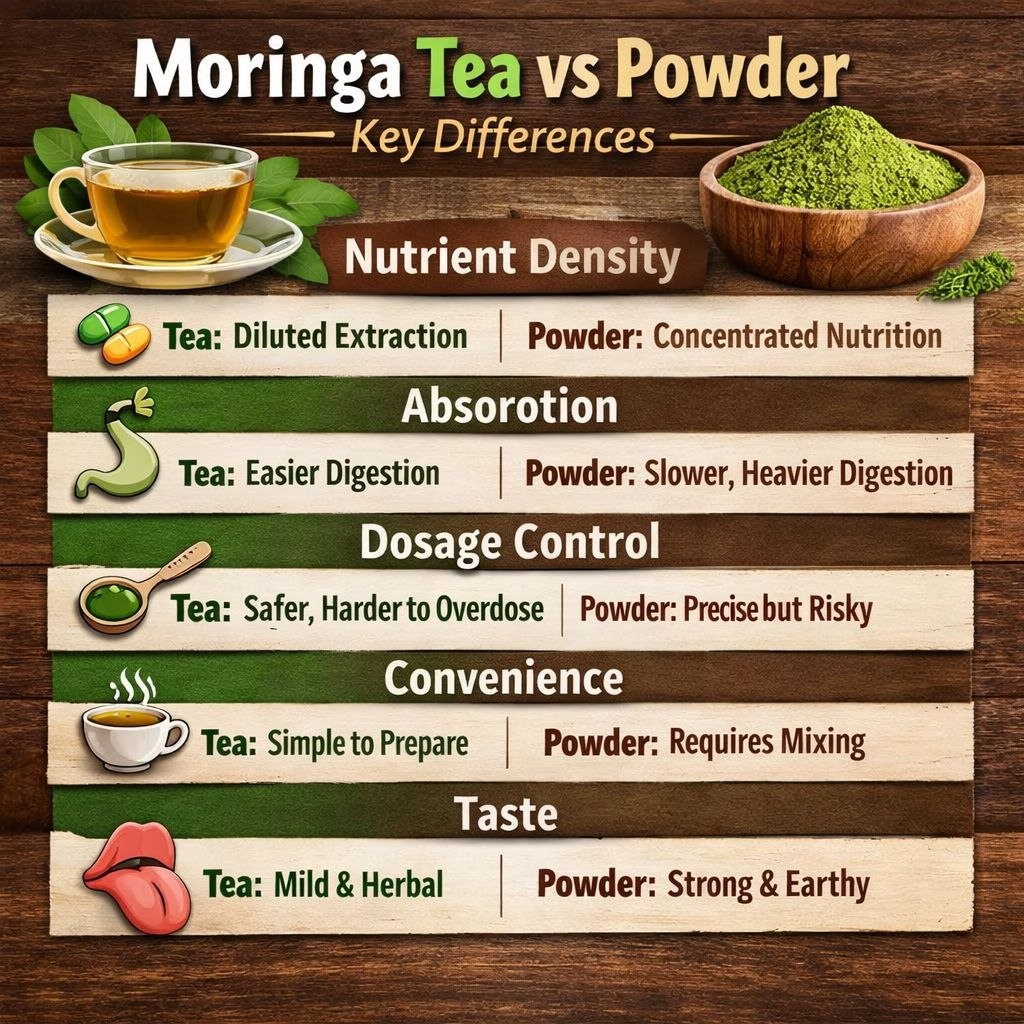
Now that you understand what each form is, let’s break down the real differences that actually impact your results. This is where most people finally realize why their experience with moringa hasn’t matched their expectations.
5.1 Nutrient Density
The biggest difference comes down to how much nutrition you’re actually getting.
Moringa powder is made from the entire dried leaf, which means nothing is removed. You’re consuming all the fiber, protein, vitamins, minerals, and plant compounds in their full form. This makes it highly concentrated and nutrient-dense.
Moringa tea, on the other hand, is an extraction. When you steep the leaves in hot water, only some of the nutrients transfer into the liquid. Many compounds—especially fiber and certain minerals—stay in the leaf and never make it into your cup.
This is why powder generally delivers significantly more vitamins and minerals per serving compared to tea, a difference also highlighted in nutritional comparisons from sources like LeafMilo.
In simple terms:
👉 Powder = full nutrition
👉 Tea = partial nutrition
5.2 Absorption & Bioavailability
Here’s where things get more nuanced.
Even though powder contains more nutrients, that doesn’t automatically mean your body uses all of them efficiently.
Moringa tea is lighter and easier to digest. Because it’s already in liquid form and less concentrated, your body can absorb certain compounds more quickly and with less effort. This makes tea a good option if you have a sensitive stomach or are just starting out.
Moringa powder, while more complete, is heavier on the digestive system. It contains fiber and a higher concentration of compounds, which can slow down digestion. This isn’t necessarily a bad thing—it just means your body processes it more gradually.
So the trade-off looks like this:
👉 Tea = easier, faster absorption (but less total nutrients)
👉 Powder = more total nutrients (but slower, heavier digestion)
5.3 Dosage Control
This is one of the most important—and most overlooked—differences.
With moringa powder, you have precise control over dosage. You can measure exactly how much you’re taking, which is great for optimizing results. But this precision also comes with risk.
Because powder is concentrated, it’s very easy to take too much, especially if you’re guessing or following inconsistent advice. This is where side effects like nausea or digestive discomfort can happen.
Moringa tea is naturally self-limiting. Since it’s diluted, it’s much harder to overconsume harmful amounts. Even if you drink multiple cups, the overall intake is still relatively moderate.
So in practical terms:
👉 Powder = controlled but requires discipline
👉 Tea = safer and more forgiving
5.4 Convenience
When it comes to daily use, convenience matters more than people think.
Moringa tea is simple. You just steep it in hot water, wait a few minutes, and it’s ready. It easily fits into a morning or evening routine, similar to any herbal tea habit.
Moringa powder requires a bit more effort. You need to measure it, mix it properly, and often combine it with smoothies, juice, or food to make it palatable. It’s not difficult—but it does require intention.
So the difference is clear:
👉 Tea = quick, effortless routine
👉 Powder = flexible but requires preparation
5.5 Taste Experience
Taste is often the deciding factor for many people—and it’s where these two forms feel completely different.
Moringa tea has a mild, herbal flavor, similar to green tea but without caffeine. It’s generally easy to drink and can be enjoyed on its own or with a bit of honey or lemon.
Moringa powder, however, has a strong, earthy taste that can be slightly bitter or grassy. Some people get used to it, but many prefer to mix it into smoothies or recipes to mask the flavor.
So when it comes to taste:
👉 Tea = smooth and approachable
👉 Powder = strong and acquired
READ ALSO Top 15 Evidence-Based of Moringa Powder Benefits(With Dosage & Warnings)
Organic Moringa Powder vs Capsules: Which Is Better for You?
6. Which Is Better Based on Your Goal?
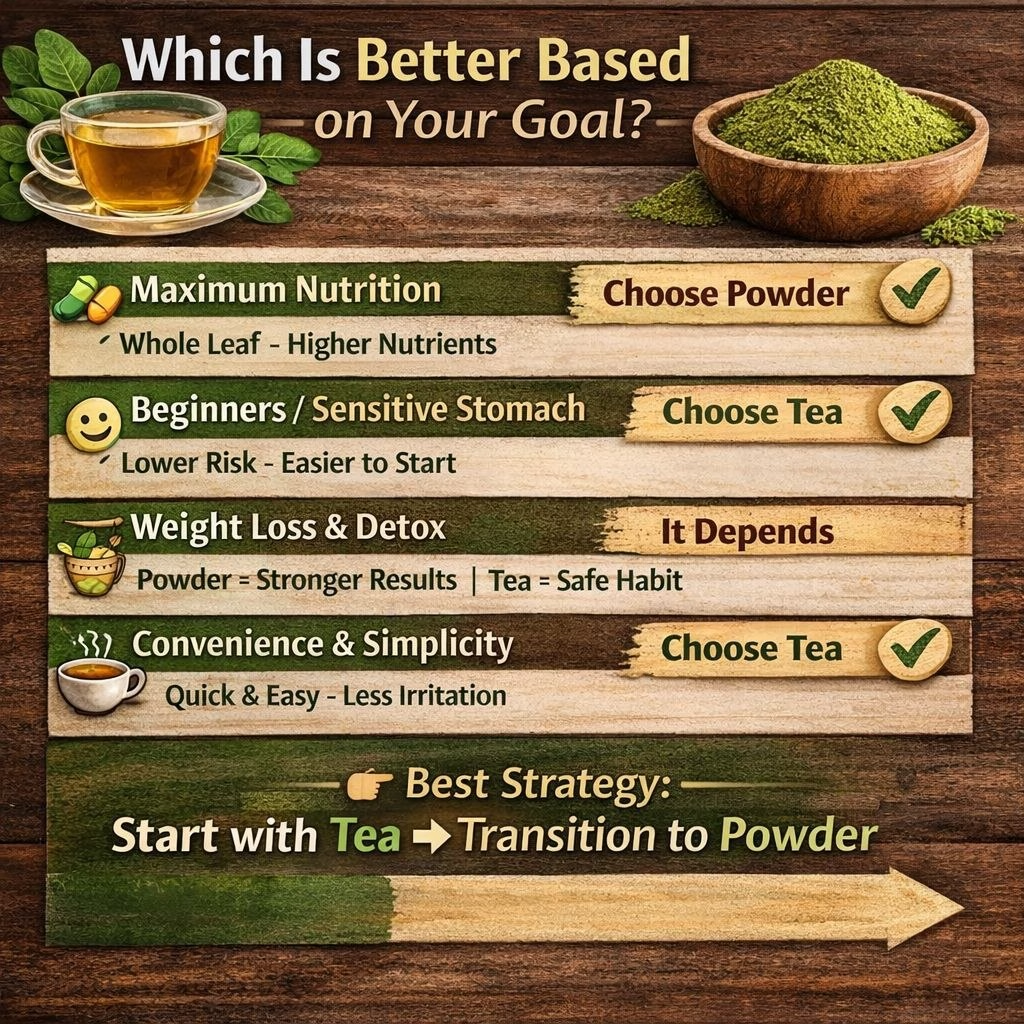
At this point, the question isn’t which form is “better” overall—it’s which one is better for you. The right choice depends on your goal, your body, and how comfortable you are managing dosage.
6.1 For Maximum Nutrition → Choose Powder
If your priority is getting the highest possible nutrient intake, moringa powder is the clear winner.
Because you’re consuming the entire leaf, you get:
- Higher levels of vitamins and minerals
- Fiber and plant protein (which tea doesn’t provide)
- A more complete nutritional profile
This makes powder ideal if you’re using moringa to support energy, fill nutritional gaps, or enhance your diet.
👉 In simple terms: if you want the full benefit, powder delivers it.
6.2 For Beginners → Start with Tea
If you’re new to moringa, tea is the safest and easiest starting point.
Why?
- It’s less concentrated, so your body can adjust gradually
- The risk of side effects is much lower
- You don’t have to worry as much about precise dosing
Most people who struggle with moringa start too aggressively with powder. Tea helps you ease into it without overwhelming your system.
👉 Best strategy: start with tea, then move to powder if needed.
6.3 For Weight Loss / Detox → It Depends
This is where context matters.
If your goal is stronger metabolic support or faster impact, moringa powder may be more effective due to its higher concentration of active compounds.
But if your goal is consistency and sustainability, tea often works better. It’s easier to turn into a daily habit, which matters more for long-term results.
So the trade-off is:
- Powder → stronger, faster impact (if used correctly)
- Tea → easier to maintain daily (better for consistency)
👉 The best approach for many people is combining both strategically over time.
6.4 For Sensitive Stomach → Choose Tea
If you have a sensitive digestive system, tea is the safer option.
Because it’s lighter and less concentrated:
- It’s gentler on the stomach
- Less likely to cause bloating or discomfort
- Easier for your body to process
Powder, especially in higher doses, can sometimes feel too heavy or irritating for sensitive individuals.
👉 If your body reacts easily, start with tea.
6.5 For Convenience → Choose Tea
Let’s be practical—what you’ll actually stick to matters.
Moringa tea is:
- Quick to prepare
- Easy to integrate into your routine
- No measuring or mixing required
Moringa powder, while versatile, requires more effort:
- Measuring the right amount
- Mixing it properly
- Often masking the taste
👉 If you want something simple and consistent, tea wins.
Quick Decision Guide
- Want maximum nutrition? → Powder
- New to moringa? → Tea
- Want stronger results? → Powder (carefully)
- Sensitive stomach? → Tea
- Want simplicity? → Tea
7. Dosage Guide
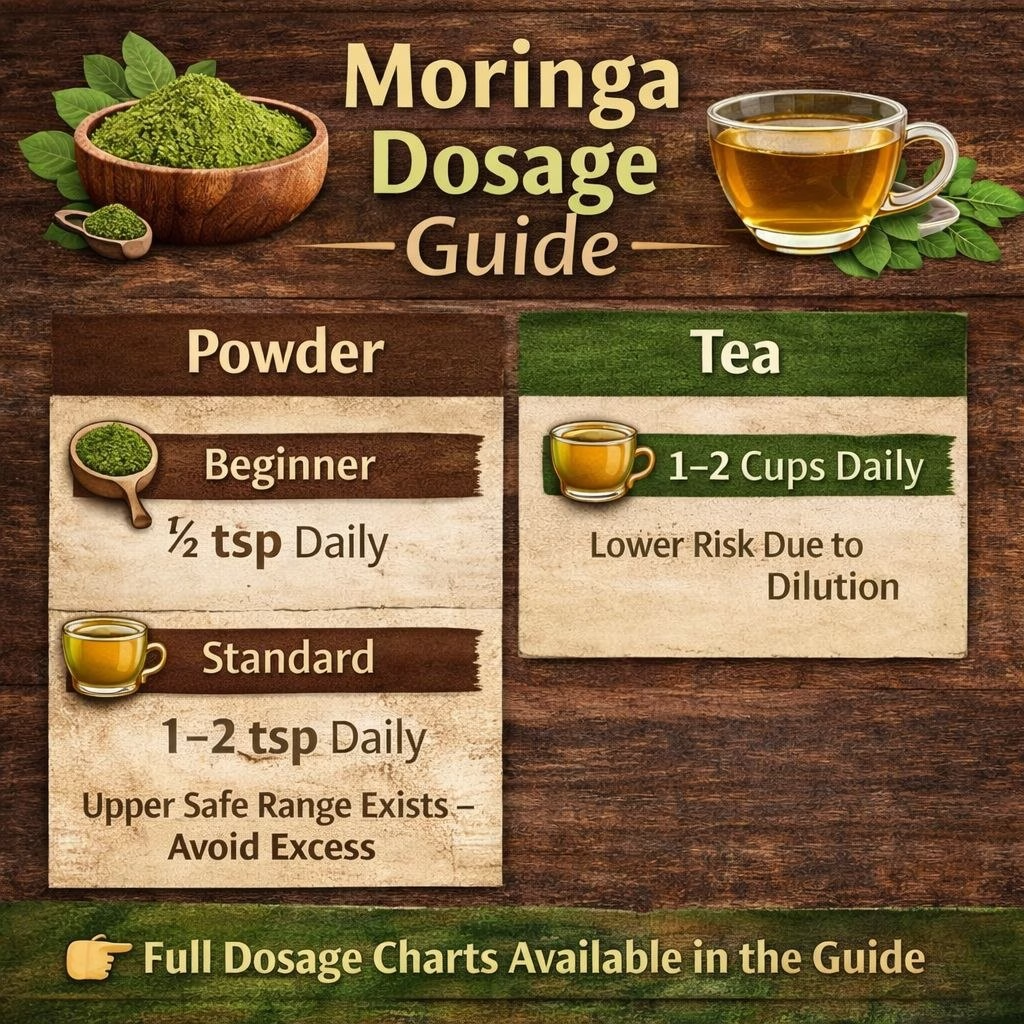
This is where most people make mistakes.
Moringa is beneficial—but only when used in the right amount. Too little may not do much, and too much can lead to unwanted side effects.
Moringa Powder Dosage
Because powder is concentrated, dosage matters a lot.
- Beginner dose:
Start with ½ teaspoon per day
→ Allows your body to adjust gradually - Standard dose:
Around 1–2 teaspoons per day is commonly recommended, as noted by sources like MAX@Home - Upper range:
Higher amounts exist, but going beyond moderate intake increases the risk of side effects. Platforms like WebMD emphasize avoiding excessive consumption.
👉 Key rule: Start low, then increase slowly if needed
Moringa Tea Dosage
Tea is much more forgiving.
- Typical intake:
1–2 cups per day is standard
Because it’s diluted:
- It’s harder to overconsume
- Side effects are less likely
This makes tea a great option for daily, long-term use.
Important Reminder
Dosage isn’t one-size-fits-all. It depends on:
- Your body
- Your tolerance
- Your health condition
That’s why guessing can lead to poor results—or unnecessary side effects.
READ FULL The Complete Moringa Dosage Guide (Backed by Science)
8. Safety & Side Effects
Moringa can be incredibly beneficial—but only when it’s used correctly. This is the part most people overlook, and it’s often the reason they either don’t see results or end up experiencing side effects.
Let’s break this down clearly so you know exactly what to watch for.
Powder Risks (What Most People Get Wrong)
Moringa powder is concentrated, which means its effects are stronger—but so are the risks if you misuse it.
The most common issue is overconsumption. Taking too much too quickly can lead to:
- Digestive discomfort
- Nausea
- Bloating or stomach cramps
This usually happens when people assume “more is better.” With moringa, that’s not how it works.
Another important factor is medication interactions. Moringa may influence blood sugar levels and blood pressure, which means it can interact with medications designed to regulate those conditions. If you’re taking medication, this isn’t something to ignore.
Because powder delivers a higher dose of active compounds, it also has stronger physiological effects. That’s great when used properly—but it also means your body will react more noticeably if something is off.
👉 Bottom line: powder is powerful, but it requires awareness and control.
Tea Risks (Lower but Still Important)
Moringa tea is generally much safer because it’s less concentrated.
Most people tolerate it well, and the risk of side effects is significantly lower. That’s why it’s often recommended for beginners.
However, “safer” doesn’t mean risk-free.
Even with tea:
- Excessive intake can still cause mild digestive discomfort
- Individual sensitivity can vary
- Underlying health conditions still matter
👉 Tea is forgiving—but you should still use it mindfully.
Important: Not Everyone Should Take Moringa
This is where you need to pay attention.
Moringa is not suitable for everyone, especially in certain situations.
- Pregnancy:
Some parts of the moringa plant (especially root and bark) may not be safe during pregnancy. Even leaf products should be approached cautiously and only with proper guidance. - Medication use:
If you’re taking medication for:- blood sugar
- blood pressure
- thyroid conditions
👉 When in doubt, always prioritize safety over experimentation.
Key Takeaway
Most moringa side effects don’t come from the plant itself—they come from incorrect use.
- Taking too much
- Starting too fast
- Ignoring your body’s signals
If you avoid these mistakes, moringa can be a safe and effective addition to your routine.
READ ALSO 7 Critical Moringa Side Effects You Must Know Before Taking It
9. Scientific Evidence: What Research Actually Says
Moringa is often marketed as a “miracle plant,” but let’s separate what’s actually supported by research from what’s exaggerated. This is important—not just for accuracy, but because understanding the evidence helps you use moringa realistically and safely.
What Research Shows
There is a growing body of research on Moringa oleifera, especially around metabolic health and inflammation.
1. Blood Sugar Support
Several studies suggest that moringa may help regulate blood sugar levels.
- A clinical and experimental review published on PubMed Central found that compounds in moringa can reduce blood glucose levels and improve insulin response, particularly in diabetic models
- Other research indicates moringa may improve glucose tolerance and insulin sensitivity, which are key factors in managing metabolic health
Mechanistically, this is linked to:
- Plant compounds like isothiocyanates and polyphenols
- Effects on insulin signaling pathways
- Reduction in glucose absorption and improved cellular uptake
👉 In simple terms: moringa shows potential to support blood sugar control—but mostly under controlled conditions.
2. Anti-Inflammatory & Antioxidant Effects
Moringa is rich in bioactive compounds like flavonoids and phenolic acids, which play a role in reducing inflammation.
- Reviews of multiple studies show moringa extracts can reduce inflammatory markers such as TNF-α and IL-6 while boosting antioxidant defenses
- Additional research confirms it may help combat oxidative stress, which is linked to chronic diseases like diabetes and cardiovascular conditions
These effects are largely due to:
- High antioxidant content
- Ability to neutralize free radicals
- Modulation of inflammatory pathways
👉 This is one of the strongest areas of evidence for moringa.
3. Broader Metabolic & Health Effects
Emerging research suggests moringa may also:
- Improve lipid profiles (cholesterol levels)
- Support weight regulation in metabolic conditions
- Enhance overall antioxidant status
Preclinical studies show improvements in:
- Body weight
- Fat metabolism
- Inflammatory balance
However, most of these findings come from animal or lab studies, not large human trials
The Reality Check (What Most People Don’t Tell You
This is where trust is built—because the limitations matter just as much as the benefits.
1. Limited Human Studies
While there are human studies, they are:
- Small in size
- Short-term
- Often lacking strong controls
For example, one human study showed only minimal improvements in blood sugar markers, despite regular moringa consumption
👉 This means results in real-world use may be more subtle than expected.
2. Heavy Reliance on Animal & Lab Research
A large portion of the strongest findings comes from:
- Animal models (rats, mice)
- In vitro (lab-based) studies
While useful, these don’t always translate directly to humans.
👉 What works in controlled lab conditions doesn’t always work the same way in your body.
3. Inconsistent Results
Not all studies agree.
Some show:
- Significant improvements in metabolic markers
Others show:
- Mild or negligible effects
This inconsistency is why major health platforms emphasize that more high-quality human trials are needed before making strong health claims.
What This Means for You (Practical Insight)
Here’s the most accurate way to understand moringa:
- ✅ It is nutrient-dense and biologically active
- ✅ It shows real potential in metabolic and inflammatory support
- ❌ It is not a guaranteed solution or medical treatment
👉 The benefits are supportive, not transformative on their own
Why This Actually Works in Your Favor
This realistic perspective is what helps you use moringa correctly.
Instead of:
- expecting instant results
- overdosing to “speed things up”
You:
- use it consistently
- choose the right form
- follow proper dosage
That’s when moringa becomes effective.at while moringa is nutritious, some of the stronger health claims are not yet fully supported by large-scale human evidence.
What This Means for You
Moringa is best viewed as:
👉 A nutrient-dense supplement that supports health
—not a cure or guaranteed solution.
If you approach it with realistic expectations and proper use, it can be helpful. But relying on it as a “quick fix” is where people go wrong.
10. Common Mistakes People Make
Most negative experiences with moringa come down to a few simple mistakes—and once you’re aware of them, they’re easy to avoid.
1. Taking Too Much Powder
This is the most common mistake.
People assume that because moringa is natural, they can take large amounts right away. In reality, starting too high often leads to:
- Digestive issues
- Discomfort
- Poor overall experience
👉 The smarter approach is to start small and build gradually.
2. Expecting Instant Results
Moringa isn’t a stimulant or quick fix.
It works gradually by supporting your body over time. Expecting immediate changes often leads to disappointment or overuse.
👉 Consistency matters more than intensity.
3. Ignoring Safety Warnings
Many people skip over basic safety guidelines, especially around:
- dosage
- medical conditions
- interactions
This is where unnecessary problems happen.
👉 Just because something is natural doesn’t mean it should be used carelessly.
4. Choosing the Wrong Form for Their Goal
Some people use tea when they need stronger results.
Others use powder when they should start gently.
This mismatch leads to:
- poor results
- avoidable side effects
- confusion about whether moringa “works”
👉 Choosing the right form is just as important as taking it.
11. Tea vs Powder: Final Verdict
So, which one is actually better—moringa tea or moringa powder?
The honest answer is: it depends on how you plan to use it. Both forms have their place, but they serve different purposes.
You should choose moringa powder if your goal is to get the maximum nutritional benefit. Because it uses the whole leaf, it delivers a higher concentration of vitamins, minerals, and plant compounds. It’s the better option if you’re looking for stronger results and are comfortable managing your dosage carefully. However, that same strength means you need to be more mindful—taking too much too quickly can lead to side effects.
On the other hand, you should choose moringa tea if you value simplicity and safety. It’s easier to prepare, gentler on your body, and much harder to overuse. This makes it the ideal starting point, especially if you’re new to moringa or have a sensitive stomach. While it’s less potent, it’s far more forgiving and easier to turn into a consistent daily habit.
For most people, the smartest approach isn’t choosing one over the other—it’s using them strategically.
👉 Start with tea to let your body adjust, then transition to powder if you want stronger benefits.
This way, you reduce risk while still unlocking the full potential of moringa over time.
12. Stop guessing with moringa.
Most people don’t get results—not because moringa doesn’t work, but because they’re using it incorrectly.
They:
- take the wrong dose
- choose the wrong form
- ignore basic safety guidelines
And that leads to frustration, side effects, or no real progress.
It doesn’t have to be that way.
👉 Inside the guide, you’ll get:
✔️ A clear, step-by-step dosage system
✔️ A breakdown of who should avoid moringa
✔️ A simple 7-day safe start plan
Everything designed to help you use moringa correctly, safely, and effectively—without confusion.
👉 Download now and start using moringa the right way.
13. FAQ Section
Is moringa tea as effective as powder?
Not exactly. Moringa powder is more concentrated because it contains the whole leaf, which means it delivers more nutrients per serving. Tea is less potent but easier to digest and safer for beginners.
Can I take both together?
Yes, but it’s usually better to keep it simple. Many people start with tea and later add powder once they understand how their body responds. If combining both, you should be mindful of your total intake.
Which is better for weight loss?
It depends on your approach. Powder may offer stronger metabolic support due to its concentration, while tea is easier to maintain daily. Consistency matters more than intensity for long-term results.
How long does moringa take to work?
Moringa isn’t instant. Some people notice subtle effects within a few days, but most benefits build over time with consistent use—typically over a few weeks.
Can I take moringa daily?
Yes, moringa can be taken daily when used in appropriate amounts. The key is sticking to a safe dosage and paying attention to how your body responds.